TABP Snacks and Beverages Coimbatore-based, a leading beverage producer targeting the demands of the Indian mass market, known as Bharat, has raised a funding round, raising $3 million (approximately ₹26 crore). This is a key investment that will enable the company to grow its operations to a considerable extent and establish itself in a fast-growing mass-market beverage industry in India. The investment supports the opportunity that is present in FMCG challenger brands that respond to the requirements of value-conscious consumers in non-metro and rural regions.
Strategic vision and capital infusion
The latest funding round was headed by LC Nueva, which signifies high confidence in the market proposition and implementation plan of TABP. Other investors who also participated in the round included Entrust Family Office and individual investors Arun Mukherjee and Soumya Malani. This new capital injection comes at a crucial moment when TABP, a new brand of FMCG challengers, is increasing its efforts towards market share in the mass-market beverage industry of India.
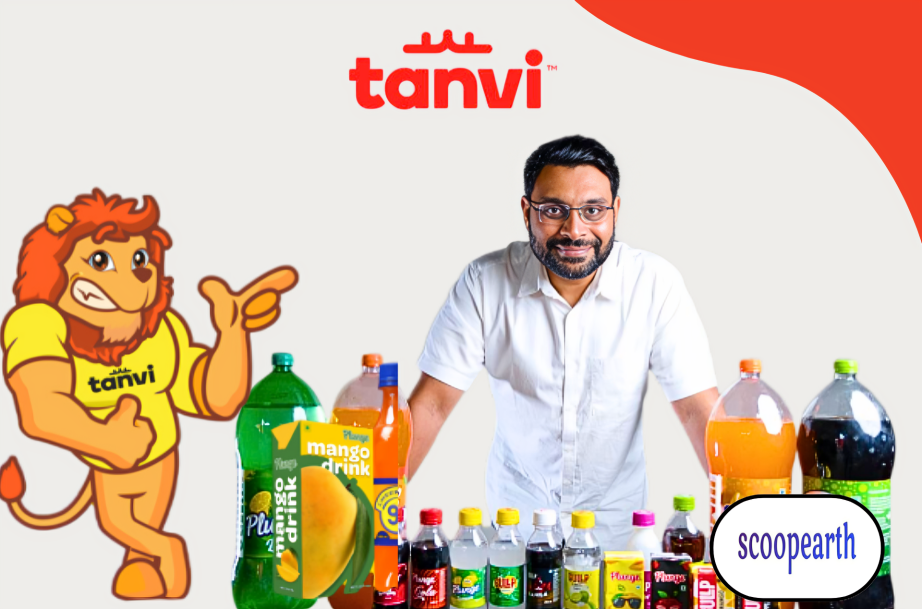
TABP was founded in 2018 by a husband-wife engineering couple, Prabhu Gandhikumar and Brindha Vijayakumar. The company has established a niche in the value beverage market that is unique and profitable by converting local street beverages which are popular into standardized, hygienic and affordable packaged drinks. Their positioning is specifically the high price-sensitive but more hygiene and safety-conscious bottom-of-the-pyramid consumers.
TABP belongs to the new generation of FMCG business that centers on Bharat, regional taste, price sensitivity, and trust, created through safety guarantees. The company will seek to formalize the unstructured beverage segment by finding formats that have high regional affinity, frequently hyperlocal flavors sold loose in unhygienic venues, and package them in a form of consistent packaged products with a compelling value-for-money offer. The founders believe that this offers a scalable avenue akin to what formalized unbranded consumption of packaged water, dairy, and snacks by organized players has accomplished in the last twenty years.
The co-founder and CEO of TABP, Prabhu Gandhikumar, said, “India’s beverage revolution won’t be defined by metros alone but by consumers of Bharat. For millions of consumers in tier-2 towns, industrial belts, and rural markets, there is still a gap between taste, hygiene, and affordability. Our goal is to deliver quality beverages that feel aspirational yet remain accessible.”
Quotation Source: Passionate In Marketing
Market opportunity and utilization of fresh capital
The $3 million in new capital will be tactically employed in three primary directions to support a speedy growth. The company will expand the distribution network in major southern and eastern states in India. The capital will be invested to launch new beverage formats that will diversify its products. TABP will also expand its production massively to accommodate the increase in demand.
The company has already exhibited impressive financial growth. In the Financial Year 2024-2025 (FY24-25), TABP registered ₹212 crore in sales which was an impressive improvement on ₹4 crore in FY19. In the long term, the company has put a challenging target of surpassing ₹800 crore in sales within three years. After this period of active development, TABP will extend its operations to the pan-India markets, and consider the potential of a public issue.
The business proposition of TABP is based on a tremendous market that is rapidly growing. The market of non-alcoholic drinks in India is estimated at ₹1.38 lakh crore and is set to grow massive to ₹2.1 lakh crore by 2029. This is being fuelled by growing awareness of hygiene among lower-income consumers, increased organized penetration and increased consumption based on affordability. However, as the majors of the beverage industry are concentrated on the premium and mainstream urban segments, a large portion of the beverage industry in small towns and villages remain unorganized.
The market opportunity is large; however, the beverage supply chain does have structural issues such as the volatility of raw materials due to climate changes as well as the implementation of distribution in rural markets. The leaders of TABP believe that their geographical familiarity, operational parsimony, and bottom-up network strategy will be major distinguishing factors against other players.
Conclusion
The recent funding round of $3 million led by LC Nueva is a turning point in the history of TABP Snacks and Beverages. The company is fulfilling the demands of the huge Bharat market directly by formalising regional and hyper-local beverages and distributing them in packaged forms that are affordable and hygienic. The investment validates a new era of capital support of aspirational but value-oriented consumption in India tier-2 and rural markets.