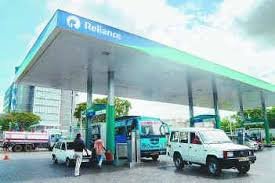
Reliance Industries Limited, with its partner BP, has proposed serious limitations on the sale of fuel in its Jio-bp chain of petrol pumps nationwide. As per the latest reports, the company has limited selling of petrol and diesel to ₹1,000 per visit per customer. This is a timely move considering the fact that the nation is experiencing a worsening fuel crisis, especially among the private fuel retailers who are increasingly finding it hard to keep up stocks as per the prevailing market conditions. The shift underscores the growing pressure on the privatized sector as the world energy prices rise and domestic distribution issues take centre stage.
Rationing approach
The limit of ₹1,000 per vehicle is a tactical solution aimed at controlling the decreasing stocks and making sure that more people have access to fuel in the long term. Jio-bp will ensure that the total depletion of its underground tanks is avoided before the next scheduled refill by ensuring that the amount of fuel that can be purchased by a single customer at any given moment will be limited.
This rationing strategy is generally observed in times of severe supply chain stress. The customers who visit these stations are now discovering that they can no longer fill their tanks to the max. It is a scenario that has seen the wait time increase and also frequent visits to various stations by those with high consumption requirements, like commercial transporters and long-distance commuters.
Primary driver and impact on consumers
This shortage in supply has been mainly caused by the discrepancy in international prices of crude oil and the controlled retail prices in the local market. The economic viability of selling fuel at the same price as state-owned enterprises is simply not always economically viable to private retailers, such as Reliance-BP and Nayara Energy, which are often supported by the government to absorb losses.
With large increases in international prices, there is a price under-recovery in which the cost to acquire and refine the oil is higher than the price at which they are allowed or can sell it to compete. As a result, numerous privately owned pumps have been scaled back or are receiving limited supplies from their parent companies to reduce financial losses.
Jio-bp stations have a cap that has led to a visible change in consumer behavior and a ripple effect in the wider fuel retail environment. With the restriction of sales by the private stations, a huge quantity of vehicles has been diverted to the state-run stations operated by Indian Oil, Bharat Petroleum, and Hindustan Petroleum.
The government-supported stations are currently witnessing demand never seen before, creating queues and, in certain areas, even temporary stock-outs of their own. This sudden, drastic increase in the volume of the units of the public sector has imposed an enormous burden on the logistics and transportation systems that carry fuel to the retail locations and adds to the feeling that the nation is short of the commodity.
Conclusion
The move by Reliance to limit fuel purchases to ₹1,000 per visit is a sharp pointer to the instability that is presently characterizing the energy industry. Although the measure will extend the available resources and keep the level of service within its network, it highlights the challenging situation occupied by private retailers in a regulated pricing context.
Consumers might be subject to such restrictions until the disparity between the world procurement prices and domestic retail prices is reduced or the supply chain is made stable. This is still an unfolding situation as stakeholders seek long-term solutions to energy security and price stability for the masses.