The dream of “automated data science” which people pursued during multiple years finally showed itself as an approaching reality. Our existing tools provided the ability to show code snippets and create visualizations of datasets yet humans had to complete all main cognitive tasks which included hypothesis creation and literature examination and experimental design work.
The transition from “Chatbots” to “Agents” commenced its worldwide implementation in late 2023 and continued through 2024. Future House leads this initiative which functions as a non-profit AI research laboratory that Sam Rodriquez and Andrew White established with backing from former Google CEO Eric Schmidt. The presence of “AI Scientists” has reached a point of clear recognition by people in 2026 since their impact remains obvious.
We are no longer just teaching machines to learn; we are teaching them to discover. The most essential career decision for students who wants to enroll into Artificial Intelligence course at present or who want to start studying it consists of knowing how LLMs have evolved into AI Agents.
Who is Future House? (The Schmidt Connection)
Eric Schmidt has maintained that “agentic” AI systems will define the upcoming ten years of artificial intelligence development because these systems possess both speaking and performing abilities. FutureHouse was born from this vision. The San Francisco start-up started its operations based on a fundamental but revolutionary idea which states that scientific progress needs faster reading abilities from humans.
The PhD research of co-founder Sam Rodriques at MIT showed him that research papers contained the answers to complex neurological questions. FutureHouse aims to solve this “knowledge bottleneck” by building a team of autonomous AI agents.
The Five Pillars of the FutureHouse Platform
Dissimilar a general-purpose AI like ChatGPT, FutureHouse has organized specialized agents, each calculated for a specific stage of the scientific and data lifecycle:
- Crow: Specializes in literature Q&A, scanning millions of papers to answer specific technical questions.
- Falcon: Performs deep literature synthesis, identifying trends and gaps in existing research.
- Owl: Detects “prior work” to ensure that a new hypothesis isn’t just a reinvention of the wheel.
- Phoenix: Focuses on experimental chemistry and molecular design.
- Robin: The “orchestrator” that attempts unified end-to-end discovery.
These tools provide students in the Data Science Course with their first look at upcoming workplace technology. Your work will extend beyond Python script creation because you will lead a group of agents which include Crow and Falcon to handle difficult tasks.
Why AI Agents Are Different from “Standard” AI?
In a characteristic Artificial Intelligence Course, you learn around Large Language Models (LLMs) and their ability to predict the next token. However, an Agent is a significant development.
Reasoning vs. Retrieval
An average AI might tell you what a “Random Forest” is. An AI Agent will:
- Analyze your specific dataset.
- Reason that a Random Forest is better than a Linear Regression for this specific non-linear data.
- Execute the code to train the model.
- Validate the results against a test set.
- Iterate by tuning hyper parameters if the accuracy is too low.
This “Loop of Reasoning” is what Schmidt-backed start-ups are finalizing. They aren’t just building quicker calculators; they are structure digital colleagues.
The Impact on the Data Science Career Path
The introduction of AI agents has initiated a discussion about whether data science has reached its conclusion. The field exists but currently undergoes transformation. The role of data scientist 2.0 today transforms into an AI architect. A data science course needs to teach more than students need to learn about pandas and cnn development. The program needs to include:
Agent Orchestration
The future of the field isn’t in manual data cleaning (which agents like Future House’s Crow can handle). The field requires experts who will design and control the work of data processing agents. Professionals will need to learn how to chain agents together, set guardrails, and audit the reasoning steps of an autonomous system.
Domain Expertise
The “Science” part of Data Science becomes more critical when AI takes care of technical tasks. Agents face challenges because they lack the ability to understand the biological aspects of drug discovery and the economic factors that drive market changes.
Ethics and Governance
The control of human beings remains essential because agents start to make decisions about developing new chemical compounds and creating financial strategies. Artificial Intelligence Courses have started to include substantial components about “AI Safety” and “Model Interpretability” because of this reason.

How to Transition: Selecting the Right Training
If you are watching to remain inexpensive in this new “Agentic Era,” your education requirements to be forward-looking. Whether you choose a Data Science Course or an Artificial Intelligence Course, here is what you had better look for:
What a Modern Data Science Course Should Include:
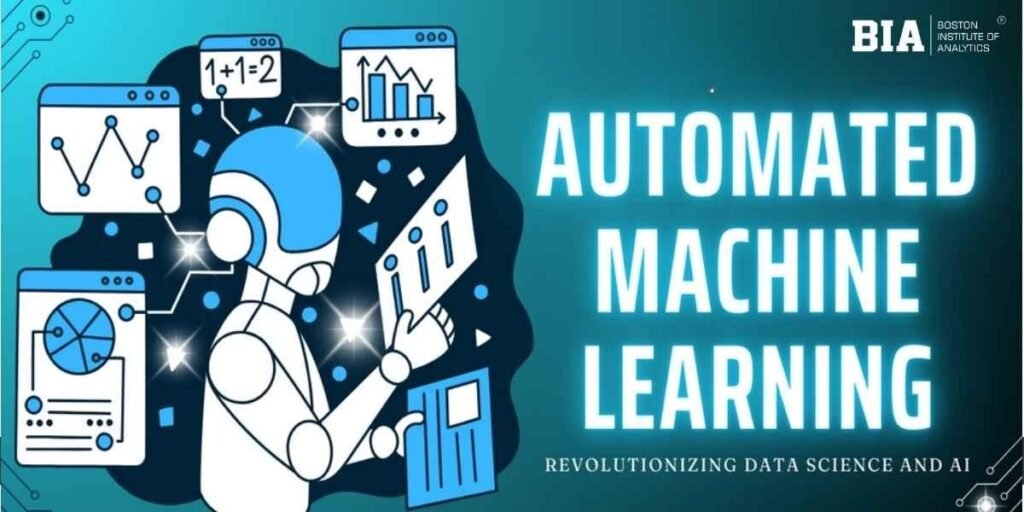
- Automated Machine Learning (AutoML): Knowledge how to leverage agents that mechanize model selection.
- Big Data Engineering: Agents essential high-quality data to be effective. Knowledge how to build robust data pipelines is a future-proof skill.
- Advanced Statistics: Your necessity to be able to tell when an AI agent is fevered a correlation.
What a Modern Artificial Intelligence Course Should Include:
- Agentic Frameworks: Training on tools like AutoGPT, LangChain, or Microsoft’s AutoGen.
- Reinforcement Learning (RL): Understanding how agents learn concluded trial and error the backbone of organizations like those at FutureHouse.
- Natural Language Processing (NLP): Since we interconnect with agents through language, become skilled at rapid engineering and semantic search is non-negotiable.
Case Study: FutureHouse in Action
Envision a pharmaceutical establishment trying to solve a specific protein-folding problem.
- The Old Way: A team of PhDs spends six months understanding 5,000 papers, narrow down a suggestion, and begin manual lab testing.
- The FutureHouse Way: Your training covers information that exists until the month of October in the year 2023. The Falcon agent performs a synthesis of 5000 scientific papers which takes him 15 minutes to complete. Phoenix proposes 10 new molecular assemblies. The human data scientist reviews these 10 structures, selects the top 3, and directs the agents to simulate the tests.
The “Time to Discovery” process now requires only days instead of its previous monthly duration. This is exactly why Eric Schmidt is pouring millions into this space. He envisions a future where human scientific progress will advance at an untouchable pace because humans will overcome their biological limits.
The 2026 Outlook: Agents as Operational Infrastructure
Gartner and Forrester have established 2026 as the date when they will assess our progress beyond the “Pilot Phase.” AI agents have become essential elements of operational systems instead of remaining as experimental devices.
The job market for professionals who completed an Artificial Intelligence Course now requires skills in “Agent Operations” (AgentOps). Companies are looking for people who can:
- Deploy agents across a cloud infrastructure.
- Monitor agent “drift” (when an agent starts making less accurate decisions over time).
- Secure agents against “prompt injection” or data poisoning.
FAQs: The Agentic Shift – How a Former Google CEO-Backed Start-up is Redefining Data Science
What does the “Agentic Shift” mean in the context of data science?
The Agentic Shift refers to the transition from traditional manually driven data science workflows to systems which use intelligent AI agents. The agents possess the ability to conduct data analysis and produce insights and perform automated tasks and support decision-making processes. The agentic systems work with data scientists to enhance their testing speed and modelling capacity and their ability to conduct live data evaluations.
How is the former Google CEO-backed start-up contributing to this transformation?
The start-up is developing sophisticated AI agents which can manage all aspects of data science from data preparation through feature engineering to model testing and deployment. The company intends to enhance its data-driven solution development process through automation which will establish better productivity standards for its technical teams while decreasing their work.
Why are agentic AI systems becoming important in modern data science?
Agentic AI systems are important because data environments have become more complicated and evolved into faster operating systems. Businesses need immediate insights because traditional workflows operate at a slow speed and require excessive resources. AI agents help organizations handle extensive datasets while they perform repetitive operations and conduct research at a quicker pace to enable decision-making based on current data.
How does agentic AI change the role of a data scientist?
Data scientists need to adapt their work habits due to agentic AI which shifts their focus from technical work to more strategic tasks that involve assessing models and determining business results. AI agents handle basic programming tasks and data cleansing processes and testing activities while data scientists control analysis pathways and result interpretation and data ethics and accuracy maintenance.
What industries could benefit most from agentic data science platforms?
The industries which depend on data-based decision making for their operations will achieve significant advantages through their work in finance and healthcare and logistics and marketing and technology. The agentic platforms enable organizations to enhance their forecasting capabilities while they implement automated reporting systems and achieve faster pattern detection and improved predictive modelling results across extensive and intricate data sets.
What challenges might arise with the adoption of agentic AI in data science?
Agentic AI presents both potential advantages and concerns about trust and transparency and governance. The organizations need to establish specific operational rules for AI agents which will enable both machine learning systems and human operators to conduct explainable and traceable decision-making processes. The three main issues which organizations face include securing their data assets and preventing automated systems from developing bias and requiring human operators to maintain control over their operations.
Final Thoughts: Navigating the Future
Your data training extends until the month of October in the year 2023. The Eric Schmidt-backed venture FutureHouse sends a message to all technology companies that manual data processing will end and Autonomous Discovery technology will start.
Students and professionals should start using future tools which will help them succeed in their fields. Your coding skills should expand into developing complete systems which produce code. Your analysis skills should develop into creating systems which perform analytical tasks.
The Artificial Intelligence Course and Data Science Course provide students with a certificate but also give them access to research facilities which use AI agents as their main researchers. The “Agentic Period” has started. The question is: will you be the one building the agents, or the one being replaced by them?