
The saree is the most democratic garment in India. A farmer in Odisha, a CEO in Mumbai, and a bride in Thrissur—all wear one and have for thousands of years. Six yards of fabric that carry cultural memory, regional identity, and timeless elegance.
India’s saree market is valued at approximately USD 14 billion and projected to cross USD 23 billion by 2033—spanning everything from ₹800 everyday cotton to ₹5 lakh Sabyasachi bridal pieces.
Here are the 10 brands defining this market today.
Quick Comparison
| Rank | Brand | Owner / Founded By | Founded | HQ | Speciality |
| 1 | Nalli Silks | Nalli family (Nalli Kuppusamy Chetty) | 1928 | Chennai, Tamil Nadu | Kanjivaram silk, India’s oldest silk house |
| 2 | Sabyasachi | Sabyasachi Mukherjee (ABFRL holds 51%) | 1999 | Kolkata, West Bengal | Luxury bridal; India’s No. 1 designer label |
| 3 | Fabindia | William Nanda Bissell (est. by John Bissell) | 1960 | New Delhi | Organic cotton, Tussar, handloom sarees |
| 4 | Taneira | Titan Company Ltd. (Tata Group) | 2017 | Bengaluru | GI-certified handloom sarees from 100+ clusters |
| 5 | Meena Bazaar | Privately held | 1970 | New Delhi (Karol Bagh) | Bridal and festive silk; North India staple |
| 6 | Ritu Kumar | Ritu Kumar (Label) | 1969 | New Delhi | Designer bridal, block print, and zardozi specialist |
| 7 | Suta | Sujata Biswas & Taniya Biswas | 2016 | Mumbai | Everyday handloom cotton; sustainable, modern |
| 8 | Karagiri | Founded by entrepreneurs (digital-first) | 2015 | Bengaluru | Online handloom: Banarasi, Paithani, Kanjivaram |
| 9 | Kalanjali | Ramoji Group | 1992 | Hyderabad, Telangana | South Indian silk and handloom; affordable range |
| 10 | Ritu Kumar Rivaah / Kalamandir | Kalamandir Retail Pvt. Ltd | 2007 | Hyderabad | Pan-India wedding and festive sarees |
Nalli Silks—India’s Most Trusted Silk House
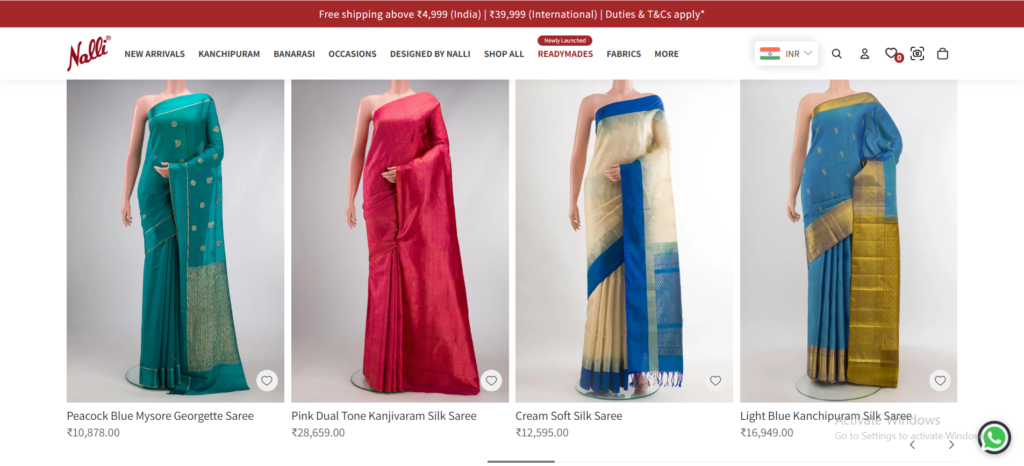
Image Courtesy:Nalli Silks(Official Website)
- Founded: 1928
- Owner: Nalli family (founder: Nalli Kuppusamy Chetty)
- HQ: Chennai, Tamil Nadu
Nalli Silks, the oldest and most respected silk saree retail brand, was established in 1928 in Chennai’s T. Nagar by Nalli Kuppusamy Chetty and has been selling silk sarees for nearly a century.
The family-owned business has been in the hands of the founder’s descendants for four generations and is synonymous with Kanjivaram sarees. The brand has since expanded its presence to the USA, Canada, and Singapore and has flagship stores in Mumbai, Delhi, Bengaluru, and Hyderabad.
What It Does: Retailers offer the best silk sarees in India, including Kanjivaram, Banarasi, chiffon, crepe, and georgette sarees.
Services: Kanjivaram, Banarasi, chiffon, crepe, and georgette sarees; bridal collections; exports; customization; and Silk Mark-certified products.
Sabyasachi—India’s Most Iconic Luxury Label
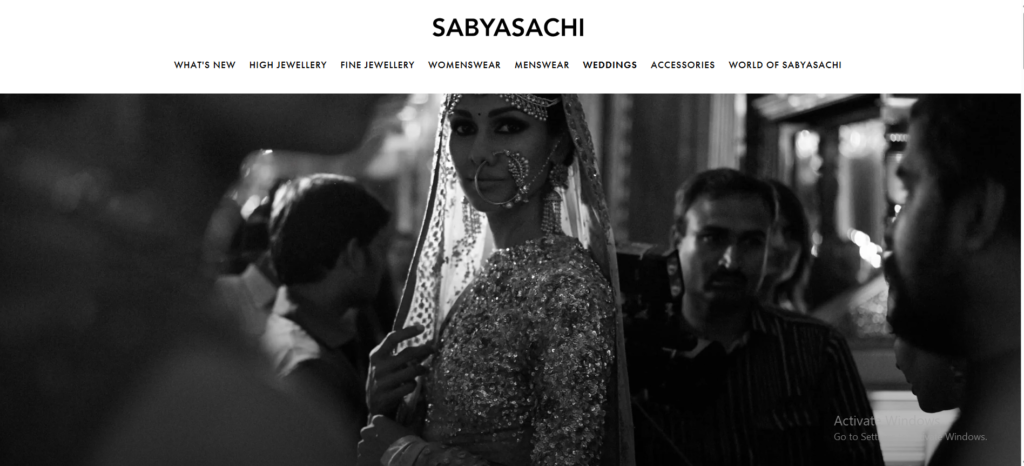
Image Courtesy:Sabyasachi(Official Website)
- Founded: 1999
- Owner: Sabyasachi Mukherjee (founder); ABFRL (Aditya Birla Fashion & Retail) owns 51% (acquired in 2021 for around ₹398 crore)
- HQ: Kolkata, West Bengal
Sabyasachi Mukherjee’s brainchild was born in Kolkata in 1999 with a loan of ₹20,000 from his family.
The designer has since become India’s most renowned luxury label, dressing Alia Bhatt at the Met Gala, collaborating with Estée Lauder, and being named “Designer of the Decade” by FDCI in 2024. In 2021, the designer’s majority stake (51%) was bought by Aditya Birla Fashion for ₹398 crore.
Sabyasachi’s heavily embroidered and vibrantly printed sarees made from Indian textiles are India’s most desired luxury bridal wear.
What It Does: Designs and retails high-luxury bridal sarees and couture lehengas.
Services: Designer bridal and couture sarees, luxury jewellery, ready-to-wear, international operations, made-to-order bridal collections, collaborations with international labels.
Fabindia—The Sustainable Handloom Champion
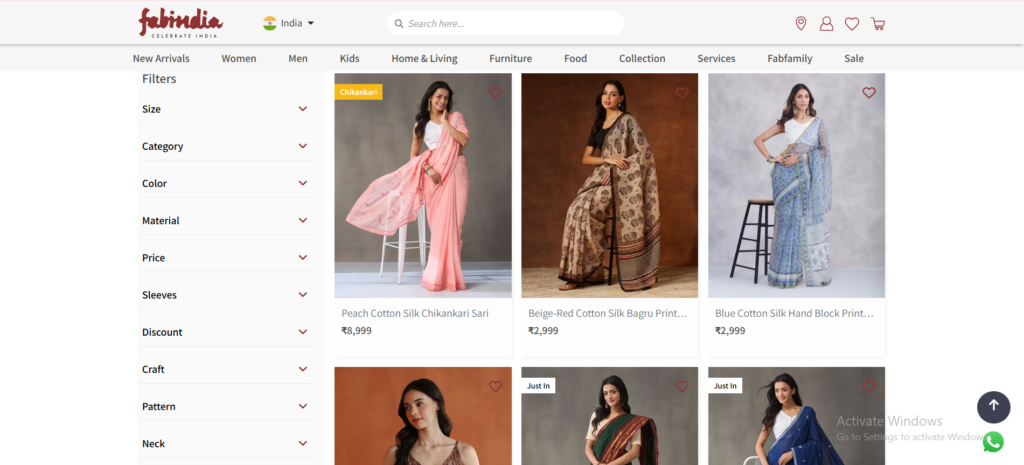
Image Courtesy:Fabindia(Official Website)
- Founded: 1960
- Owner: William Nanda Bissell (MD); John Bissell (co-founder)
- HQ: New Delhi
This leading ethnic clothing retailer was founded in 1960 by American John Bissell as a fabric exporting company and later transformed into a handloom saree retail chain offering to the masses.
Fabindia continues to operate under the leadership of William Nanda Bissell, the son of the company’s co-founder, and today, the label owns over 300 stores across the country. Its sarees are made from organic and naturally dyed Tussar silk, Chanderi, Kota, and cotton.
What It Does: Retailers handweave naturally dyed sarees and contribute to the livelihood of thousands of weavers.
Services: Handwoven Tussar, Chanderi, Kota, and cotton sarees; hand-blocked prints; ethnic wear; exports; and 300+ stores across India.
Taneira—Tata’s Handloom Initiative
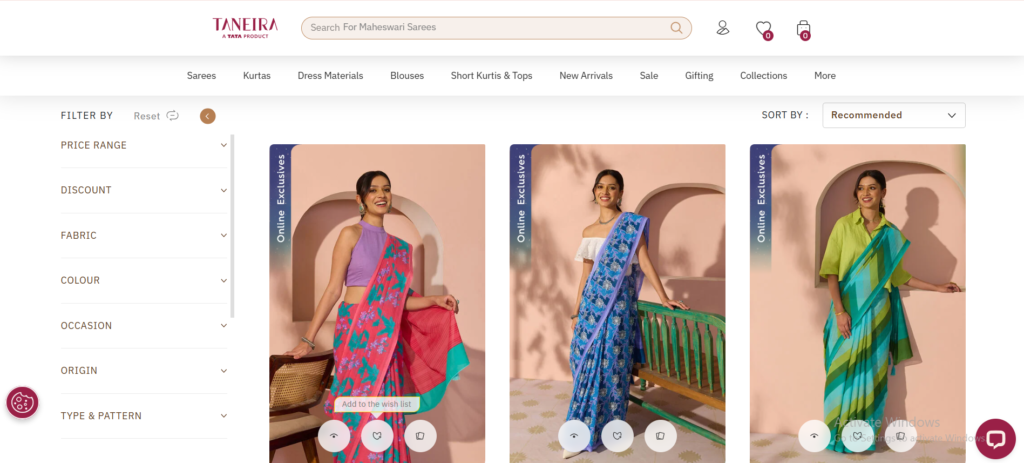
Image Courtesy:Taneira(Official Website)
- Founded: 2017
- Owner: Titan Company Limited (Tata Group)
- HQ: Bengaluru, Karnataka
Taneira is the brainchild of Tata Sons and was launched in 2017 to position India’s vast handloom weaving traditions at the forefront of the domestic and international luxury markets.
What differentiates Taneira from similar labels is that every saree sold under its label is GI-certified and can be traced back to the cluster it was woven in. Taneira operates in multiple iconic weaving centers across the country, including Banaras, Varanasi, Chanderi, Kalamkari, and others.
What It Does: Offers GI-certified sarees from India’s weaving clusters under the TATA umbrella.
Services: GI-certified sarees; bridal and festive collections; Weavershala artisan program; and e-commerce platform.
Meena Bazaar—North India’s Bridal Staple
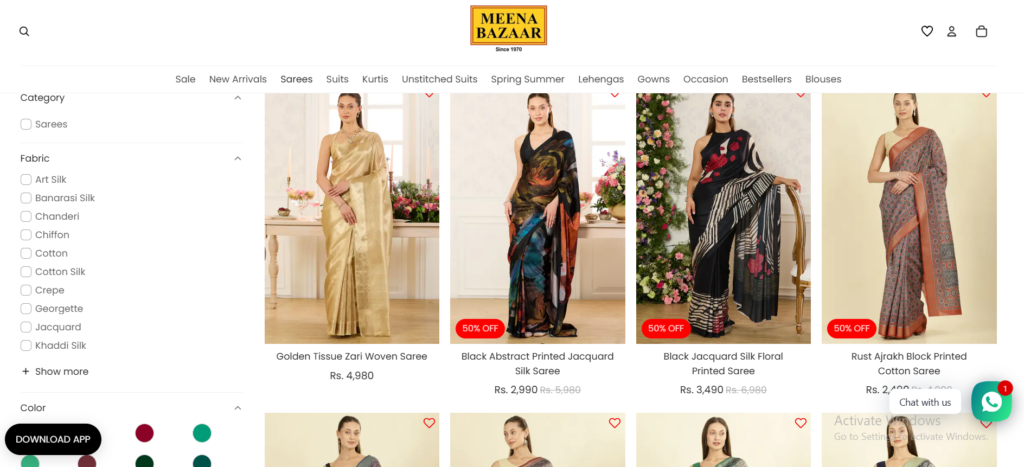
Image Courtesy:Meena Bazaar(Official Website)
- Founded: 1970
- Owner: Privately held
- HQ: Karol Bagh, New Delhi
This iconic bridal and wedding wear retailer was established in Delhi’s Karol Bazaar in 1970 and has since become a staple in North India’s wedding markets. Meena Bazaar offers a wide range of bridal and festive wear, including the heavily woven Banarasi silk sarees and lighter chiffon, georgette, and crepe sarees.
What It Does: Offers bridal and festive collections including silk, georgette, chiffon, crepe, and embroidered sarees.
Services: Banarasi silk, georgette, chiffon, crepe, embroidered sarees; designer bridal collections; e-commerce platform; and nationwide stores.
Ritu Kumar—The Pioneer of Indian Bridal Fashion
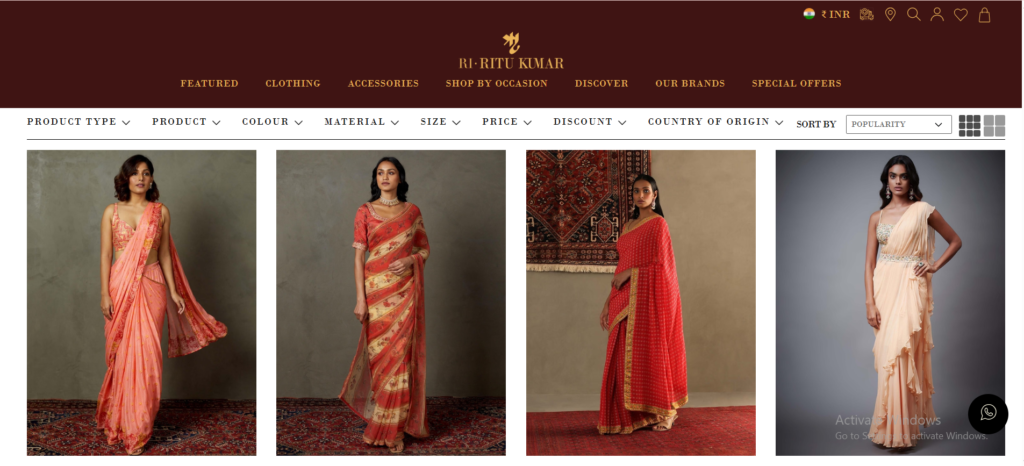
Image Courtesy:Ritu Kumar(Official Website)
- Founded: 1969
- Owner/Founder: Ritu Kumar (Padma Shri awardee)
- HQ: New Delhi
In 1969, Ritu Kumar set up her design studio in Kolkata with four hand-block printers and became the first-ever designer to popularize Indian bridal wear on a national level.
The designer holds the prestigious Padma Shri and FDCI Lifetime Achievement awards. Her silk organza, georgette, and chiffon sarees with hand-crafted embroidery are coveted heirlooms.
What It Does: Designs and retails designer bridal and ethnic wear with traditional block printing and zardozi embroidery.
Services: Designer bridal sarees; hand-blocked prints; zardozi embroidery; ready-to-wear ethnic wear; lehenga/choli collections; international boutiques; and e-commerce platform.
Suta—The Everyday Handloom Revolution
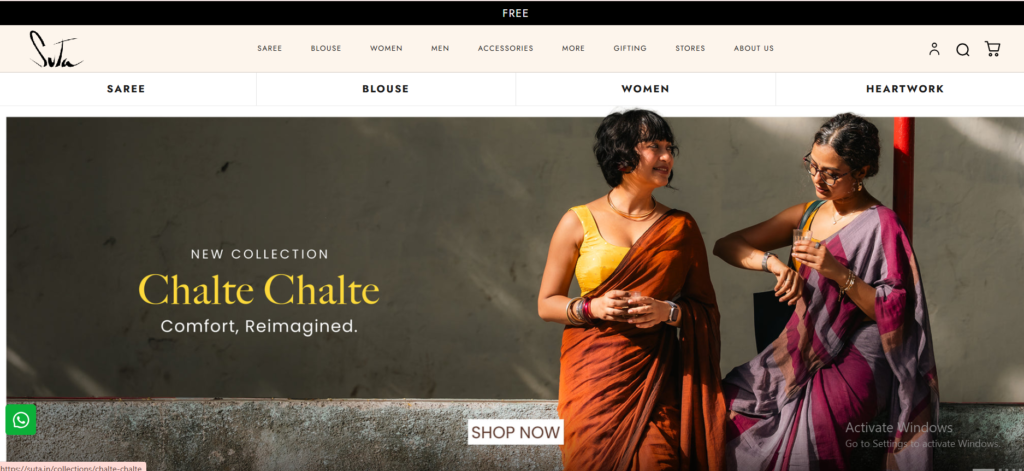
Image Courtesy:Suta(Official Website)
- Founded: 2016
- Founders: Sujata Biswas & Taniya Biswas (sisters)
- HQ: Mumbai, Maharashtra
Mumbai-based Suta was founded in 2016 by sisters Sutja and Taniya Biswas and has been redefining the handloom saree landscape since. The brand’s philosophy was to offer lightweight cotton and linen sarees as an easy alternative to the heavily woven Banarasi and Kanjivaram sarees.
Suta’s accessible price range (starting at ₹1,500) and ease of draping offered women sarees they could wear to the office or while traveling.
What It Does: Offers lightweight, hand-crafted everyday cotton sarees in innovative patterns.
Services: Handmade cotton, linen, and mulmul sarees; natural-dye sarees; online retail; ₹1,500–₹8,000 price range; gifting options; customization; and nationwide shipping.
Karagiri—The Digital Handloom Specialist
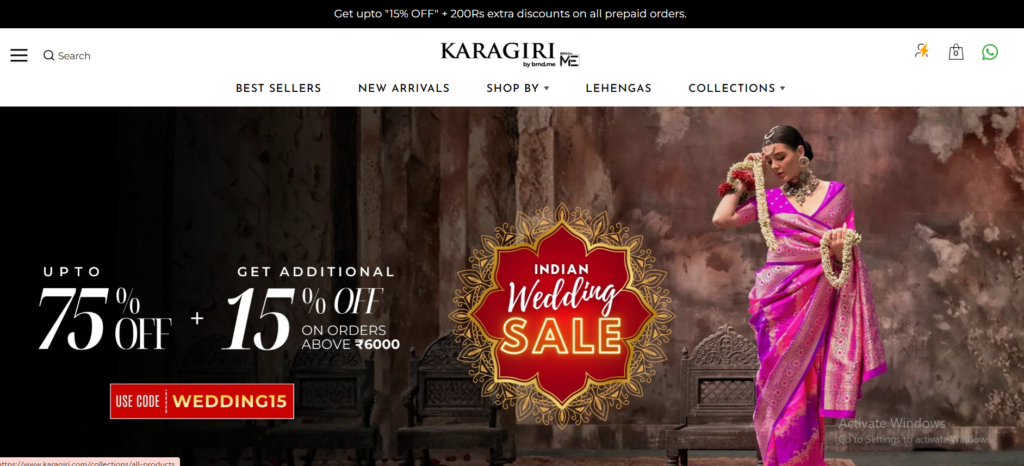
Image Courtesy:Karagiri(Official Website)
- Founded: 2015
- Founders: Startup founders (digital-first company)
- HQ: Bengaluru, Karnataka
This Karnataka-based digital handloom pioneer connects customers with traditional Banarasi, Paithani, Kanjivaram, and Chanderi weaves without the hefty price tags. With over 10,000 patterns on its portal, Myntra, and Amazon India, Karagiri has been shortlisted as one of the top handloom retailers on the planet.
What It Does: Offers digital-first, handcrafted sarees in traditional Banarasi, Paithani, Kanjivaram, and Chanderi weaves.
Services: Assorted Banarasi, Paithani, Kanjivaram, and Chanderi sarees; 10,000+ patterns; e-commerce platforms; bridal collection; easy returns; and nationwide shipping.
Kalanjali – South India’s Most Popular Saree Label
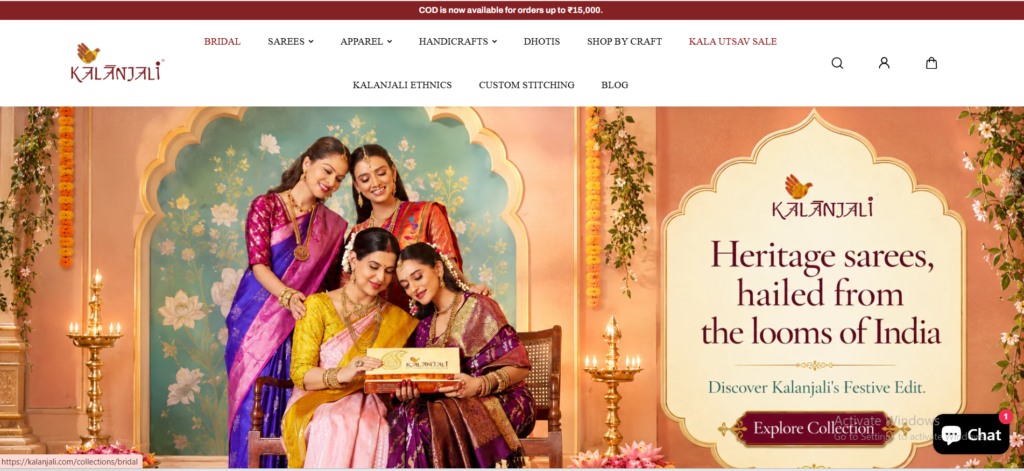
Image Courtesy:Kalanjali(Official Website)
- Founded: 1992
- Owner: Ramoji Group (founder: Ramoji Rao)
- HQ: Hyderabad, Telangana
This Hyderabad-based ethnic textiles company was founded in 1992 by media mogul Ramoji Rao under the Ramoji Group and has been offering South India’s traditional and unique handloom sarees since. Kalanjali became known for offering Banarasi, Kanjivaram, Gadwal, and Ikkat sarees at reasonable prices.
What It Does: Offers traditional sarees from South India as well as the rest of the country.
Services: Kanjivaram, Gadwal, Ikkat, Banarasi, and cotton sarees; handloom and bridal collection; and affordable pricing.
Kalamandir—Pan-India Wedding Destination
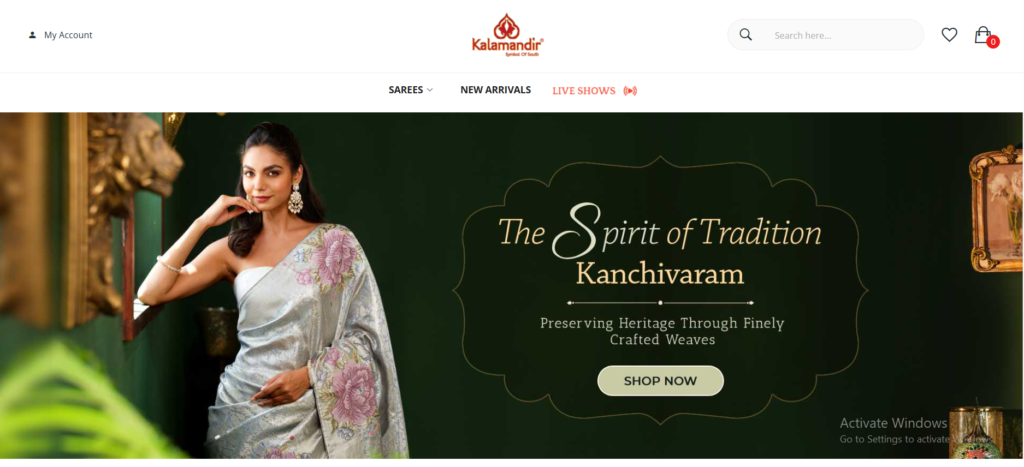
Image Courtesy:Kalamandir(Official Website)
- Founded: 2007
- Owner: Kalamandir Retail Pvt. Ltd. (founders: Srinivas Agarwal & family)
- HQ: Hyderabad, Telangana
This pan-India saree retailer has been offering a wide range of bridal, wedding, and festive wear from Banarasi to Kanjivaram since its inception in Hyderabad in 2007. From Kanjivaram and Banarasi silk to Paithani, georgette, and chiffon sarees, Kalamandir has something for every bride.
What It Does: Offers a one-stop wedding destination for ethnic wear, including Kanjivaram, Banarasi, Paithani, georgette, and chiffon sarees.
Services: Kanjivaram, Banarasi, Paithani, georgette, and chiffon sarees; bridal collection; ethnic wear; multiple city outlets; and e-commerce platform.
FAQs
Which is the best saree brand in India?
There is no definitive answer, but here is a breakdown based on your needs:
Designer sarees: Sabyasachi, Ritu Kumar, or Nalli Silks for their superior luxury bridal wear. For everyday wear: Suta has the most innovative, easy-to-drape, and affordable handloom or cotton sarees. For certified luxury, Taneira offers the most reliable GI-certified sarees from some of the country’s weaving clusters.
Which is India’s oldest saree brand?
Nalli Silks (est. in 1928) is the oldest saree brand in India, followed by Ritu Kumar (est. in 1969).
Which is the best brand for wedding sarees?
For luxury wedding sarees: Sabyasachi and Nalli Silks. For authentic GI-certified handloom wedding sarees: Taneira and Karagiri. For a wide range of wedding sarees at different price points: Meena Bazaar and Kalamandir.
How to identify a genuine silk saree?
Look out for the Silk Mark certification that authentic silk sarees possess. Reputable brands like Nalli Silks and Taneira will have the certification.
What is the best brand for everyday saree wear?
Suta offers innovative handloom or cotton sarees starting at ₹1,500. Fabindia’s organic and handwoven Tussar, Chanderi, Kota, or cotton sarees are the best value-for-money handloom sarees. For affordable everyday handloom sarees, Karagiri is a good pick.
Conclusion
India’s saree market is one of the few fashion spaces where tradition and innovation intersect. While Nalli has been weaving silk for nearly a century, Sabyasachi has taken the saree to the global fashion capital of New York, and Suta has made light cotton sarees cool for the modern urban woman.
This list of India’s top 10 saree brands represents the incredible diversity of textiles, weaving techniques, and price points that characterize the country’s love affair with the six-yard drape.
From the luxury bridal wear of Sabyasachi to the handcrafted everyday cotton sarees of Suta – these are the brands that have been able to resonate with consumers for decades and continue to thrive. Whether it is a daughter’s first saree or a granddaughter’s bridal collection, these brands have it all covered for the next hundred years.