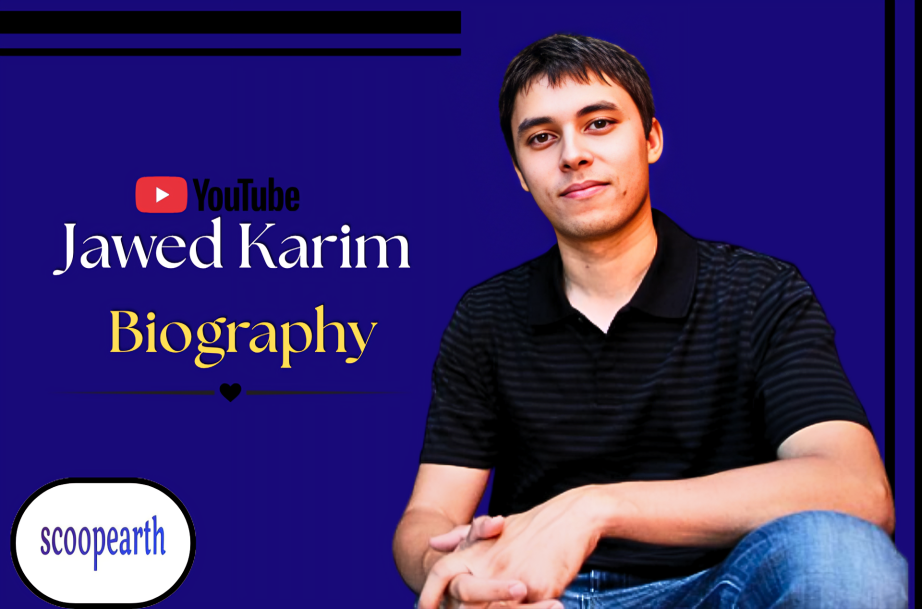
Jawed Karim Story, Biography, Success Story & Net Worth: Business Growth, Journey & Impact
Jawed Karim Story, Biography, Success Story & Net Worth: Business Growth, Journey & Impact
SUMMARY
By Navya Kumar
On April 23, 2005, a 25-year-old software engineer stood in front of the elephant enclosure at the San Diego Zoo and recorded a casual, grainy 19-second clip. Titled “Me at the zoo,” the clip featured him casually talking about elephants and their unusually long trunks. There were no edits, special effects, or production value. It was just an ordinary video uploaded to a new experimental website he had built with two friends.
That engineer was Jawed Karim, and the clip became the first video ever uploaded to YouTube.
While many people recognize Karim strictly as the answer to internet trivia, his contribution to technology goes much deeper. As one of YouTube’s co-founders, he helped develop the platform’s early architecture and played an important role in making online video sharing practical at scale. After stepping away from YouTube’s day-to-day operations, he shifted his focus to venture investing, becoming one of Airbnb’s earliest backers when it was still an unknown startup. Despite keeping a low public profile, Karim has had a lasting impact on both the technology and startup industries.
Who Is Jawed Karim?
| Attribute | Details |
| Full Name | Jawed Karim |
| Born | October 28, 1979 |
| Birthplace | Merseburg, East Germany |
| Nationality | American (German and Bangladeshi heritage) |
| Education | B.S. in Computer Science (UIUC); M.S. in Computer Science (Stanford University) |
| Occupation | Software Engineer, Internet Entrepreneur, Venture Capitalist |
| Known For | Co-founding YouTube, uploading the first YouTube video, early-stage technology investing |
| Company Roles | Co-Founder (YouTube), Co-Founder (Y Ventures) |
| Attribute | Details |
| Net Worth | Estimated between $300 million and $350 million |
The Reality Behind Jawed Karim’s Net Worth
Since Jawed Karim is a private investor, there is no official record of his exact wealth. However, based on publicly available information, his net worth is estimated to be between $300 million and $350 million.
A large portion of his wealth came from Google’s acquisition of YouTube in October 2006. Google purchased the company for $1.65 billion in an all-stock deal. Because Karim chose to step away from YouTube’s daily operations to complete his master’s degree at Stanford University, he owned a smaller stake in the company than fellow co-founders Chad Hurley and Steve Chen. Even so, he received 137,443 shares of Google stock, worth roughly $64 million at the time of the acquisition. As Google’s stock grew over the following years and underwent multiple stock splits, the value of Karim’s original shareholding increased significantly.
His wealth expanded further through venture capital investing. In 2009, Karim invested in Airbnb during its seed funding stage, long before it became one of the world’s largest hospitality platforms. The company’s growth and eventual public listing substantially increased the value of that early investment.
Since Karim continues to invest privately rather than lead a public company, the exact size and composition of his portfolio remain unknown. As a result, any estimate of his current net worth is based on available financial records and reported investments.
Estimated Net Worth Growth
| Milestone Era | Estimated Value |
| 2005 (Early YouTube) | Minimal / Sweat Equity |
| 2006 (Google Acquisition) | ~$64 million |
| 2009–2020 (Venture Investing) | ~$140 million to $200 million |
| Present | $300 million to $350 million |
Early Life & Education
| Key Driver |
| Building YouTube as one of its founding engineers |
| Received 137,443 Google shares through the acquisition |
| Early investments in Airbnb, Reddit, Eventbrite, and other startups |
| Long-term appreciation of Google stock and successful venture investments |
Jawed Karim was born on October 28, 1979, in Merseburg, East Germany, to an academically accomplished family. His father, Naimul Karim, was a Bangladeshi research chemist, while his mother, Christine Karim, was a German biochemist.
Growing up in East Germany during the early 1980s was challenging for multicultural families. Facing discrimination and xenophobia, the Karims moved to West Germany in 1982 and settled in Neuss. Although the move improved their circumstances, they continued to encounter anti-immigrant sentiment. Looking for better opportunities and a more welcoming environment, the family immigrated to the United States in 1992, eventually settling in Maplewood, Minnesota.
Karim attended Saint Paul Central High School, where he developed a strong interest in computers and technology. After graduating, he enrolled at the University of Illinois Urbana-Champaign (UIUC) to study computer science. UIUC had already established a reputation for producing some of the technology industry’s most influential innovators, including Marc Andreessen, the co-founder of Netscape. Studying at the same university gave Karim access to a strong engineering culture and helped lay the foundation for his future career.
Before completing his undergraduate degree, Karim accepted an opportunity to work at PayPal, one of the fastest-growing technology startups of the time. Although he left university to join the company, he never abandoned his education. After YouTube was founded, he returned to academics and earned a master’s degree in Computer Science from Stanford University, balancing his studies while remaining involved with the company as an adviser.
Career Journey & The Birth of YouTube
Before completing his undergraduate degree, Jawed Karim joined PayPal, which was rapidly emerging as one of Silicon Valley’s most promising fintech startups. As one of the company’s early software engineers, he worked on several technical projects, including PayPal’s real-time anti-fraud system, which helped improve the platform’s security and detect fraudulent transactions more effectively.
More importantly, PayPal introduced Karim to two colleagues who would later change internet history—Steve Chen and Chad Hurley. The three engineers shared an interest in building products that solved real-world problems, and their collaboration eventually led to the creation of YouTube. They also became part of the group later nicknamed the “PayPal Mafia,” whose former employees went on to establish or help build companies such as Tesla, LinkedIn, Palantir, and Yelp.
The idea for YouTube emerged in early 2005. Finding and sharing videos online was surprisingly difficult at the time. Karim has often been linked to the frustration of searching for footage of major events such as the 2004 Indian Ocean tsunami and Janet Jackson’s Super Bowl halftime performance, highlighting the lack of a simple platform where people could easily upload and watch videos.
To solve this problem, Karim, Hurley, and Chen built a browser-based video-sharing website that made uploading, viewing, and sharing videos much easier than existing alternatives. While Chad Hurley focused on the platform’s design and user experience and Steve Chen handled much of the technical infrastructure, Karim played a key role in developing the site’s early architecture and core functionality.
As YouTube quickly gained users, Karim made an unusual decision. Instead of joining the company as a full-time employee, he chose to remain an adviser so he could return to university and complete his master’s degree at Stanford. This decision meant he held a smaller ownership stake than his co founders, but he remained an important part of YouTube’s early development.
On April 23, 2005, Karim uploaded “Me at the zoo,” the first video ever posted on YouTube. The 19- second clip wasn’t meant to be historic—it simply demonstrated that the platform worked. Over time, however, it became one of the most significant moments in internet history, marking the beginning of a platform that transformed online video and created entirely new opportunities for creators, businesses, and audiences around the world.
Companies & Investments
After YouTube was acquired by Google in 2006, Jawed Karim shifted his focus from building products to investing in emerging technology companies. Rather than taking on another high-profile operating role, he chose to support startups by providing early-stage funding and mentoring founders.
YouTube
Karim is best known as one of YouTube’s three co-founders. Beyond helping launch the platform, he contributed to its early technical development and tested many of its core features before the site was made available to the public. His account, “jawed,” remains the oldest YouTube account and is home to the platform’s first-ever uploaded video, “Me at the zoo.”
Airbnb
One of Karim’s most successful investments came in 2009 when he backed Airbnb during its seed funding stage. At the time, the company was a small startup trying to introduce a new approach to short-term accommodation. As Airbnb grew into one of the world’s leading hospitality platforms, Karim’s early investment became one of the standout successes in his venture capital portfolio.
Y Ventures (Youniversity Ventures)
In 2008, Karim co-founded Y Ventures alongside investors Keith Rabois and Kevin Hartz. The firm’s investment strategy centered on supporting student entrepreneurs and first-time founders with strong technical ideas. Through Y Ventures, Karim helped fund several startups in their early stages, including Airbnb, Reddit, Eventbrite, and Postmates. Many of these companies went on to become well-known technology businesses, reinforcing Karim’s reputation as an investor with an eye for promising startups.
Legacy & Impact
Jawed Karim has never sought the spotlight. Unlike many technology entrepreneurs, he rarely gives interviews, maintains a low public profile, and has largely stayed away from the public speaking circuit. Even so, his influence on the digital world is difficult to overstate.
In 2019, Karim, along with fellow YouTube co-founders Chad Hurley and Steve Chen, received an Emmy Award for Lifetime Achievement in recognition of YouTube’s lasting impact on media and entertainment.
While Karim is often remembered for uploading the first video to YouTube, his most significant contribution was helping create the platform itself. YouTube changed how people share information, learn new skills, build communities, and create businesses online. It also opened the door for millions of content creators to reach audiences without relying on traditional media.
His first upload, “Me at the zoo,” was simple by design. There was no professional editing, expensive equipment, or carefully planned production. That simplicity reflected what YouTube would eventually become—a platform where anyone with a camera and an internet connection could share their ideas with the world.
Today, video content plays a central role in education, entertainment, marketing, and communication. From independent creators and educators to global brands and media companies, countless people have benefited from the platform Karim helped build.
Although he rarely appears in public and prefers working behind the scenes, Jawed Karim’s contributions continue to shape how billions of people create, consume, and share video online. His career is a reminder that lasting impact isn’t always measured by public recognition—it is often defined by the technologies that quietly become part of everyday life.
Interesting Facts
• The Oldest YouTube Account: Jawed Karim’s personal YouTube channel, “jawed,” is the oldest account on the platform. More than two decades later, it still features only one video—”Me at the zoo.”
• A Private Personality: Unlike many technology entrepreneurs, Karim rarely appears in the media, avoids public social media platforms, and seldom gives interviews. He has chosen to keep his personal life out of the spotlight throughout his career.
• Speaking Through Video Descriptions: Although he rarely makes public statements, Karim has occasionally updated the description of “Me at the zoo” to express his views on YouTube’s policy changes. In 2013, he criticized Google’s decision to integrate Google+ comments into YouTube. In 2021, he also spoke out against the removal of public dislike counts.
• Education Remained a Priority: Even as YouTube was rapidly growing, Karim chose to complete his master’s degree in Computer Science at Stanford University instead of taking on a full-time executive role at the company.
Frequently Asked Questions
What was the first video ever uploaded to YouTube?
The first video uploaded to YouTube was “Me at the zoo,” a 19-second clip posted by Jawed Karim on April 23, 2005.
Did Jawed Karim create YouTube by himself?
No. YouTube was co-founded by Jawed Karim, Steve Chen, and Chad Hurley, who had previously worked together at PayPal.
Why did Jawed Karim receive a smaller payout from Google’s acquisition of YouTube?
Karim chose not to work as a full-time employee at YouTube so he could complete his master’s degree at Stanford University. As a result, he owned a smaller equity stake than his co-founders when Google acquired the company.
What is Jawed Karim’s estimated net worth?
His net worth is estimated to be between $300 million and $350 million, primarily from Google’s acquisition of YouTube and his early investments in successful technology startups.
Was Jawed Karim an early investor in Airbnb?
Yes. Karim invested in Airbnb during its early funding stage through Y Ventures, making it one of the most successful investments in his portfolio.
Does Jawed Karim still own or run YouTube?
No. Google acquired YouTube in October 2006, and the platform is now owned and operated by Alphabet Inc.
Is Jawed Karim still active on YouTube?
Karim has not uploaded any videos since “Me at the zoo.” However, he has occasionally updated the video’s description to comment on major changes made to the platform.
Conclusion
Jawed Karim’s first YouTube upload lasted just 19 seconds, but it permanently altered the path of global internet culture. As a co-founder of YouTube, he helped build a platform that transformed how people create, share, and consume video content online.
Beyond YouTube, Karim established himself as a successful early-stage investor by backing companies such as Airbnb and supporting promising entrepreneurs through Y Ventures. While he has chosen to remain largely out of the public eye, his work continues to influence the technology industry in meaningful ways.
His journey shows that innovation isn’t always driven by those seeking attention. Sometimes, the people who have the greatest impact are the ones working quietly behind the scenes, building ideas that change how the world connects and communicates.



Note: We at scoopearth take our ethics very seriously. More information about it can be found here.