The Indian flag airline Air India is reported to be demanding a substantial capital infusion of at least $1.1 billion by its existing shareholders, Tata Sons and Singapore Airlines (SIA), as it struggles to sail itself through a rough phase of unprofitable business and severe operational calamities. This important call to seek a lifeline is at a time when the airline strives hard to free itself of various internal and external challenges with the aim of sustaining its presence within the ever-competitive world of aviation.
Significant financial support and ownership structure
The significant financial incentives requested by its key shareholders are not only directed towards meeting short-run operational shortfalls. The request is explicitly outlined to capture the expenditures required for the overhaul of systems and services at Air India. This is a systemic renewal, a long-term health and stability requirement of the carrier.
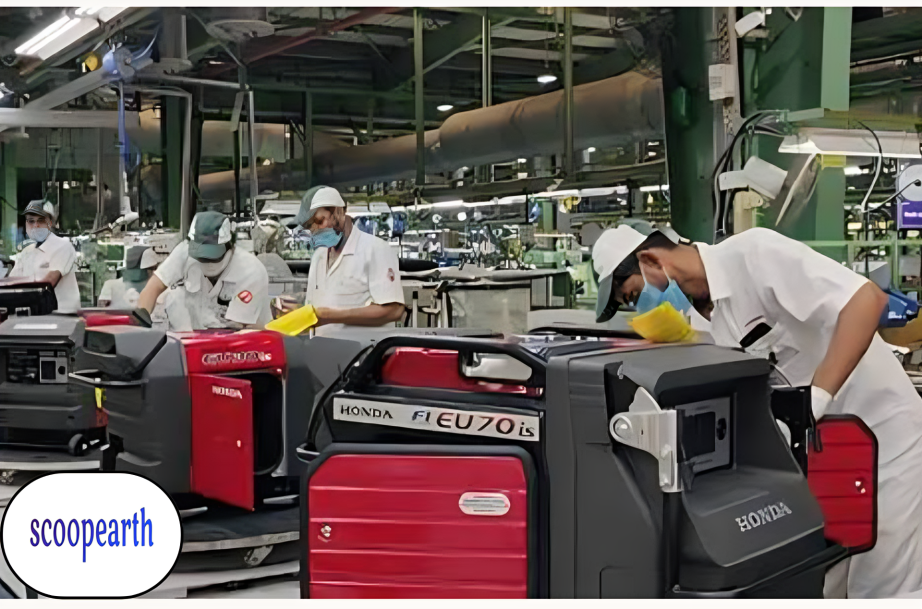
An important part of the funding application is allocated towards building the in-house capacities of the airline. The funds are supposed to assist in laying down and building up the Air India engineering and maintenance departments. It is a direct result of the wider recovery strategy since the support aims to assist the airline in recovering its losses and to deal with the gaps in operational resilience that have just been revealed.
The financial cost, once accepted, would be divided between two primary stakeholders in the airline, Tata Sons and Singapore Airlines. This financial support is determined by the ownership structure of Air India. The Tata group is the majority holding shareholder in the airline and owns 74.9%. Singapore Airlines owns the other 25.1%.
The report indicates that any financial assistance that would be finally given would be given out in a proportional way, depending on the shares owned by each entity. The ultimate disposition this funding will assume is something that the owners have yet to decide. They will have to determine whether the capital infusion of $1.1 billion will be in the form of an interest-free loan to the carrier or whether the capital infusion will be done via an equity injection.
Involvement of SIA and manufacturing capacity
The focus on profitability and stability at Air India has lately come under ruthless fire due to a mix of geopolitical challenges and a catastrophic safety accident. The security issues after this event required swift intervention. The aviation regulator in India introduced a system-wide audit on the operations of the airline. As a result of this, Air India had to cut its international flights covering widebody jets by 15% between the months of June to August, a move which was necessary but bound to affect its anticipated revenue.
On top of the internal issues, the geopolitical forces had a devastating impact on the profitability of the routes by airline. The quest to achieve good financial standing was bitter due to long routes to flight caused by airspace limitations. These limitations were implemented based on an armed border conflict with Pakistan in May.
The strategy of creating in-house engineering and maintenance capability is a crucial turning point for Air India. The carrier is currently contracting out maintenance work to AI Engineering Services Ltd, which is an Indian government-owned enterprise and a former subsidiary of Air India.
The financial assistance as requested is significant to the airline in its bid to transition into its own engineering and maintenance facilities. This will be achieved, as per the report, by concentrating on the construction of hangars in strategic airports in the country.
Singapore Airlines has played a major role in the operational recovery. Since the Ahmedabad crash, SIA has been reported to have a close involvement in major functions within the airline, particularly in the engineering, operations, and airport services functions. This increased participation serves as an indication of the urgency to enhance the core operational capabilities of Air India.
Conclusion
Air India had a reported interest of a minimum of $1.1 billion financial lifeline by its owners, who are Tata Sons and Singapore Airlines underscores the magnitude of the problems that Air India suffers. This funding is necessary due to the systemic modernization, in-house maintenance development, and the need to recover after the combination of a major safety incident and geopolitical route restrictions. The final decision of the owners to deliver the fund in the form of an interest-free loan or as equity, depending on their shares, will play a significant role in determining the path of Air India, as it tries to overcome the financial losses and become a more operationally stable and competitive company of the future.