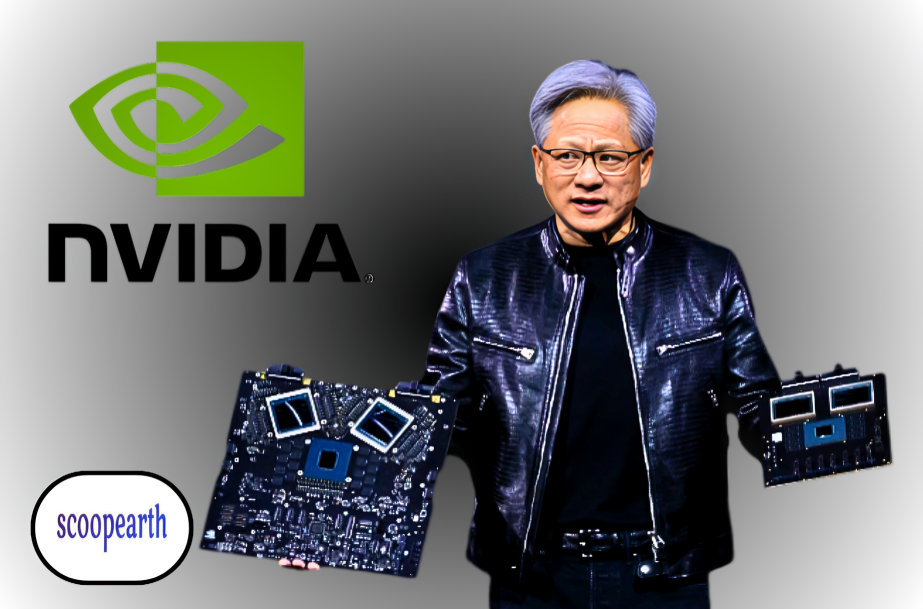
Nvidia Unveils Next-Generation AI Chip at CES
At the Consumer Electronics Show (CES) in Las Vegas, Nvidia‘s CEO Jensen Huang shared exciting new developments aimed at bolstering the company’s leadership in artificial intelligence. He announced the introduction of a groundbreaking AI processor that promises enhanced performance while consuming less power.
Huang revealed that Nvidia plans to start shipping its latest AI chip, named Vera Rubin, later this year. After nearly three years of development, this processor is engineered to handle AI workloads more swiftly and efficiently than its predecessors.
Lower Costs and Energy-Efficient Data Centres
Nvidia claims that the Rubin chip will enable businesses to train AI models using just a quarter of the chips previously needed. Additionally, operating AI applications like chatbots and virtual assistants will be significantly cheaper, costing nearly one-tenth of what older chips required.
The company has also revamped its supercomputing systems to simplify cabling and installation, allowing for faster deployment in large data centres. If the chip meets expectations, it could help companies manage the rising electricity costs associated with AI infrastructure.
“This is how we advance AI to the next level while ensuring that data centres remain energy-efficient and cost-effective,” Huang stated.
Shipments to Begin in Second Half of the Year
The Rubin chips are already in production and are set to be shipped to major clients,
including Microsoft and Amazon, in the latter half of the year. This aligns with a promise Huang made during Nvidia’s annual developer conference last year.
Named after the renowned astronomer Vera Rubin, this chip is anticipated to be pivotal in sustaining Nvidia’s stronghold in the AI hardware sector. Currently, Nvidia commands over 90% of the AI accelerator market, with each chip priced around $30,000.
Rising Competition in the AI Chip Market
Despite its dominant position, Nvidia is encountering increasing competition. Companies like AMD and Google are developing alternative AI chips and have secured partnerships with significant AI users, such as OpenAI.
To enhance its capabilities, Nvidia has recently entered into a licensing agreement with AI chip startup Groq, focusing on improving inference performance, which is becoming increasingly critical as AI adoption grows across various industries.
Geopolitical Challenges and Policy Uncertainty
Nvidia’s expansion has also been influenced by global geopolitical factors. Huang dedicated a significant portion of last year to discussions with policymakers regarding export restrictions on advanced AI chips.
While the US government has permitted Nvidia to sell its second-most-powerful chip to China, clarity on regulations from Beijing is still pending, creating uncertainty for future sales in that region.
Financial Growth Driven by the AI Boom
The rising demand for AI hardware has greatly enhanced Nvidia’s financial standing. In November, the company reported quarterly profits of $31.9 billion, a remarkable increase compared to previous years.
Nvidia now anticipates total sales nearing $500 billion by the end of this year, highlighting the magnitude of the ongoing AI boom.
Nvidia Expands Focus on Autonomous Vehicles
In addition to AI chips, Nvidia is also diving deeper into robotics and self-driving technology. The company has created a new AI software platform called Alpamayo, which will be shared with partners like Uber and Lucid to facilitate the development of autonomous vehicles.
Nvidia has been collaborating with Mercedes-Benz since 2020, and vehicles featuring their jointly developed self-driving technology are expected to start shipping later this year in both Europe and the US.