Some men make money. Some make legacy. Ratan Naval Tata (28 December 1937 – 9 October 2024) was undoubtedly the latter.
His death led to an outpouring of grief, unprecedented in Indian business circles. Although he did not figure on the Forbes billionaire list, the Tata empire controlled a vast wealth that was largely funneled into charitable trusts.
The key to understanding Ratan Tata is to study the man who wielded control over the Rs 33.7 lakh crore business empire and took home just Rs 2.5 crore as his annual salary. This is an extraordinary insight into the mind of an exceptional individual.
Who was Ratan Tata?
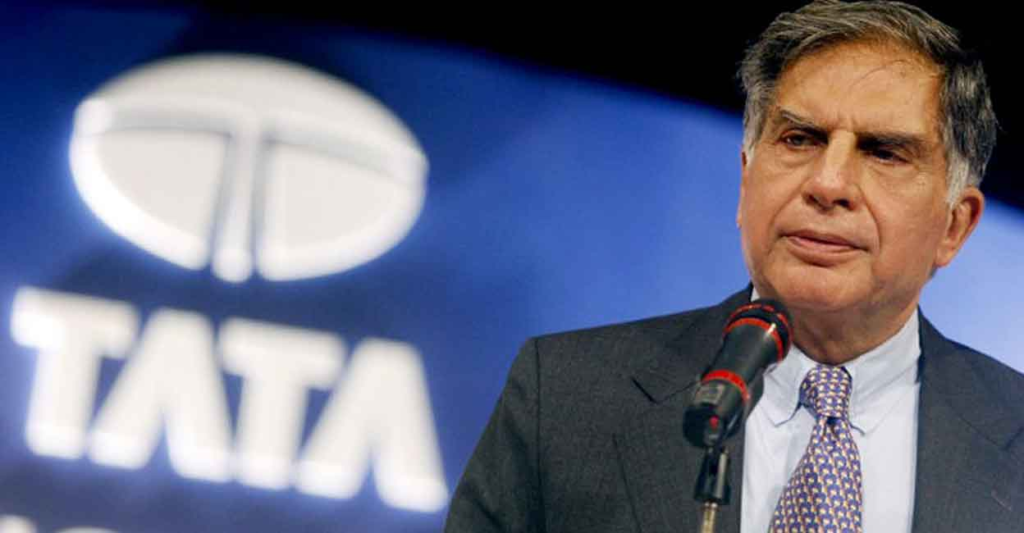
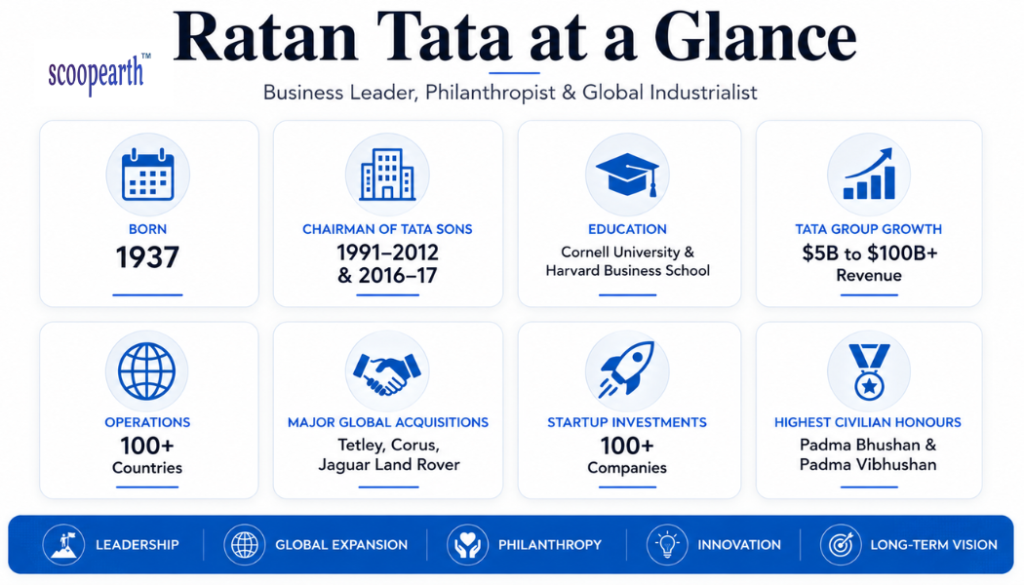
Ratan Naval Tata was an Indian business magnate and philanthropist who served as the Chairman of Tata Sons, the holding company of the Tata Group, from 1991 to 2012, and again for a brief period from October 2016 until February 2017.
During his tenure, Tata Sons transformed from a mid-sized conglomerate into a global giant with operations in over 100 countries, with revenues rising from approximately $5 billion to over $100 billion.
Tata also oversaw the substantial charitable activities of the Tatas, which saw the trusts to which 66% of Tata Sons was owned, directed towards philanthropy. Thus, he was one of the most prolific philanthropists globally, known to have balanced his business acumen with an extraordinary sense of social responsibility.
Quick Profile
| Attribute | Details |
| Full Name | Ratan Naval Tata |
| Born | December 28, 1937, Mumbai (Bombay), India |
| Passed Away | October 9, 2024, Mumbai, India (Age 86) |
| Father | Naval Tata (adopted son of Ratanji Tata) |
| Mother | Soonoo Commisariat (parents separated; raised by grandmother Navajbai) |
| Education | Cathedral and John Connon School, Mumbai; Cornell University (B.Arch., 1962); Harvard Business School (AMP, 1975) |
| Joined Tata Group | 1962 (Tata Steel shop floor, Jamshedpur) |
| Chairman, Tata Sons | Tata Sons: 1991–2012; 2016–2017 interim |
| Awards | Padma Bhushan (2000), Padma Vibhushan (2008), Honorary KBE (UK, 2009), Légion d’honneur (France) |
| Net Worth at death | ~$500 million (Celebrity Net Worth); ₹7,900 crore (Planify) |
| Tata Group market value | $300–400B+ (across listed entities) |
Ratan Tata Net Worth: The Honest Summary
Ratan Tata’s net worth is one of India’s most paradoxical issues. The closest estimates of Ratan Tata’s net worth at the time of his death in October 2024 are as follows:
Celebrity Net Worth: $500M (~₹4,200C)
Planify (India): ₹7,900C
Yahoo Finance: $456M (~₹3,800C)
So why is there such a discrepancy in the estimates of Ratan Tata’s net worth? Because, as mentioned earlier, about 66% of Tata Sons belonged to charitable trusts, the wealth created by the business empire did not go to him personally.
The other reason is that his modest salary as the Chairman of Tata Sons amounted to only about ₹2.5C.
Net Worth Breakdown
| Asset Category | Estimated Value |
| Personal stake in Tata Sons | Major constituent of the ₹7,900C net worth |
| Startup investments | Ola Electric, Paytm, Lenskart, Swiggy, FirstCry, Urban Company, etc. |
| Real estate | Sea-facing mansion in Colaba, Mumbai |
| Salary (as Chairman) | ~ ₹2.5C per annum |
| Tata Trusts (philanthropic, not personal) | ~ 2/3rd of Tata Sons, worth over ₹10 lakh C, |
Ratan Tata’s personal life and business decisions were deeply intertwined. Tata always prioritized his business, family, and philanthropy in that order. He took special care to provide for the people and pets (yes, pets!) that mattered to him.
For instance, his will reportedly allocated a substantial amount of money to his domestic workers – ₹3.5C to his household staff and ₹12L to his dog Tito. Such decisions reflect the values instilled in him by his grandmother, who brought him up, and his belief in being generous – to people and animals – to those who deserve it.
The Early Years
Ratan Tata was born in Bombay on 28 December 1937. His parents decided to live separately when he was seven years old, and he spent his formative years with his grandmother, Navajbai. This significantly influenced him, and he later attributed his grounded nature to her.
Tata stated that she taught him to “keep his feet on the ground,” which made him a responsible adult. Tata’s grandmother played a special role in his life, as he always regarded her as his guide and confidante.
He studied at Cathedral and John Connon School in Bombay before moving to the United States for higher education. In 1962, he graduated from Cornell University with a degree in Architecture. In 1975, he received an MBA from Harvard Business School, where he completed the Advanced Management Program.
After completing his studies, Ratan Tata returned to India to work. He joined Tata Steel in Jamshedpur in 1962 and spent the next 29 years there. Starting his career on the shop floor was a hands-on experience that taught Ratan Tata to empathize with his workers.
He often recounted how working alongside his laborer colleagues, throwing limestone, helped him become a better manager in the long run.
Career Path
Building the Business Empire (1962–1991)
Tata built a strong foundation for his future business career, gaining extensive experience while simultaneously holding various managerial positions.
For instance, he worked at Empress Mills, a textile manufacturing company, and later took charge of the ailing NELCO.
He managed to turn several businesses around, including Tata’s power plants and hotels. Nevertheless, Ratan Tata was rather indifferent to setbacks and failures; he later claimed that they had a more significant impact on his business acumen than successes. In 1981, Tata became the chairman of Tata Industries.
Coming into Power (1991)
When Ratan Tata’s mentor, J.R.D. Tata stepped down from his position as the chairman of Tata Sons, he nominated Ratan as his successor.
However, this was not without controversy. It is hard to deny that JRD Tata’s tenure was momentous, considering that he led the conglomerate for 54 years. As expected, his exit from the business world was a turning point in the history of Tata Sons.
Yet, what happened next can only be described as remarkable, as Ratan Tata managed to pull off one of the greatest comebacks in Indian business history. Under his watch, in 1991:
- A new compulsory retirement age of 75 was introduced, dismantling the fiefdoms system of the Tata group
- The group turned from a loose confederation into a focused corporate empire.
- The turnover surged from $5 billion to $100 billion by 2012.
Major Acquisitions: Going Global
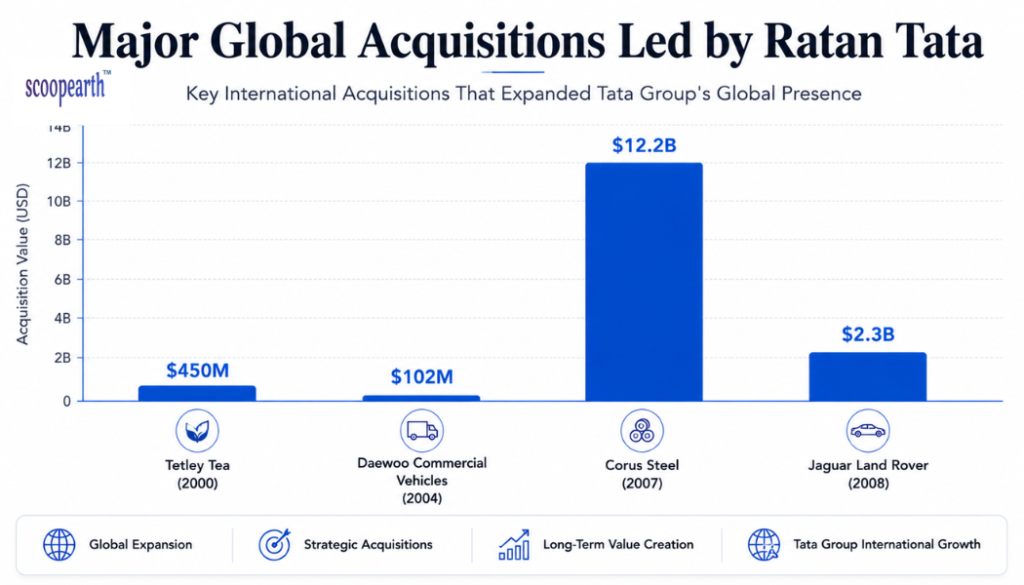
During his tenure as the chairman of Tata Sons, Ratan Tata executed several high-profile global acquisitions, including the purchase of British Tetley Tea Company for $450M in 2000 and Daewoo Commercial Vehicles from South Korea in 2004 for $102M.
In addition, Tata acquired Corus Steel from the UK in 2007 for $12.2B and Jaguar and Land Rover from the US for $2.3B in 2008. The most astonishing acquisition, however, was Tata’s 2006 purchase of the UK’s luxury hotel group, Taj, for $ 170 M.
It is particularly noteworthy that the acquisition of Jaguar and Land Rover was the single largest investment made by any Indian company up to that point. The Ford Motor Company sold the brands for $2.3B in 2008, having bought them for $2.5B in 1989.
In fact, Ford sold off the brands to Tata under duress, and Ratan Tata personally met with the Ford family to discuss the potential deal. Currently, Jaguar Land Rover (JLR) generates revenues worth over £25 billion annually.
Tata Nano: The Cheapest Car in the World
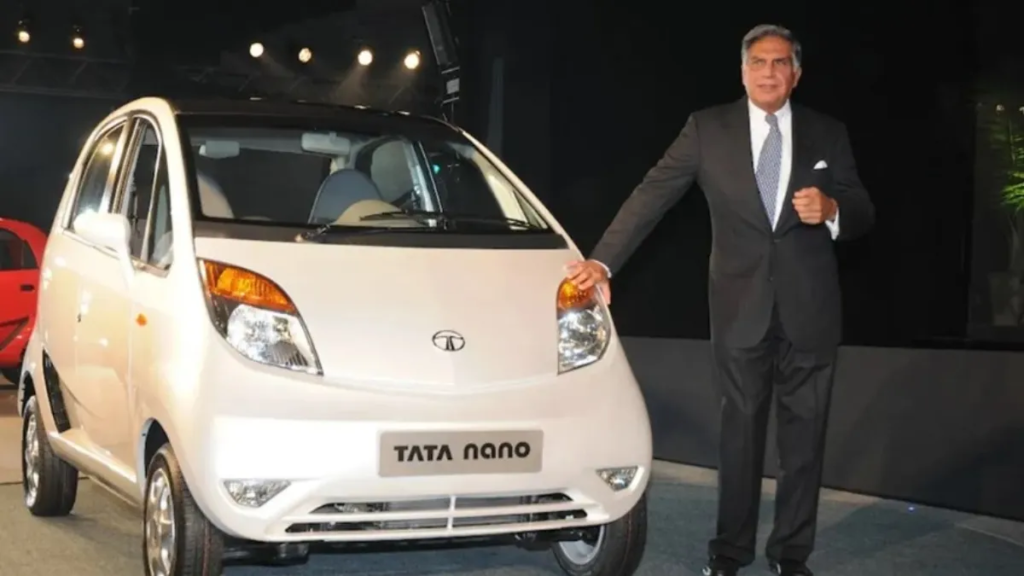
The Tata Nano, which was launched in 2009, was a revolutionary concept, as it aimed to provide an affordable car for everyone. Priced at only ₹ 1 lakh, or $2000, the Tata Nano was the cheapest car in the world at the time of its launch.
Nonetheless, it was later taken off the market in 2018. There are multiple reasons for the failure of the Tata Nano, the most significant of which was its label as the world’s cheapest car, which failed to appeal to the target audience.
In other words, consumers were not interested in purchasing the world’s cheapest car, as they would have rather bought a motorcycle and upgraded to a car later in their lives. In addition, it is hard to deny that Ratan Tata was rather honest about his company’s failure, as he did not try to defend the Nano and blamed his own misjudgment for the product launch.
Angel Investing: Backing Indian Startups
Ratan Tata is one of the most sought-after angel investors in India. He continues to support and fund numerous startups even after his retirement. Ratan Tata is known to have funded over 100 companies, including Paytm, Ola, Swiggy, and many others.
The business magnate has an unusual perspective on angel investing, as he prefers to back promising startups simply because he is genuinely interested in what they do. The startups that approach him always say that Ratan Tata is easygoing and willing to listen to their suggestions.
Philanthropy: The Heart and Soul of Tata Trusts
The Tata Trusts, which is an umbrella organization for a group of charitable societies, has a long history of engaging in philanthropy. Established more than a century ago, the trust has been at the forefront of numerous social welfare programs in India.
It has been instrumental in building prestigious institutions such as the Indian Institute of Science in Bengaluru, Tata Memorial Hospital, and Tata Institute of Social Sciences. Moreover, the trust has been involved in various grassroots welfare activities, such as providing clean drinking water and promoting women’s education.
When the COVID-19 pandemic broke out, Ratan Tata once again demonstrated his commitment to philanthropy by donating an unprecedented sum of ₹ 950 crore to aid the millions of Indians affected by the pandemic. In addition, he donated ₹500C to help the victims of the 26/11 terror attack and ensure that the employees of the Taj Hotel continue to receive their salaries.
Awards and Recognition
| Award / Honour | Year |
| Padma Bhushan | 2000 |
| Padma Vibhushan | 2008 |
| Honorary Knight Commander of the Order of the British Empire, or KBE for short. | 2009 |
| Légion d’honneur (France) | 2016 |
| Honorary Degrees | Carnegie Mellon, Warwick, IISc, Indian School of Business |
| Singapore Honorary Citizenship | — |
| Pritzker Architecture Prize Jury Member | — |
FAQs
1. What was Ratan Tata’s net worth at the time of his death?
Celebrity Net Worth estimates his net worth at $500 million (~₹4,200 crore) at the time of his passing in October 2024. Planify (India) estimates ₹7,900 crore. The variance exists because most of the Tata empire’s value flows through charitable trusts, not personal holdings.
2. Why was Ratan Tata’s personal net worth relatively low despite running a ₹33 lakh crore empire?
Because 66% of Tata Sons — the holding company of the Tata Group — is owned by Tata Trusts, not by Ratan Tata personally. Dividends from TCS, Tata Motors, and other giants went to charity, not his bank account. His personal salary was approximately ₹2.5 crore per year.
3. When did Ratan Tata become Chairman of Tata Sons?
He became Chairman of Tata Sons in 1991, succeeding J.R.D. Tata. He served until his retirement in 2012 and briefly returned as interim chairman from October 2016 to February 2017.
4. What are the biggest acquisitions Ratan Tata made?
The landmark acquisitions include Tetley Tea ($450 million, 2000), Corus Steel ($12.2 billion, 2007), and Jaguar Land Rover ($2.3 billion, 2008) — the last of which is now the most profitable part of Tata Motors, generating £25+ billion in annual revenue.
5. Which startups did Ratan Tata personally invest in?
His personal angel investment portfolio includes Paytm, Ola, Ola Electric, Lenskart, Swiggy, FirstCry, Urban Company, Snapdeal, Cure.fit, CarDekho, Goodfellows, and over 100 other companies across fintech, health, e-commerce, and consumer sectors.
6. What was the Tata Nano and why did it fail?
The Tata Nano was launched in 2009 as the world’s cheapest production car at ₹1 lakh. Despite its engineering achievement, it failed commercially because the “cheapest car” label carried a social stigma. Buyers wanted an upgrade from motorcycles, not the world’s most affordable label. Production ended in 2018.
7. What awards did Ratan Tata receive?
He received the Padma Bhushan (2000) and Padma Vibhushan (2008) from the Government of India, an Honorary Knighthood (KBE) from the UK in 2009, the Légion d’honneur from France in 2016, and honorary doctorates from Carnegie Mellon, the University of Warwick, and IISc Bengaluru, among others.
8. How much did Tata Group grow under Ratan Tata?
Under his leadership from 1991 to 2012, Tata Group’s revenues grew from $5 billion to over $100 billion — a 20-fold increase. The number of countries it operated in expanded from 50 to 80+, and the group’s workforce grew from 250,000 to 450,000.
9. Was Ratan Tata married?
No. Ratan Tata never married. He came close on four occasions, he has said in interviews, but the relationships never led to marriage. He famously loved dogs and was known to go to great lengths for animal welfare — including personally appealing on Instagram in June 2024 for blood donors to save a stray dog.
10. What is the total value of Tata Trusts’ holdings?
Since the Trusts hold 66% of Tata Sons, and the Tata Group’s combined market cap has crossed $300–400 billion at various points, the Trusts’ holdings are valued at over ₹10 lakh crore — making them among the most valuable philanthropic entities in the world. This is institutional value, not personal wealth.
Conclusion
Ratan Tata’s legacy rests on a deliberate inversion: he built something enormous and gave almost all of it away. The ₹7,900 crore personal net worth sits in deliberate contrast to the ₹33 lakh crore empire he shaped — and that gap was entirely his choice.
He chose Tata Trusts over personal accumulation, ₹2.5 crore salary over executive bonuses, and quiet accountability over boardroom glory.
What he left behind — JLR’s engineering, TCS’s global standing, the Tata Memorial Hospital, and a thousand startup founders who found a legendary industrialist who made them feel heard — cannot be expressed in rupees. Some legacies are simply too large for any net worth figure to contain.