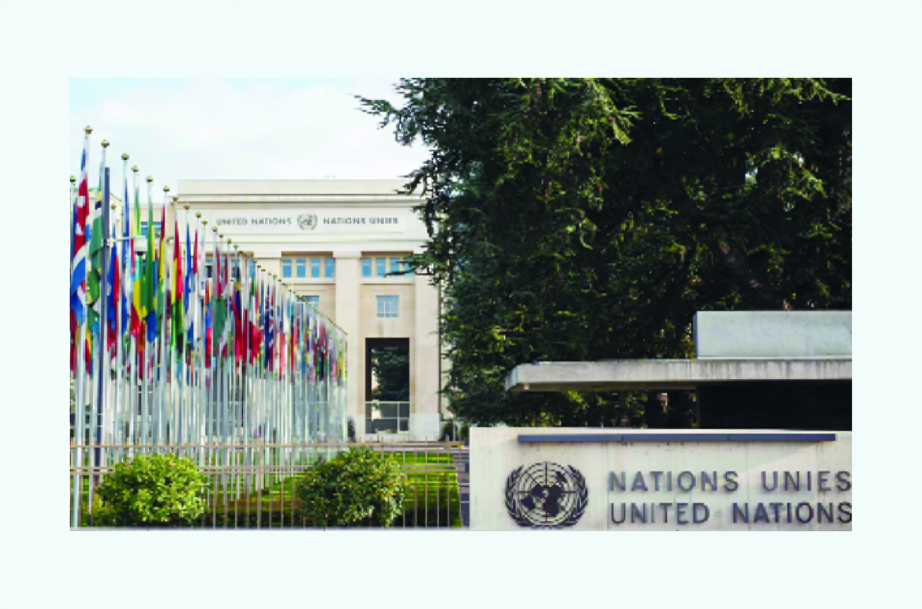
India has announced at the United Nations to fund the operationalisation of a dedicated webpage, under the UN banner, for Information and Communications Technology (ICT) security products globally. Ambassador Parvathaneni Harish, the Permanent Representative of India to the United Nations, stated that this portal will be used to mitigate the persistent capacity deficit between developed and developing countries.
The announcement follows member states’ first substantive plenary meeting of the permanent cyber mechanism, which was held July 20-24 and during which detailed discussions took place on funding, implementation and specialised fellowships for women.
Initiative and technical development
In 2022, India conceived the idea and proposed the concept of the Global ICT Security Cooperation and Capacity-Building Portal. The country has financed the entire process of making the portal an actual working platform, after ensuring that the initiative is carefully debated multilaterally until it gets international approval.
India has pointed out the revolutionary importance of digital technologies to the Global South in terms of economic growth and achieving the SDGs. India stressed that all these benefits will only be possible when digital technology is made with strong security mechanisms to counter the constantly evolving threats from the global community.
The U.N. portal, as proposed, intends to be a one-stop solution to help improve the cyber-resilience of the member governments. Its core elements include a central resource bank, a worldwide calendar of events and activities aimed at strengthening capacity, a ranking list of training and educational needs and resources, and an online forum for sharing information and experiences between countries.
CERT-In, the national organisation working on computer security incidents, will assume the technical consultancy activities needed for project implementation in India. CERT-In will supervise the testing of procedures and infrastructure that will make this portal, from the design stage, a reality. This direct participation highlights India’s national experience in maintaining digital public infrastructure, which is open and inclusive, and emphasizes security and technical robustness to face digital threats.
Capacity building principles and opportunities
India’s delegate has clearly articulated an ambitious program for building international collaboration in cyberspace, stressing the significance of capacity building not as an afterthought, but as the main objective. India feels that capacity building should be targeted, local, demand driven, devoid of any political and religious connotations, and completely transparent. The Indian perspective is rooted in the direct experience of designing digital public infrastructure, wherein the development of technology had to go along with the development of security measures.
The Ambassador highlighted the Indian Technical and Economic Cooperation (ITEC) Programme as an example of successful capacity-building in practice and in the context of demands and needs. In the last 5 years alone, India has offered almost 50,000 fully funded training courses to professionals from countries in the global south.
These educational opportunities included nearly 400 special courses at over 100 top-class Indian institutions. Many of them are dedicated to ICT, cybersecurity, e-governance, and cutting-edge technologies like artificial intelligence and big data analytics, underscoring both the capacity for substantial capacity development and the right mix of political will and impact.
India also enthusiastically received the creation of a Dedicated Thematic Group for Cyber Capacity Building exclusively under the UN Global Mechanism. India considers this creation to be a significant formal recognition of the need for capacity-building to be a high priority within international security frameworks. The creation of this group creates a lasting capacity-building institutional mechanism that mirrors the vision of the new UN support portal.
Conclusion
India’s full funding of the UN Global ICT Security Cooperation and Capacity-Building Portal is a significant step in enhancing international cyber diplomacy and global collaboration efforts. India is giving the resources to turn years of consensus-building into action on capacity support for developing countries, including full financial resources and the technical expertise of CERT-In.
India’s contribution underscores the need to integrate capacity building into the core of the agenda, not just an addition, to ensure sustainable digital progress throughout the Global South is rooted in shared security, technical empowerment, and equitable access to cybersecurity resources.