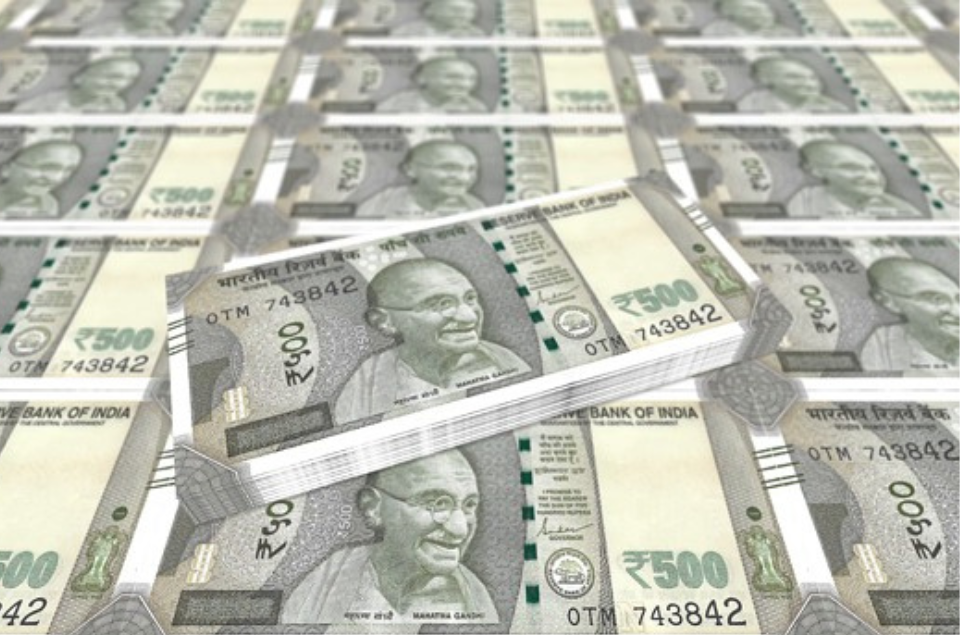
The Reserve Bank of India’s complementary intervention and the concomitant action by the central government will substantially change the short-term trajectory of the currency, according to a research note from Goldman Sachs Group Inc. Market experts at the top-tier firm on Wall Street, such as Kamakshya Trivedi, emphasized that those policy measures are explicitly designed to cap the ongoing downtrend pressures on the local currency.
The investment bank does not expect an inevitable downward trend to continue, but rather a distinct leveling off of the dollar-rupee cross rate, which would mark a longer period of stability for the local currency.
Intervention strategy and contextualizing
The intervention strategy, which was introduced on Friday, includes several significant financial and operational changes designed to attract foreign investment. A major part of these far-reaching measures is the tax exemption of foreign investments directed specifically to government securities. Authorities have made a strategic decision to allow foreign investors unrestricted access to a wider range of debt categories.
In addition to these changes, the central bank has also introduced exemptions for commercial banking institutions engaged in the issuance of foreign-currency bonds and foreign-currency deposits. The multifaceted set of measures has attracted significant enthusiasm in the financial world, with some analysts estimating that the measures could collectively succeed in attracting up to $50 billion in additional foreign capital.
This is no ordinary Goldman Sachs opinion because of how the domestic currency’s price had changed over the past few weeks. The Indian rupee touched a lifetime low of 96.9650 against the United States dollar last month.
This excessive currency devaluation was mainly the result of a sharp increase in the price of crude oil in the international markets and record-high levels of capital outflows from the domestic equity markets. This rapid devaluation has previously been the cause of much speculation by several market analysts, with some even openly claiming that the currency was heading down towards the psychological point of 100 per dollar.
Revised forecasts and rebuilding reserves
Goldman Sachs has officially revised its currency forecasts in the wake of the new rules. The Wall Street bank has revised its three-month dollar to the rupee forecast higher to 96 from 97, a feat that marks the bank’s strongest dollar rate performance in weeks.
The firm maintained that the 6-month forecast volumes are at the same levels as compared to the past month, with an expectation of 96. The firm further revised its 12-month forecast volume upwards to 97 from 96. The currency exhibited dynamic movements right after these forecasts were released, dropping by as much as 0.4% to 95.36 on Monday. This came on the heels of its largest one-day gain in more than two months on Friday.
Goldman Sachs explicitly warned market participants in connection with the foreign inflow package that they must not expect to witness extreme appreciation of the rupee in the spot market. The recent depreciation of the currency has been roughly on par with the performance of other energy-importing currencies around the neighborhood, analysts noted.
The Wall Street firm has every reason to believe that any fresh capital inflows that it creates due to such policy steps will be explicitly used by the central bank for the reconstruction of protective foreign exchange reserve buffers and deliberately to unwind short forward book from the market, so that the rupee does not strengthen too fast.
A significant change in the fundamentals of the rupee has also been made in favor of it on account of the shifting dynamics around geopolitics and yields. Since the outbreak of the Iran conflict, the carry of the rupee has risen significantly, said Goldman Sachs. The currency also has a higher return rate than other top-yielding Asian currencies, such as the Indonesian Rupiah and the Philippine peso.
These changing market conditions have made the Indian currency look better known as one of the more undervalued emerging market currencies relative to the U.S dollar in the high-yield carry asset complex. International asset managers have a growing case to make to fully bring the rupee into diverse asset baskets, say financial experts.
Conclusion
The delicate course being navigated by the Reserve Bank of India (RBI) has thereby reshaped the immediate trajectory of the domestic rupee currency from an era of speculatory fragility to one of controlled stability. Policymakers focusing on capital flight have been able to create a framework that can attract billions of dollars in foreign investment by offering tax breaks and increased debt options.
Goldman Sachs notes that these developments won’t cause the spot exchange rate to appreciate rapidly, but they do create an important platform to ensure its necessary safety. The rupee is poised for a change in its downtrend trajectory as the central bank intensifies its reserve-building operation, and the currency will become more attractive to global yield portfolios.