Discovered Materials has raised $9 million (approximately ₹85 crore) in a seed funding round led by Lightspeed India Partners. Prominent investment firms were involved in the capital raise, such as Y Combinator and Peak XV Partners. A group of global angel investors including Paul Graham, Gokul Rajaram, and Thariq Shihipar was also involved in the funding round. The successful raising of these funds represents a major financial milestone for the young company in the early stages of growth.
Operational model and addressing thermal dissipation
A press release from the company stated that the fresh funding would be used first to build the firm’s organizational and technical base. The startup intends to increase the size of its standard staff, enlarge its laboratory space, and speed up the growth and scaling of its proprietary artificial intelligence research agents.
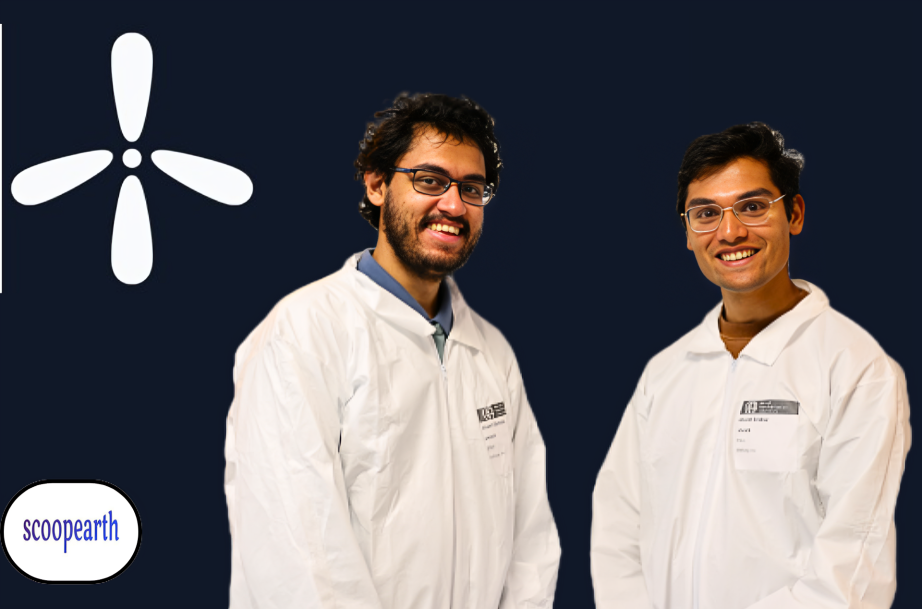
Discovered Materials is founded by entrepreneurs Advaith Sridhar and Akash Ramdas. The startup is an AI-powered deep tech startup with a team dedicated to addressing key hardware limitations in the semiconductor industry, specifically thermal management.
The company focuses its research on tackling extreme heat dissipation requirements on high-performance AI chips with thermal outputs in excess of 140W/cm². Discovered Materials is engineering next-generation thermally conductive dielectric materials that address these extreme heat generation problems found in computing hardware.
The company’s broad, advanced materials portfolio enables efficient heat removal in current semiconductor architectures while preserving the required dielectric properties, allowing for seamless integration into future device designs. The operational model of Discovered Materials is based on a network of cloud-based autonomous artificial intelligence agents.
AI research agents execute thousands of virtual material hypotheses daily with customized model harnesses that utilize state-of-the-art frontier AI models. The platform enables the company to navigate a huge design space of chemicals and structures, faster than the typical lab experiment.
After generating potential material candidates through the AI systems, they are then subjected to physics simulations to test their basic properties. These simulations enable evaluation of key factors such as structural stability, dielectric constants, and thermal properties.
With such fusion of AI generation and actual testing, Discovered Materials reported it has been able to create new thermal materials within three months using its artificial intelligence systems, with an equivalent performance to commercially available materials that can take years to achieve.
Deep-tech funding and future commercialization
Along with these in-house material discovery initiatives, Discovered Materials has developed an initiative known as the Material Discovery Bench. The objective of this benchmark is to systematically assess the performance of frontier AI systems applied to challenges in semiconductor materials, as a vehicle to quantify and drive innovation in AI for physical science problems.
Discovered Materials will seek patent protection for the most promising material candidates its breakthroughs enable to commercialize. After the patent procedure, the business plan for the startup will focus on licensing its proprietary thermal management formulations and semiconductor technologies directly to the world’s major chip manufacturers for incorporation into the global commercial manufacturing pipeline.
The investment in Discovered Materials aligns with a larger trend in the Indian deep tech startup landscape, where AI, mobility, healthcare, and energy startups keep attracting attention from around 300 venture capitalists based in India. Among recent trades, E3 Electric.Ai raised up to ₹100 crore through a Series A round led by BluVenture Holdings to continue developing and commercializing its AI-powered electric scooter, E3 TRION.
Another recent investment was made by healthcare start-up eNLife Research, which took in ₹6 crore in a seed round led by Piper Serica VC Fund to develop an AI-powered blood-based diagnostics platform for early detection of Alzheimer’s disease and other neurodegenerative conditions. Several investments also indicate strong investor confidence, as investment activity in Indian deep-tech startups has reached $1.62 billion through 140 equity funding rounds by July 2026.
Conclusion
The $9 million seed round, led by Lightspeed India Partners, reflects the emerging importance of artificial intelligence in fueling materials science and hardware engineering. Discovered Materials promises to reduce material development timelines from years to months, combining autonomous AI agents with physics simulations to tackle thermal dissipation challenges in 3D chip packaging.
The growth of Discovered Materials demonstrates how AI research platforms are emerging to meet fundamental technical needs in the world’s semiconductor industry, as deep tech funding has surged in India, surging to $1.62 billion in equity rounds through 140 transactions.