The Indian wearables market is already at a stage of major recalibration, which is reflected clearly in the recent financial announcements made by the Gurugram-based lifestyle brand Noise. In the fiscal year ending in March 2025, the noise funded by Bose recorded a significant decrease of 24% in its operating revenue, which stood at ₹1,048 crore. This is compared to a figure of ₹1,384 crore in the previous fiscal year, which is a season of consolidation as the brand suffers through the declining market demand of smart watches and wireless audio devices in the nation.
Although this top-line contraction has occurred, the strategic move of the company towards cost optimization and efficiency has enabled it to achieve some financial resilience in the highly competitive and dynamic retail environment.
Decline in Noise’s operating scale and cost-cutting strategy
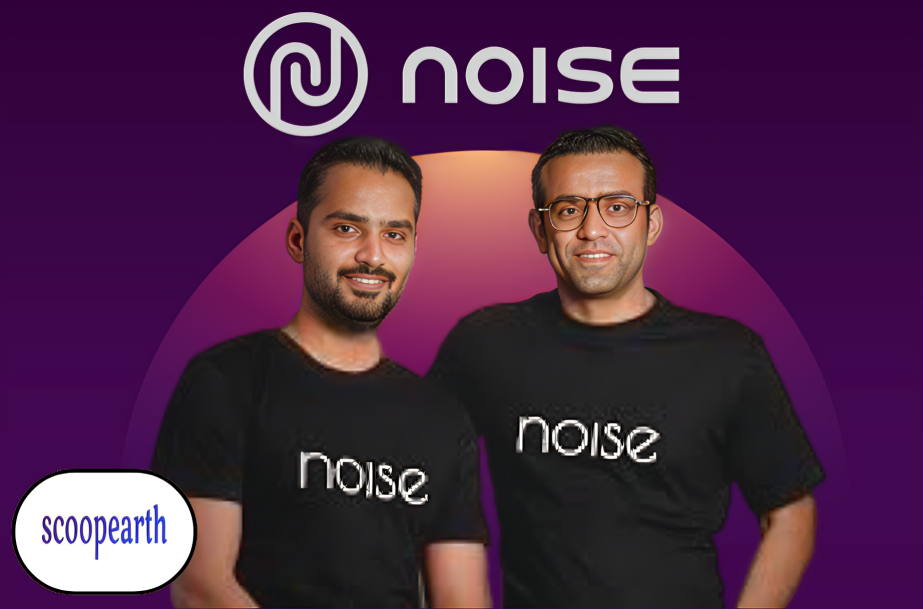
The drop in the operating scale of Noise is an indication of a transition to the aggressive expansion period that the brand experienced several years ago. Noise was founded by Amit and Gaurav Khatri in 2014. Noise has been a strong competitor in the consumer electronics arena, characterized by the use of e-commerce in selling smartwatches, wireless earphones, and speakers. In FY25, these wearable and audio products were still the main source of revenue for this company.
As the operating income decreased substantially, the firm also recorded approximately ₹17 crore non-operating income, which comprised interest on current investments. This added the total revenue during the fiscal year to ₹1,066 crore. The decline in revenue is largely explained by macro market factors such as the declining consumer expenditure on discretionary electronics and the end of several major product lines.
Noise responded to the decreased revenue by undertaking a strict cost reduction plan, which reduced its overall spending by almost 25%, down to ₹1,067 crore in FY25, a decrease from its previous spending of ₹1,417 crore in FY24. The largest share of this spending was going into the purchase of materials, which took up about 68% of the total cost structure.
This is a procurement expense of ₹725 crore, which is equivalent to a 23% year-on-year fall, which would be quite close to the operating scale reduction. The tightening of the supply chain and more conservative inventory management allowed the brand to alleviate some of the pressure of unsold inventory of the brand, which has recently been the bane of many participants in the Indian wearable industry.
The marketing and advertising, which were a key driver behind the swift rise of the brand, were also transformed drastically. Noise reduced its marketing expenditure by 37%, reducing it to ₹180 crore in FY25. This action implies a shift toward a sustainable and focused brand presence as opposed to high-burn customer acquisition.
There was a decrease of 12% in the cost of employee benefits, amounting to ₹71 crore, which will include approximately ₹6.5 crore in the costs of Employee Stock Ownership Plan (ESOP). Legal fees, freight, and warranty claims were other overheads that added to the overall amount of expenditure, as there was a corporate-level effort to streamline the operations and improve unit economics.
Profitability metrics and market context
The FY25 bottom line of Noise makes an intriguing narrative of peripheral recovery by extra financial considerations. Noise has registered a small profit of ₹3.2 crore in the fiscal year despite the scale-down in operations. A deferred tax gain of ₹47 crore contributed significantly to this turnaround in profitability. The operational losses would have been even worse without this accounting adjustment.
The company was able to maintain an EBITDA positive and had a balance in EBITDA of ₹18 crore at a margin of 1.67%. The Return on Capital Employed (ROCE) was 7.31%, which means that the growth has reduced, but the business is still viable. On a unit basis, the economics indicated that the Noise had to spend 1.02% to receive every rupee of operating revenue in the fiscal year, and there was some imbalance that the brand will have to rectify to remain sustainable in the long run without the need to depend on the windfalls associated with taxes.
The financial performance of Noise cannot be discussed separately from the industry patterns that have been presented by such researchers in the market as IDC. In mid-2024, the Indian wearables market recorded the first-ever quarter decline by 10% reduction in unit shipments. This recession was precipitated by a mixture of lower product development and overstocking in the retail system.
The key competitors, such as boAt and Fire-Boltt, have been experiencing identical headwinds, with some experiencing even steeper volume decreases in shipments. It is on this basis that the strategic support of the international audio giant Bose has served as a pillar of critical support to Noise. Firstly, Bose had invested $10 million in the brand and recently decided to invest another $20 million, an indication that it has long-term confidence in how the brand can survive the current storm in the market and come out as a more efficient entity.
Conclusion
FY25 has been an adaptation period of Noise, when the company consciously retreated and shifted to the realm of operational discipline. The drop in revenues to 24% to ₹1,048 crore is indicative of the nature of the wearables industry in India, which is currently in a maturity phase and is performing badly.
The low profit of ₹3.2 crore was mostly supported by deferred tax gains, but the good EBITDA indicates that the main business still has the power to be competitive. With the brand still capitalizing on its alliance with Bose and tactics to overcome the problems of the new space in consumer electronics, its priorities of improving unit economics will be the final aspect that will dictate its success in the Indian retail ecosystem.