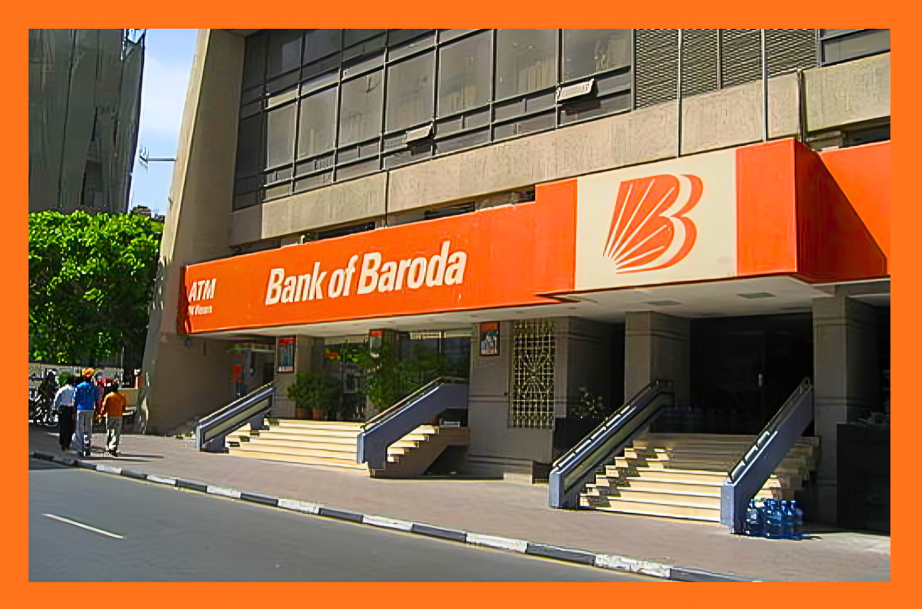
Bank of Baroda is one of the second-largest government-owned banks of India in terms of assets. Bank of Baroda has completed a large foreign bond sale by raising $700 million in bids. This capital was obtained through a twin-tranche dollar bond offering. This marks a key achievement for the public sector bank, with it receiving the funding at significantly tighter spreads than initially guided.
Dual-tranche breakdown and bond issuance
According to 2 merchant bankers, the pricing was consistent with what has been observed in the last 3 mergers of leading financial institutions in India, including the State Bank of India. The dual-tranche issue has been a significant strategic development for Bank of Baroda. The access to global capital markets has proven this strong investor demand and further enhanced the institution’s credit rating among international bondholders.
The $700 million capital raise was broken into two tiers with different time horizons to meet investor demand. The Bank of Baroda received bids of $400 million for three-year bond and $300 million for five-year debt paper. Both tranches were favorably priced relative to the bank’s opening ask.
Three-year notes were sold at 90 basis points over United States Treasuries and five-year papers at 100 basis points over Treasuries. Both showed a narrow grid tightening of about 30 basis points from the original guidance boards issued to the market.
The lender had provided the specific rates of the coupons attached to each tranche in a formal disclosure made late to the exchanges. Bank of Baroda will pay a coupon of 5.1140% on a three-year issuance and a coupon of 5.3180% for a five-year issuance. The two coupons are structured to be paid on a half-yearly basis.
Market evaluation in CreditSights provided further context on the fair value of these newly issued securities. The market intelligence firm has estimated the fair value of Bank of Baroda notes at around 5 basis points below that of the paper issued by the State Bank of India (SBI). The reason for this close valuation was argued by CreditSights to be that both public sector bodies receive support from the central government and have identical credit metrics.
The bond raising is a historic move for Bank of Baroda to return to the international capital markets. The state-backed lender has issued its first dollar bond in seven years. The return arrives when Indian financial institutions are looking hard for foreign money to tweak their balance sheets and widen their funding base.
Bank of Baroda’s revival is concurrent with the overall resurgence in India’s financial sector. The policy changes have prompted these Indian banks to increase their activity in foreign money markets. The Reserve Bank of India announced the swap facility in June, which highly influenced the borrowing structure. The Reserve Bank of India facility encouraged major domestic banks to accept foreign currency debt as it would become cheaper for them.
Fund utilization and market momentum
The Bank of Baroda transaction follows a successful pattern with State Bank of India, the country’s top public lender, which made a similar issuance. A few days prior, in the same week, State Bank of India had sold $500 million in 5-year bonds at a coupon rate of 5.25%, compounded every six months.
State Bank of India’s debt paper was offered at a narrow 88 basis points above Treasuries, down significantly from the original guidance of 120 basis points. The bidding for the State Bank of India’s bond issue was unusually strong, totaling almost $2.5 billion in bids.
However, state-run banks have not had their share of the momentum in the dollar bond market. Additionally, significant private sector financial institutions have benefitted from kind market conditions since July.
Private banks such as HDFC, Axis and ICICI have mobilized funds through dollar bond issues with success. Banks like Bank of Baroda and State Bank of India were also able to secure funding at spreads narrower than their initial guidance, reflecting strong overseas demand for Indian credit risk.
The $700 million will be raised through this dollar bond sale for specific operational goals for the state-run institution. Bank of Baroda noted that proceeds from the dual-tranche offering will be used for fulfillment of its various general funding needs.
As far as their credit quality is concerned, the new issue of dollar bonds has been rated in accordance with the overall Bank of Baroda issuer ratings. The notes are rated ‘BBB’ by S&P, ‘BBB-‘ by Fitch Ratings and ‘BBB+’ by CareEdge Ratings. The ratings reflect the bank’s position as a leading state-backed financial institution within its financial environment.
Conclusion
The Bank of Baroda’s $700 million dual-tranche dollar bond issue is a significant step towards the international debt market after a seven-year gap. The lender secured a less-than-guidance pricing largely due to the favorable regulatory mechanics such as the Reserve Bank of India’s swap facility, as well as strong sovereign backing.
Robust demand for the 3-year and the 5-year tranches reflects high investor confidence in Indian financial institutions in the global market. In recent years, State Bank of India, HDFC Bank, Axis Bank and ICICI Bank have successfully issued such transactions, highlighting the active period of global fundraising by India’s leading banking institutions.