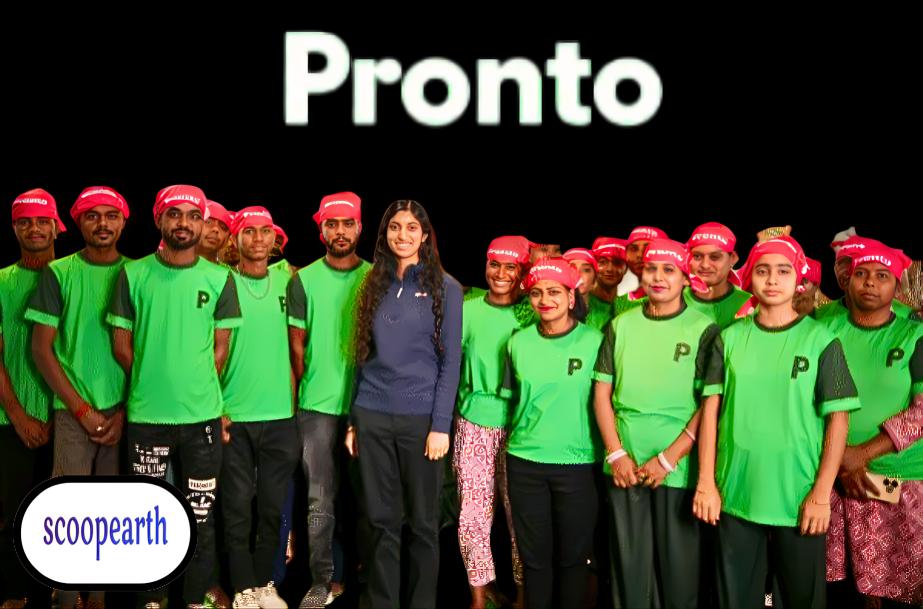
In 2024, Georgetown graduate Anjali Sardana, a graduate with a major in labor market inefficiencies, realized a huge untapped consumption gap in the Indian consumer market. Although in urban India, people could easily access services such as food delivery, ride-hailing, or even medical consultations, on-demand, high-quality household services were still annoyingly unattainable. The study of the household services market in India carried out by Sardana showed that there is one crucial paradox: a customer has an enormous problem with finding a reliable domestic worker who fails to turn up, does a bad job, or asks to be paid extra.
The customers experience immense difficulties with finding a reliable domestic worker because they use outdated tools in their search, including approaching other neighbors, checking building guards, browsing community boards, or calling dozens of other untrustworthy individuals, which, more often than not, leads to the failure of the worker to show up, do a job, or insist.
Business operation and “Win-Win-Win” model
The study conducted by Sardana revealed that the problem of a lack of available workforce actually did not exist. Rather, house workers regularly experienced months of unemployment or underemployment annually, which resulted in drastic income unpredictability. She has concluded that the problem was essentially a demand-matching problem, a special kind of market inefficiency in which neither the customer nor the worker had benefited. According to Sardana, this was a lose-lose scenario, unlike the scenario of typical market inefficiencies, where one person gains, which is why she started Pronto in Gurugram in April 2024 to address this issue of a two-sided dilemma.
The purpose of the formation of Pronto was to fill this gap, matching urban households with a pool of all-around trained professionals, or Pros, to perform a specified number of 14 household services, such as cleaning, laundry, dishwashing, and meal preparation. The unique selling proposition of the company is based on the promise to serve the requests within 10 minutes or less. Customers can access the service via an app, where live-tracking of their assigned Pronto Pro is possible.
The company is run on a shift model that is the secret to guaranteeing quick service delivery to the consumers, as well as providing stability to employees at the same time. The main pricing mechanism of the services is their duration, i.e., 30-minute, 1-hour, or 90-minute, with the average order value spanning between ₹200 and ₹300, and varying with the particular city and locality.
Customers are given the option of being able to add services instantly when they have a job in progress, or they can easily make their recurring appointments to take care of their daily or weekly requirements. Such a shift-based system will ensure that employees receive consistent shifts and higher overall incomes, which will practically resolve the issue of their income insecurity. In the case of the platform itself, this design produces a win-win-win situation, as Sardana mentions, by fulfilling the demands of the customers to quality, safety, and reliability, and the needs of workers to stable income and jobs.
Technological backbone and quality assurance
At Pronto, quality and safety take place at step one as the workforce is selected through a highly stringent and demanding vetting process. This begins with a compulsory in-person screening process by a trainer, which, as Sardana refers to it, is a very selective process since of the 300 or so applicants only 50 move forward to undergo this process. The successful candidates in the first screening undergo a five-day intensive training programme.
This training syllabus is an all-around syllabus that includes both technical and interpersonal skills. It consists of hard skills in all 14 services, soft skills, grooming and hygiene, tech literacy required to use apps, e-bike riding skills, and an intensive education on Pronto and its values and processes of operation. The company uses comprehensive background checks, including a check of court records and police verification based on Aadhaar and PAN documents.
Prior to joining the active working pool and getting into a hub, a professional has to undergo a final exam and be provided with an official Police Clearance Certificate. This investment in the labor force enables Pronto Pros to gain up to ₹40,000 per month, which is a great income accompanied by health insurance benefits, and there are plans still in progress to implement education and childcare benefits in the near future.
The technical foundation of Pronto’s 10-minute guarantee is a highly sophisticated three-layer technology stack, including the customer application, the professional application, and an essential technology layer of operations. It is an operations layer that deals with the complex automation required to coordinate: pairing the highly skilled professional with the correct job, logistics in many hubs, and high-level timing guarantees.
Pronto professionals are strategically positioned within pre-determined geographical circles or polygons around every operating centre, and each polygon covers a 10-minute radius. Sardana describes that the area of these polygons is dynamically regulated depending on the local conditions, e.g., in a city such as Goa, the polygons have larger sizes than in a city like Mumbai because of the changes in traffic and road network.
This efficiency in its operations soon caught the eye of investors. Pronto has raised a total of $13 million in two rounds, including $2 million in a seed round with Bain Capital Ventures in early 2025, and an $11 million Series A round in August 2025, co-led by General Catalyst and Glade Brook Capital with Bain Capital Ventures returning as well. The investments have been made in geographic expansion, recruiting 10,000 professionals, creating residential micro-hubs, and improving its quality assurance and real-time technology of operation.
Conclusion
Since officially coming into the market in May 2025, Pronto has demonstrated a strong market traction with an impressive 50x growth and is managing bookings in the four-figure range daily, and operates in several of the largest metropolitan centres in India, such as Mumbai, Bengaluru, Hyderabad, and Pune. The firm is also actively working on ambitious plans within the next 2 years that will see it enter Tier I, II, and III cities in India and also expand its service catalogue with additional categories. The platform also guarantees the safety of the workers by taking care of measures such as periodic refresher courses and a prepared SOS line and partner support system that enables Pros to leave a site immediately and call management in case they feel unsafe.