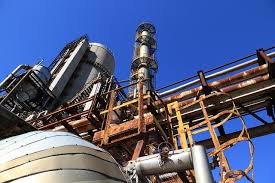
One of the most robust foundations of India’s industrial ecosystem, the chemical industry contributes around 7% of the country’s GDP and forms the foundation for a number of important industries, including construction, agriculture, pharmaceuticals, textiles, and automobiles. Currently producing over 80,000 commercial chemical products, the nation is ranked sixth in the world and third in Asia. India has gained international prominence for its dyes, generics, vaccines, and agrochemicals, making it a vital hub in the global chemical value chain. The country is currently boosting efforts to digitize, decarbonize, and shift to greener manufacturing.
Market Outlook: Growth with a Green Vision
By 2030, the Indian chemical industry is expected to have grown from its 2024 valuation of ₹21.50 lakh crore (USD 250 billion) to ₹35.26–39.67 lakh crore (USD 400–450 billion). The market is expected to reach ₹86 lakh crore (USD 1 trillion) by 2040, with a high CAGR of approximately 9–10%, thanks to growing downstream manufacturing capacity, favorable regulatory incentives, and rising global demand.
Additionally, exports are growing; between April and February of FY25, dyes and dye intermediates contributed ₹20,088 crore (USD 2.3 billion). India’s position as the world’s fourth-largest agrochemical producer and a major force in dye and intermediate manufacture greatly increases its potential to develop into a global center for high value, sustainable chemical production as the world looks for trustworthy chemical supply partners.
Cleaner Chemistry, Circular Production
To reduce emissions, minimize waste, and lessen reliance on fossil fuels, the industry is undergoing a significant transition towards green chemistry and the use of circular materials. Through programs like the BioE3 plan, India is progressively substituting biomass-based inputs for petroleum-based ones, making it possible to produce bio specialty chemicals, biopolymers, and enzymes utilizing industrial byproducts and agricultural waste.
Green chemistry, which was first implemented as part of the Responsible Care project, has developed into a fundamental business strategy from a compliance-driven approach. Today, businesses are employing biotechnology, nanoscience, and sophisticated materials to rethink processes in order to remove hazardous ingredients, increase productivity, and produce products that are safer for the environment.
By 2030, the circular economy could generate ₹19.22 lakh crore (USD 218 billion) in revenue, and by 2050, it might generate over ₹55 lakh crore (USD 624 billion). With India producing about 62 million tons of garbage a year, developing circular systems may unlock enormous value, from green agrochemicals to biodegradable plastics and biopolymers, signifying a dramatic change toward low-waste, resource-efficient growth.
Decarbonization Driven by Digitalization
Decarbonization is a top issue since the sector uses 13% of India’s total industrial energy and accounts for around 6% of the country’s greenhouse gas emissions. With chemical clusters in Gujarat and Maharashtra already expanding solar and wind integration, manufacturers are embracing electrification, carbon-capture technologies, and the source of renewable energy. Prominent companies like SRF and Deepak Nitrite want to cut carbon intensity by at least 20% by 2030.
At the same time, productivity and safety requirements are changing due to AI-enabled digital transformation. Tata Chemicals’ IoT-powered process optimization and Reliance Industries’ AI-led refinery maintenance demonstrate how digital technologies are lowering production losses, energy consumption, and downtime, opening the door for smarter, autonomous chemical facilities.
Policy Backbone and Collaborative Growth
Strong policy frameworks, such as the proposed National Chemical Policy, NITI Aayog’s plan for port-based mega clusters, and Production-Linked Incentive schemes and Green Chemistry efforts, help the industry. While exports have doubled over the past ten years, reaching ₹3.5 lakh crore in 2024, FDI inflows have surpassed ₹1.42 lakh crore (USD 23.2 billion). The Green Hydrogen Mission also aims to save ₹1 lakh crore on fossil fuel imports, create 6 lakh jobs, and increase capacity to 5 MMT annually.
Industry-academia collaboration and innovation at scale are made possible by government investments in research centers, CIPET capacity, specialized skill development, and ESG-aligned green finance.
Conclusion
India’s chemical sector is becoming a global leader in sustainable production thanks to the growth of green chemistry, bio-based materials, and digital innovation. The industry is well-positioned to increase exports, decrease reliance on imports, and improve long
term national competitiveness as the use of renewable energy grows and circular models proliferate. With the support of industry cooperation, regulatory change, and technology-driven efficiency, India is creating a chemical ecosystem that is more robust, competitive, and environmentally friendly—ready for the future.