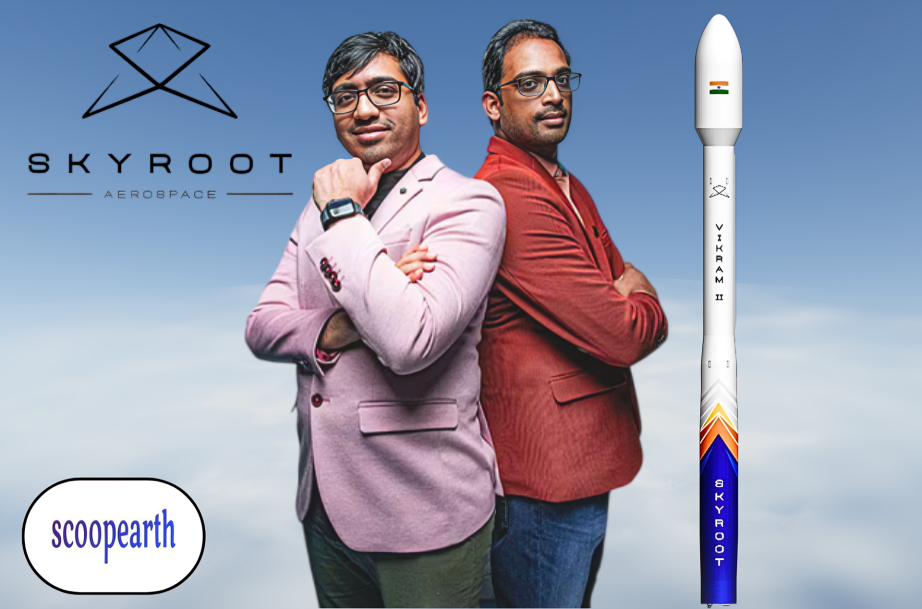
After a successful $60 million funding round, Skyroot Aerospace has officially become a unicorn. This major capital injection comes at a crucial time as the company is set for the historic first flight of its Vikram-1 orbital rocket. The milestone is a testament to the company’s progress and is also a strong sign of investor confidence in the Indian government’s capacity to deliver high-tech and cost-effective solutions for the global satellite launch industry.
Growth and technological validation
The fresh funding of $60 million reflects the strong development and technological proof of the growth of Skyroot’s launch vehicles. A group of international investors, venture capital companies, and even the initial investors who have believed in the vision of accessibility and economical usage of space took part in the funding round.
Skyroot not only achieves the unicorn valuation milestone but also establishes a benchmark for the Indian deep-tech and space-tech ecosystem. The capital will be used to further expand its production capabilities, speed up research and development efforts, and increase the frequency of launches of its future space missions.
Launch and capital infusion
The achievement comes just before India’s first privately funded commercial orbital rocket launch, known as Vikram-1, which is set for the coming week. Vikram-1 stands seven storeys tall and is designed to carry payloads up to 350 kilograms with the aid of advanced 3D-printed engines and is all-carbon-fibre-bodied.
The satellites are designed to be deployed on demand and at an economical cost. A key structural deficiency in the small-satellite launch market is the availability of reliable small-satellite external tank suppliers for international operators, and Skyroot is filling this role, especially because the majority of the parts will be indigenous.
The investment followed rapid expansion in the production and test range capacities of Skyroot. The company inaugurates the huge Infinity campus that provides the ability to design, develop, integrate, and test several agencies of launching vehicles with the latest technological equipment.
To achieve high launch frequency, Skyroot envisions designing and launching an orbital rocket once a month, integrating its design features into the process. The investment will secure the appropriate hydroponic infrastructure needed to sustain this ambitious pace, catering to the rapidly increasing global market size of commercial space transportation services.
Conclusion
The startup Skyroot Aerospace has entered the unicorn club, signaling a historical event in the private space sector of India. The startup has grown from an ambitious dream of the ISRO scientists to an established and world-famous space-tech company with forward-looking space reforms and substantial investments by international entities.
The company’s funding round, valued at $60 million, offers the financial backing and operational flexibility required for the company to chase its commercial ambitions, as it prepares to take its Vikram-1 into orbit. With continuous innovation, cost reduction, and modernization of infrastructure, Skyroot is poised to make India a key center for satellite launches worldwide in future decades.