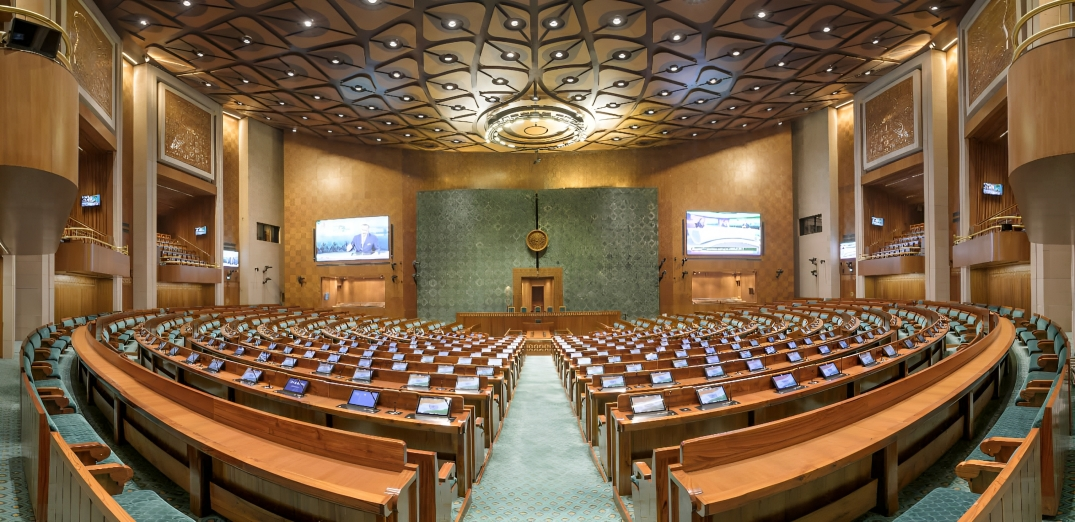
The Parliament is preparing a session with a significant level of legislative initiative, which means that the government is willing to transform the regulatory landscape of India as quickly as possible to stay in step with the rapid digitalization of the economy and society. The top officials accustomed to the upcoming agenda have reported that the government is about to enter a phase of intense discussion where several vital fields of technology policy, data governance, e-commerce, and global trade developments would be on the agenda. These issues will be put in the limelight, and the fundamental economic reform efforts of the government. The general legislative discussions will be characterized by the presence of vital issues regarding the regulation of digital Data, the unregulated spread of content created by Artificial Intelligence (AI), and Tariff-related policies that will influence different industries.
Legislative focus and the emergence of advanced AI technology
The session is a sign of a governmental interest in building a strong, responsible digital ecosystem because of the multiple, challenging issues that have been raised, as India has a large, digitally networked population. This emphasis highlights an understanding that legislative clarity in technology and data has become equally vital to national development as compared to traditional economic planning, and future discussions are of primary importance to individuals, businesses, and the technological environment in the country.
One of the key legislative priorities will be the domain of data governance with a focus on implications and implementation of the Digital Personal Data Protection (DPDP) Rules, which have recently been notified. Having this primary legislation in place, the Members of Parliament (MPs) are generally expected to challenge the status and applicability of its implementation, which will trigger the necessary lawmaking discussion about the way in which personal data will be safeguarded and controlled throughout the digital realm. The idea behind this for the government is to entrench the structure of data privacy in India, making organizations that deal with the personal information of citizens accountable.
Due to the development of high-technology AI, specific, targeted laws have become necessary. News on the governance of deepfakes and the increasing threat of AI-induced misinformation are expected to take centre stage in parliamentary debate. Legislators will consult and examine the suggestions that the AI copyright committee of the DPIIT has been discussing, and the intricacies of intellectual property rights in the era of generative AI. The idea behind these debates is to strike a balance between the desire to promote AI-based innovation and the necessity to impose strict protection against the risks of potential harm, especially concerning any synthetic and misleading information.
Regulatory gaps and content regulation
The legislative drive will also widely encompass content regulation and compulsory media watchdogs, where legislators will also put sharp questions on the government proposals and the pending regulatory bills. The health of the Broadcasting Services Bill is going to be reassessed in the context of the wider legislative discussion of the establishment of all-inclusive rules concerning the consumption of digital content. The radical change in the regulatory environment, nevertheless, is the intention of the Ministry of Information and Broadcasting (MIB) to revise the Press Council Act, 1978.
The purpose of this draft amendment is to fundamentally expand the scope of the Press Council of India ( PCI ) to serve as a single media regulator of print, broadcast, and digital media. The suggested reforms will place under the authority of the Council digital publishers, major influencers, and influential content creators, which has never been the case.
According to the leading sources, the expansion of the powers of the PCI is motivated by the need to combat the spread of misinformation by increasing regulatory control over the whole news and news-like content sector. Specifically, the content standards and, in particular, the controversies concerning obscene content, deepfakes, and online misinformation, are likely to take center stage in this section of the agenda.
The results of numerous legislative organizations are also adding to the urgency of AI regulation. In its example, the Parliamentary Standing Committee on Home Affairs has raised a resounding alarm in the past, seeking far-reaching reformation of the current laws relating to cyber in India. The Committee warned that existing legislative loopholes leave the nation vulnerable to the malicious abuse of AI, such as deepfakes, and the thriving underground economy of Cybercrime-as-a-Service (CaaS) that replicates the real Software-as-a-Service paradigms.
One of the key regulatory gaps identified by the Committee concerns the current legislation: the current law does not provide a clear differentiation between user-generated and AI-generated content. These uncertainties have enabled sophisticated AI-generated fraud to spread, quoting instances of victims being cheated into handing over money after receiving video calls with convincing AI-created impersonations of friends or workmates. As a result of combating these threats, one of the key recommendations was that all digital media, such as photos, videos, and graphics, be mandated to use digital watermarks to create the required provenance and eliminate malicious manipulation, thus calling on the government to come up with tougher laws that are more explicit.
Conclusion
The intersection of data protection, AI responsibility, and media regulation issues makes the next Parliament session one of high legislative impact. The policy-wide agenda of the newly announced DPDP Rules, pushing to have a single media regulator, trying to deal with deepfakes and cybercrime, is an emphatic move to establish a strong regulatory superstructure of digital India. By addressing the technology policy, the data governance, and the tariff-related global trade trends, Parliament should create an environment where digital innovation could flourish, and accountability, transparency, and safety remain highly enforced in all aspects of the life of the country that is becoming more digital.