Introduction:
Infrastructure and construction companies are the backbone of a strong India. Billions are being poured into highways, rail lines, and airports. It is this drive towards expansion that has helped Indian companies to implement some of the best projects globally. This article discusses the top 10 Infrastructure companies in India that they engaged in creating new infrastructure for the country.
| Company Name | Established Year | Headquarters |
| Larsen & Toubro (L&T) | 1938 | Mumbai |
| Adani Enterprises | 1988 | Ahmedabad |
| Megha Engineering (MEIL) | 1989 | Hyderabad |
| Tata Projects | 1979 | Mumbai |
| Kalpataru Projects Int. | 1981 | Mumbai |
| Rail Vikas Nigam (RVNL) | 2003 | New Delhi |
| NCC Limited | 1978 | Hyderabad |
| KEC International | 1945 | Mumbai |
| Shapoorji Pallonji Group | 1865 | Mumbai |
| PNC Infratech | 1999 | Agra |
Larsen & Toubro (L&T)

- Founders: Henning Holck-Larsen and Søren Kristian Toubro
- Employee Count: 54,500+
Larsen & Toubro, or L&T as it is often called, is a dominant force in India’s infrastructure industry. They handle a broad array of projects, from construction of highways and bridges to power stations, missiles and urban metros. L&T has diversified from smart city integrations, using AI to streamline project management. Sustainability is a focus for L&T, from solar-powered construction sites to lessening carbon emissions. The firm’s international operations in the Middle East further enhance its international reputation.
Adani Enterprises
- Founders: Gautam Adani
- Employee Count: 6,900+
Adani Enterprises is the construction arm of the Adani Group and is at the forefront of many businesses spanning ports, airports, as well as energy infrastructure and its services. It has expanded rapidly while focusing on renewable sources like wind and solar farms. The infrastructure firm built new cargo terminals at Mundra Port.
They are on their way to becoming one of the biggest transport infrastructure creators in the nation. Adani Enterprises has a big emphasis on airports and road infrastructure. They manage several of India’s busiest airports, modernising them to world standards.
Megha Engineering & Infrastructures (MEIL)

- Founders: Pamireddy Pitchi Reddy
- Employee Count: 40,000+
MEIL is fast emerging as a big player in the infrastructure sector, especially in water, energy and transport segments. The company is best known for building massive irrigation schemes that bring water to agricultural fields in dry areas. They’ve developed advanced pumping stations for the Kaleshwaram Lift Irrigation Project.
MEIL is establishing its electric vehicle charging network, paving the way for eco-friendly transportation in India. The company has a specialisation in hydrocarbon as well as manufacturing segments, managing the end-to-end projects quite effectively. The company’s growth story helps it create jobs in rural areas while delivering high-quality infrastructure.
Tata Projects
- Founders: J. R. D. Tata
- Employee Count: 19,000+
Tata Projects is the infrastructure company for the iconic Tata Group, one of India’s largest conglomerate groups. They are airport and industrial complex specialists with smart tech like IoT for maintenance. Among Tata Projects’ key achievements is the Noida International Airport, which is currently being built with a variety of sustainable features, including rainwater harvesting.
The company specialises in modular construction to lower waste and time. Their maritime projects, on docks, for example, make their trade routes more efficient. They are committed to ethics and train workers in safety protocols to minimise accidents. Tata’s brand image and public trust ensure reliable partnerships with governments, driving India’s industrial progress.
Kalpataru Projects International
- Founders: Mofatraj P. Munot
- Employee Count: 9,800+
Kalpataru Projects International rebranded from Kalpataru Power Transmission to reflect its wider scope. The company leads in power transmission, railways and urban development. They are doing work on high-voltage lines that carry power between remote areas and the national grid. Their metro rail expansions in places such as Thane make the lives of thousands who commute daily significantly easier.
Kalpataru uses advanced materials for durable structures, resisting harsh weather. They also expand their reach through international projects in Africa, extending India’s expertise to the world. The company has a vast global presence, with a presence in more than 30 countries. The firm’s focus on digital twins, virtual models of projects that can predict problems early on.
Rail Vikas Nigam Limited (RVNL)
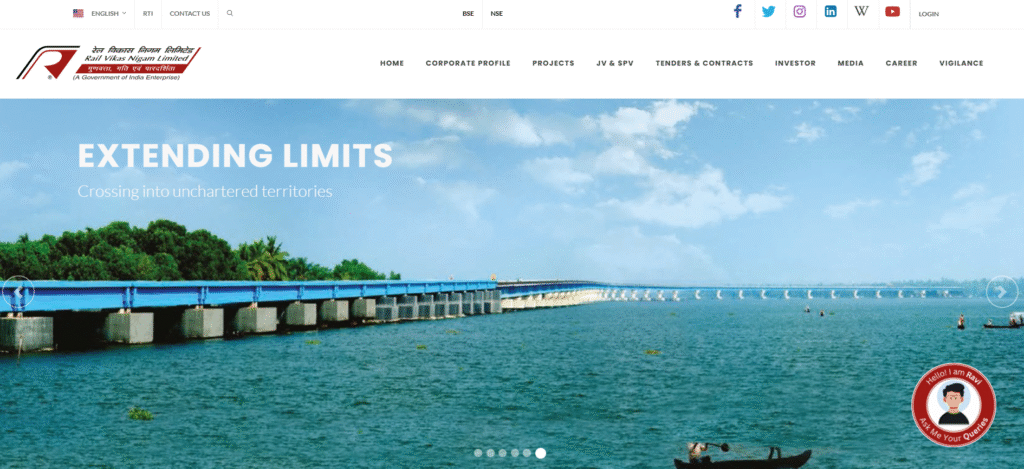
- Founders: Ministry of Railways, Government of India
- Employee Count: 330+
It is a Public Sector Undertaking (PSU) under the Ministry of Railways. The company is involved in rail project construction. RVNL has brought semi-high-speed trains that have reduced travel time on routes such as Delhi to Mumbai. RVNL’s electrification efforts reduce reliance on diesel, promoting green rail travel.
The company is now bidding for metro projects in various cities and even exploring projects in foreign countries. Collaborations with private firms bring in new tech like automated signalling. RVNL’s role in Vande Bharat expansions makes rail travel faster and more comfortable for passengers.
NCC Limited
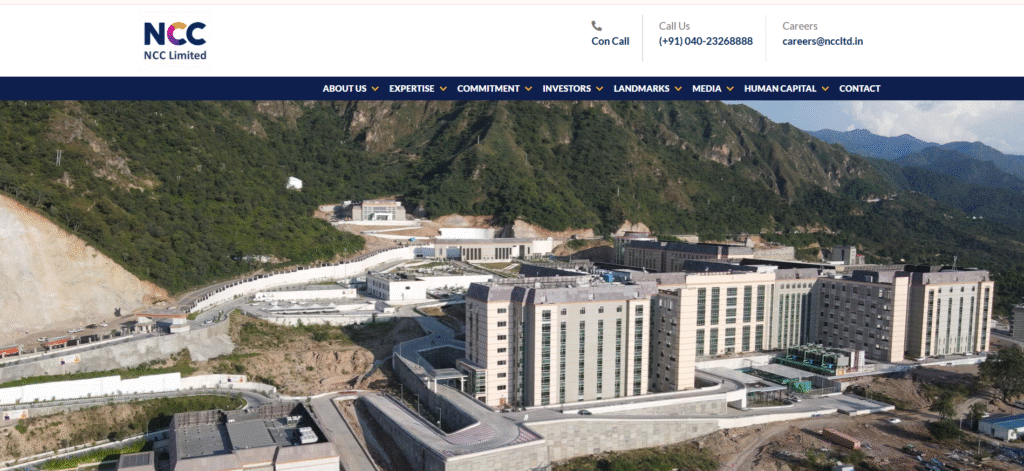
- Founders: Alluri Venkata Sathyanarayana Raju (A.V.S. Raju)
- Employee Count: 7,300+
NCC Limited is a versatile giant in the infrastructure world. The firm is handling buildings, roads, and water supply systems. They worked on multi-lane highways in challenging terrains, boosting connectivity. NCC’s urban housing projects incorporate affordable, eco-friendly designs. They use precast concrete for quicker builds and reduced costs. The company’s water treatment plants address shortages in growing cities. NCC’s adaptation to digital tools and diverse segments ensures steady growth, contributing to India’s urban transformation.
KEC International
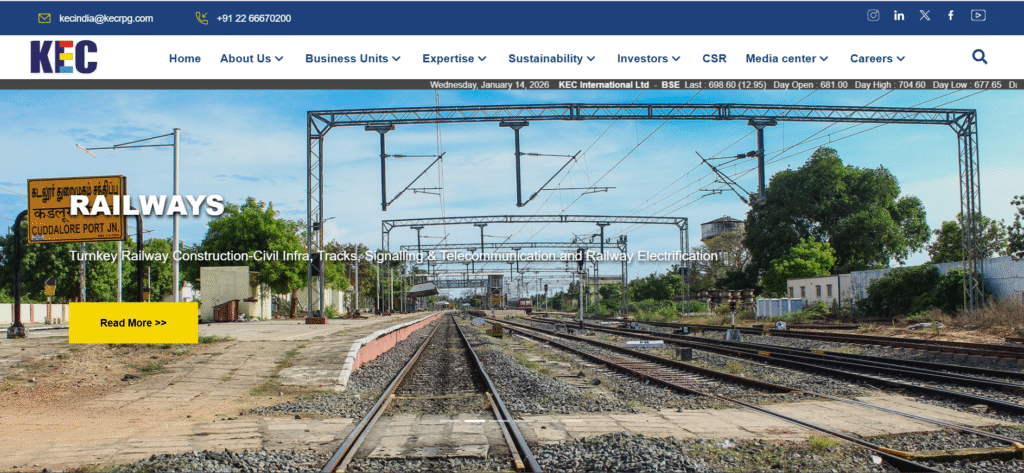
- Founders: Ramji H. Kamani (Now part of the RPG Group)
- Employee Count: 6,700+
The RPG Group is the parent of this flagship company, known as KEC International. It excels in power infrastructure and civil engineering. KEC also hit headlines in January 2026 with secured orders worth Rs 1,050 crore. They have built vast transmission networks, including submarine cables reaching into the sea to connect offshore wind farms.
KEC’s entered the renewable energy sector with solar park setups in Rajasthan, and its recent entry into the wind energy sector. They also handle international orders in the Americas, showcasing global standards. Their projects enhance the energy security of India while supporting economic growth.
Shapoorji Pallonji Group
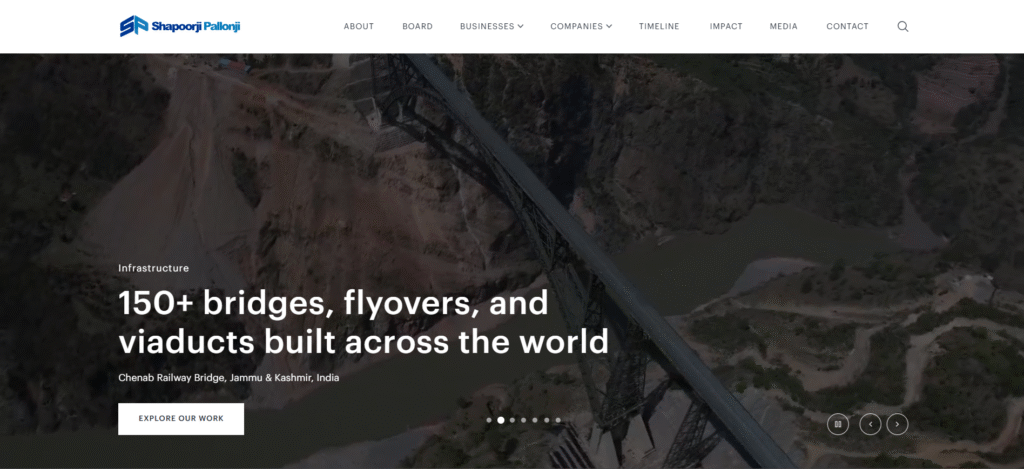
- Founders: Pallonji Mistry
- Employee Count: 33,000+
Shapoorji Pallonji Group is one of the oldest and most respected infrastructure companies in India. They have developed luxury townships with smart home features. Their airport modernisation projects, like in Guwahati, include sustainable aviation fuel facilities. The firm is also diversifying into biotech parks and data centres. The diversity of ideas generated by Shapoorji Pallonji’s international workforce drives innovation, and community initiatives such as skill centres uplift local economies.
PNC Infratech
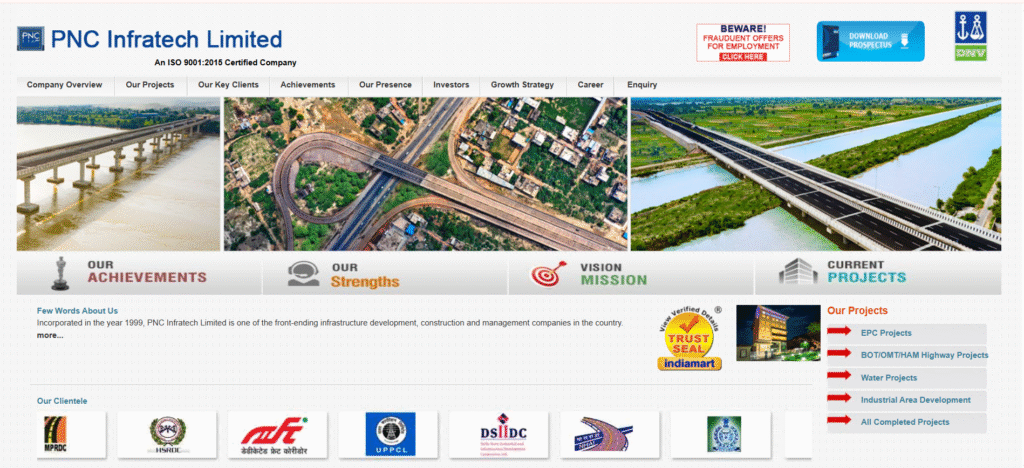
- Founders: Pradeep Kumar Jain, Chakresh Kumar Jain, and Yogesh Kumar Jain
- Employee Count: 6,100+
PNC Infratech specialises in building highways, bridges, and airports. They use hybrid annuity models, where the government helps to balance risks in long-term projects. PNC’s airport runways meet international safety norms. PNC helps bridge urban-rural divides, with a focus on rural connectivity.
Their growth targets reflect optimism in India’s infrastructure growth. Their growth with the win of a contract to build a large bridge in Bihar and a runway development project for Varanasi International Airport is an effort to prove they are ready for the next phase of growth.
Conclusion:
The infrastructure industry in India is flourishing due to the government’s initiative to transform India into a developed nation. Their innovation will become a second wave of development that is sustainable and open for all. These are the players in this fast-evolving space that investors and job seekers should pay attention to in the future. These are the companies that will create the India of tomorrow. The article mentioned the top ten infrastructure companies that power India’s economic rise.
FAQs:
What are infrastructure companies in India?
Infrastructure companies build and maintain roads, bridges, airports, ports, railways, power projects, and urban facilities.
Why are infrastructure companies important for India?
They support economic growth by improving transport, connectivity, energy supply, and public facilities across the country.
How were the top infrastructure companies selected for 2026?
They are usually selected based on project size, market presence, experience, financial strength, and contribution to major projects.
Which sectors do top infrastructure companies work in?
Most companies work on roads and highways, railways, metro projects, power, water, airports, and urban development.
Are Indian infrastructure companies involved in government projects?
Yes, many work closely with central and state governments on large public infrastructure projects.
Do these companies also work outside India?
Some leading Indian infrastructure companies handle projects in other countries, especially in Asia, Africa, and the Middle East.
How does infrastructure growth benefit common people?
It improves travel, creates jobs, boosts business activity, and provides better public services.
Is infrastructure a good sector for long-term growth?
Yes, due to continuous demand for development and upgrades.
What challenges do infrastructure companies face in India?
Common challenges include project delays, land acquisition issues, funding constraints, and regulatory approvals.
Will infrastructure spending increase in the coming years?
Yes, India is expected to increase infrastructure spending to support urbanisation, industrial growth, and economic development.