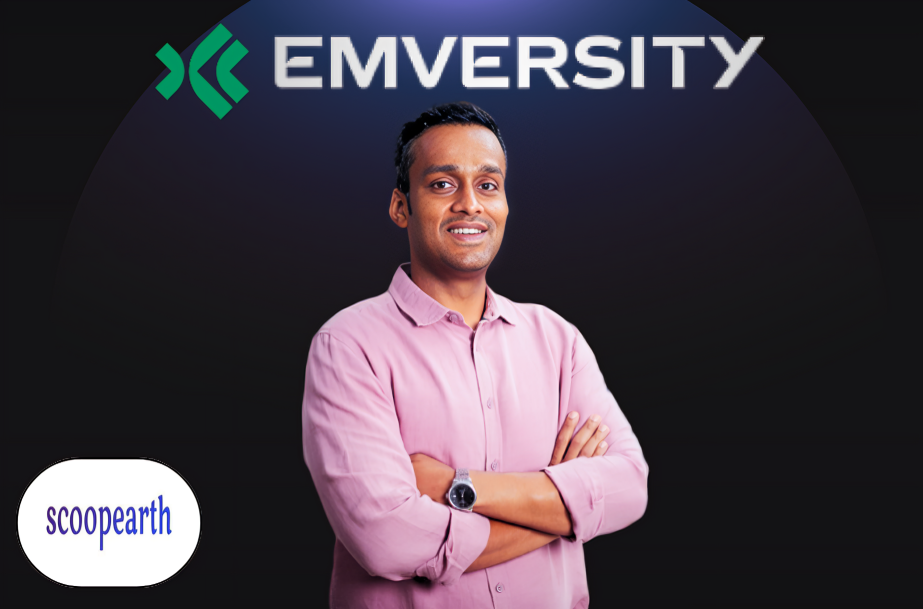
Navin Bishnoi, Marvell – As billions of users simultaneously interact with AI platforms like ChatGPT, the challenge extends beyond simply providing accurate responses. It involves ensuring that these responses are delivered instantly, securely, and reliably. At the heart of this seamless experience lies a crucial yet often overlooked component: data centre networking. According to Navin Bishnoi from Marvell, specially designed networking chips are now the backbone of extensive AI infrastructure.
Marvell’s Contribution to the AI Ecosystem
Marvell is a prominent global semiconductor company dedicated to the movement, storage, processing, and security of data on a large scale. Its silicon solutions are widely adopted by leading cloud providers, hyperscalers, and original equipment manufacturers (OEMs). From cloud computing and AI workloads to carrier infrastructure and enterprise networks, Marvell’s technologies are deeply integrated into the data stack.
The company boasts a diverse portfolio that encompasses compute, interconnect, network switching, security, and storage, offered through merchant silicon, semi custom, and fully custom designs. This adaptability enables Marvell to cater to the specific needs of modern AI-driven data centres.
India’s Emerging Role in AI Infrastructure
In India, Marvell is at the forefront of designing customised semiconductors, networking switches, storage, and connectivity solutions. The company has established a strong
presence in India’s rapidly expanding AI infrastructure market, which is projected to reach nearly $94 billion by 2028.
Marvell collaborates closely with global hyperscalers and cloud providers, facilitating everything from routine digital transactions to extensive AI model training. Its custom silicon is embedded across compute systems, networking fabrics, and security layers, making it a vital component of contemporary digital operations.
Traditional vs AI Data Centres: A Shift in Networking
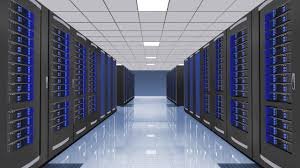
While traditional data centres primarily focus on predictable data movement between servers and storage, AI data centres operate on a vastly different scale. They interconnect thousands—sometimes even hundreds of thousands—of AI accelerators (XPUs) that constantly exchange large volumes of training data.
In the “scale-up” scenario, hundreds of XPUs function collaboratively like a single supercomputer. Here, ultra-low latency is crucial, as even a slight packet loss can hinder AI training. In the “scale-out” scenario, high-speed connectivity, congestion control, lossless Ethernet, and intelligent traffic distribution are essential to sustain performance at scale.
How Marvell Ensures Low Latency and High Bandwidth
Marvell meets these challenges head-on with advanced switch architectures specifically designed for AI and high-performance computing. Its Teralynx switches are engineered to minimise latency during traffic surges, provide high bandwidth, and support dense, energy-efficient network designs.
By shortening the time data spends within the network, these switches contribute to reduced overall AI job completion times, which is vital for large distributed training tasks.
Tackling Congestion and Traffic Spikes
Network congestion poses a significant risk in AI data centres. Marvell proactively addresses this by embedding intelligence directly into its switches. The system continuously monitors traffic, detects early signs of congestion, and implements corrective measures in real time.
Shared memory pools offer additional buffering during sudden traffic surges, while priority-based traffic management ensures that critical workloads receive the necessary bandwidth. Fine-grained bandwidth control across ports and queues further guarantees stable and predictable performance.
Security in the Era of AI Infrastructure
As AI systems proliferate across data centres, edge locations, and APIs, the risks
associated with cybersecurity increase. Marvell integrates security directly into its hardware, safeguarding AI models against threats such as data poisoning, theft, and evasion.
Its solutions encompass secure boot, robust authentication, encryption of data both in transit and at rest, and confidential computing. The company is also preparing for future security challenges posed by quantum computing, adopting a Zero Trust approach and continuous threat monitoring.
Power, Heat, and Engineering Challenges
AI workloads exert tremendous pressure on power and cooling systems. Dense networking and continuous processing generate significant heat, making energy efficiency a paramount concern.
Marvell tackles this challenge by optimising power consumption at every level—from circuit design and architecture to software adjustments—helping data centres manage heat while sustaining performance.
In today’s AI-centric landscape, networking has evolved beyond mere support infrastructure. It now serves as the foundation that enables intelligence at scale, and Marvell is at the forefront, creating the silicon that keeps this ecosystem thriving.