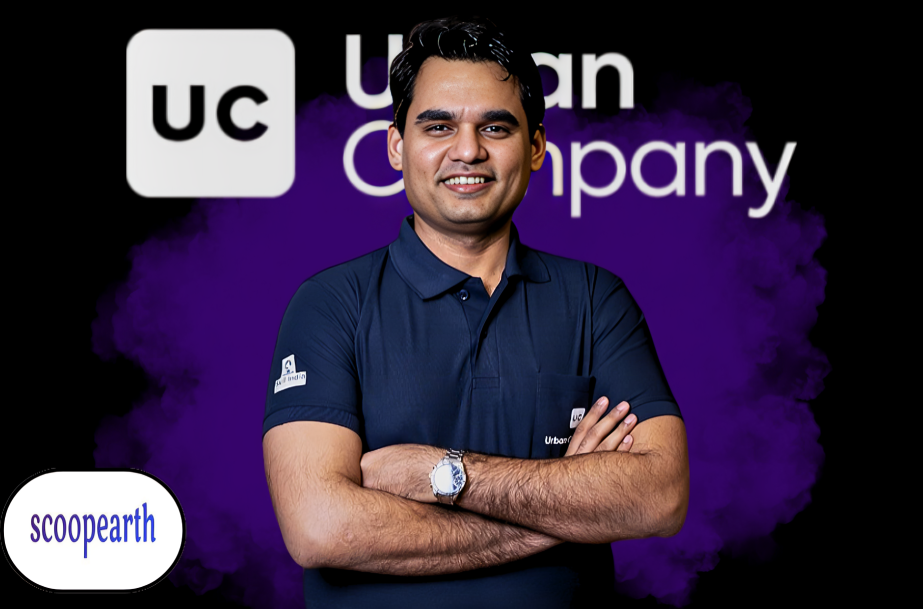
At just nineteen, Indian-American entrepreneur Dhravya Shah has created Supermemory, an innovative open-source evaluation framework aimed at standardising the benchmarking and comparison of context and memory systems across various platforms. This framework enables developers to efficiently test multiple memory providers with a single setup, featuring built-in tools such as a web user interface, command-line interface (CLI), checkpoints, and comprehensive evaluation reports.
Supermemory seeks to fill a significant void in contemporary AI systems by ensuring consistent, portable, and intelligent memory across different models and providers.
Who Is Dhravya Shah?
Shah, who left IIT Bombay to pursue a Bachelor’s degree in Computer Science at Arizona State University, embarked on his entrepreneurial journey early on. He began developing Supermemory while living in Mumbai, balancing his preparation for the highly competitive IIT entrance exams with experimentation on consumer-focused applications and bots.
Prior to his move to the US, Shah successfully built and sold a Twitter formatting bot to Hypefury, which not only bolstered his confidence but also provided the financial backing to explore more ambitious projects. Now based in San Francisco, he is focused on scaling Supermemory.
What Supermemory Does
Shah explains that Supermemory can facilitate a variety of real-world applications. For example, a video editor can swiftly retrieve the most pertinent clip with a simple
prompt, while a real estate startup can efficiently analyse months’ worth of stored documents to extract vital insights.
The platform has begun to attract attention from developers and several prominent clients within the AI ecosystem.
Highlighting the product’s transparency and flexibility, Shah shared on social media platform X, “Supermemory is fully open-source. You can view results live in a web UI, configure judge prompts, restart runs from checkpoints, and see exactly why certain results failed.”
Launch Strategy and Vision
Shah has strategically timed the launch of Supermemory for the holiday season. “While other teams rest, we are committed to shipping every single day for the next seven days,” he stated. Describing this as an intense release cycle, he promised that the final week of 2025 would be “unforgettable.”
Addressing the Memory Challenge in AI
At its essence, Supermemory is designed to tackle the issue of self-learning context— memory associated with users, tasks, workflows, and teams. It serves as a universal memory layer that can be integrated into any large language model, regardless of the underlying provider.
Shah contends that memory should not be confined to a specific model or company. The current complexity and restrictions of switching memory systems between providers often trap users within a single ecosystem. “Memory should be a universal right, not a moat,” the Supermemory website asserts.
By being provider-agnostic, Supermemory allows developers to adopt superior models without losing their accumulated context.
Building Memory Like the Human Brain
Supermemory is crafted to function semantically, akin to the human brain— remembering what is essential, forgetting when necessary, adapting over time, and scaling with usage. It is designed to be configurable, fast, and intelligent, ensuring that personalisation enhances the user experience rather than hindering it.
“Intelligence without memory is just sophisticated randomness,” the company states. “We add memory to intelligence.”
Looking to the future, Shah envisions that advanced AI systems—and even robots—will require memory systems as robust as their intelligence. “When AGI becomes a reality, it will need a super memory,” the company notes.