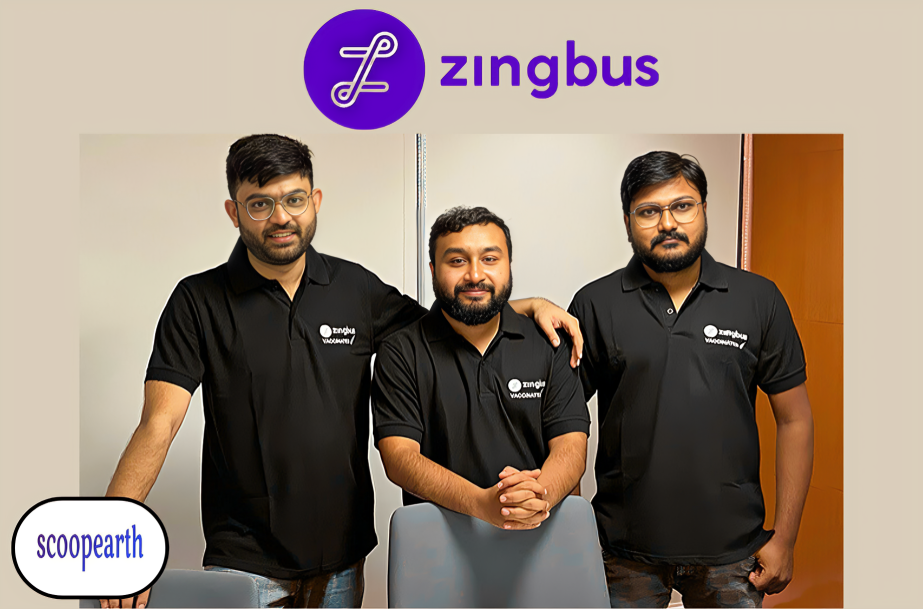
Over the past years, there has been a massive transformation in the intercity mobility industry in India, and technology-based platforms are reshaping the way people commute between states. The Gurugram-based Zingbus, also one of the most high-profile competitors in this segment, has recently announced a significant increase in its financial results for the fiscal year of March 2025. The company has managed to meet the ₹161 crore revenue mark with the support of key investors such as Info Edge, and it is an indication that the company is experiencing a strong growth in its market presence despite the prevailing challenges of realizing profitability in the high-burn mobility business.
Substantial revenue surge and operational costs
Zingbus has shown a remarkable capacity to grow its operations in a brief time. With regards to the financial reports of the company that are submitted to the Registrar of Companies, its operating revenue increased by an incredible 85% and grew to ₹161 crore in FY25 compared to ₹87 crore in the preceding fiscal year, FY24. This growth pattern underlines the growing need for organized intercity transport services and the effective takeover of a larger market share by Zingbus.
In the company, there is a high level of revenue focus and streamlining. Its total operation income is comprised of the intercity bus ticketing services, which are the only source of revenue of the platform. This exclusive concentration on ticketing implies that Zingbus is further specializing in its main strength of consolidating buses and offering a digital booking experience that long-distance travelers find satisfactory.
With the growth in revenue of Zingbus, there was a relative increase in its expenditure as well, which is a characteristic of the capital-intensive quality of the intercity mobility business. The overall spending of the company increased by 65% reaching ₹191 crores in FY25 as compared to ₹116 crores in FY24. An in-depth examination of the expenditure trends shows that bus hire expenses take the biggest portion of these expenses.
The given expense category constitutes more than 63% of the total spending, which illustrates the dependence of the platform on its fleet partners to ensure service availability. Bus hire fees also soared by 147%, and the amount is ₹121 crore in FY25 compared to ₹49 crore the year before. This is a direct result of the growth in routes as well as the quantity of buses running under the Zingbus brand.
Other operational expenses also increased in line with hiring charges. Guarantee commissions to the fleet partners that provide a certain degree of commitment and service quality increased drastically by 78% to ₹16 crore. Conversely, the company was able to maintain its internal overheads at a moderate level.
The growth in employee benefit expenses was only moderate at 7% to amount to ₹15 crore, and advertising expenses also rose by 9% to amount to ₹6 crore. This managed increase in internal staffing and marketing expenses, compared to the huge increase in revenue, is indicative that Zingbus is focusing more on operational expansion than on aggressive internal expansion or excessive expenditure on brand.
Unit economics and financial metrics
Zingbus has started to increase its operating efficiency significantly, which is one of the most positive signs of performance in FY25. Although the company is at the stage of making losses, it has been able to reduce its EBITDA losses significantly. The loss on EBITDA decreased to ₹30.4 crore in FY25 compared to ₹38.7 crore last year. This decline is furthermore impressive when considering it through the prism of EBITDA margins, which rose as of FY24-44.5%) to -18.9% in FY25, respectively. This means that the company is growing in great efficiency, with improved capacity utilization and route optimization.
The business has demonstrated a positive movement in the unit economics. During FY25, Zingbus incurred expenditures of ₹1.19 to generate ₹1 of operating revenues. Although this remains an operational deficit, it is significantly better than FY24, when the company was using ₹1.33 to earn the same figure. This movement towards a more sustainable spending-to-earning ratio is an important sign to investors such as Info Edge, since it is a clear indication of a possible break-even point in the case that the current trend of efficiency is maintained.
Although the revenue growth was massive and the margins improved, the bottom line of the company was under strain. Zingbus had a net loss of ₹25 crore in FY25, which was nearly similar to the net loss of ₹24 crore in FY24. This stabilization of the net loss despite the fact that the revenue increased by almost twice the amount indicates that the costs related to fleet expansion were mostly compensated by higher revenue and operational controls. Other financial ratios like the Return on Capital Employed (ROCE) were at -40.39%, indicating the current stage of investment that the company is in.
Conclusion
Zingbus has had a year of major scaling during the fiscal year 2025. With almost twice its revenue and its passage to the ₹161 crore mark, the company has established itself as a force to reckon with in the intercity mobility landscape. Although the company is still struggling with losses and high operational expenses in terms of bus hire and fleet commissions, the drastic increase in EBITDA margins and unit economics gives the company a hopeful future.
The backing of such supporters as Info Edge is again crucial as Zingbus balances on the fine line between quick market penetration and long-term financial sustainability. The priorities are likely to stay the same as the company enters the next stage of its development and continues the trend of closing the gap between its spending and revenues.