In a landscape heavily influenced by plastic waste, harsh chemicals, and single-use products, altering consumer habits in India is a formidable challenge. However, Mumbai-based startup Beco is making significant strides in this arena by providing eco friendly, chemical-free, and plastic-free cleaning and personal care solutions tailored for contemporary Indian households.
Founded in 2018, Beco has quickly risen to prominence as a leading direct-to consumer (D2C) sustainability brand, catering to over a million households, achieving ₹49.79 crore in revenue for FY24, and securing ₹111 crore in funding thus far.
Meet the Visionaries Behind Beco
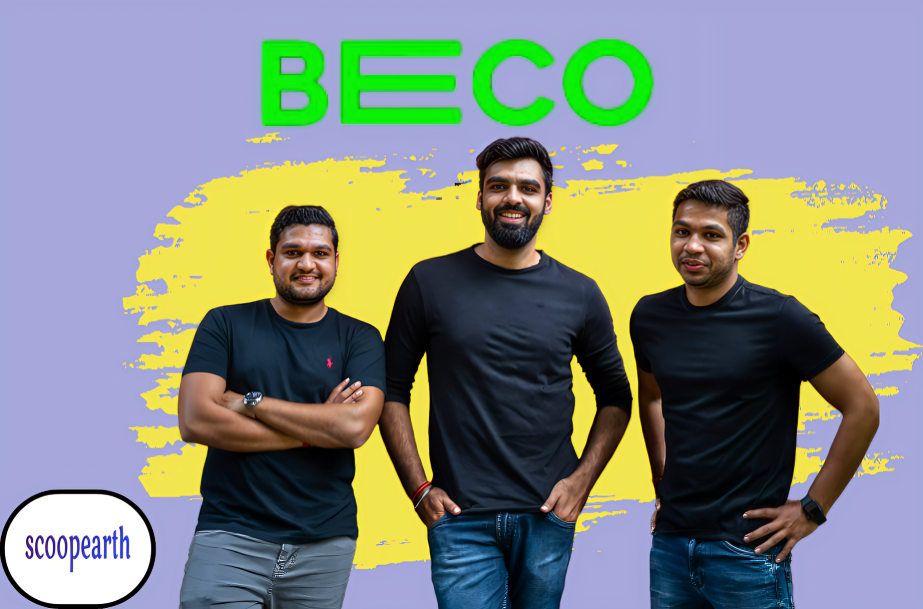
Beco was co-founded by cousins Aditya Ruia and Anuj Ruia, alongside their close friend Akshay Varma, each contributing unique expertise to the venture.
Aditya Ruia, a graduate of BITS Pilani, manages operations and strategy. His early involvement in environmental clean-up initiatives significantly influenced Beco’s commitment to sustainability. Anuj Ruia is responsible for execution and sourcing, adeptly navigating complex supply chains that extend from bamboo plantations in Northeast India to cornstarch processors.
Akshay Varma, an alumnus of IIT Madras and a former consultant, serves as the CEO. He spearheads product development and market strategies, positioning Beco as a viable alternative to conventional chemical cleaning products.
A Beach Cleanup That Inspired a Business
The inception of Beco can be traced back to a beach cleanup in Mumbai in 2017, where Aditya Ruia was struck by the sight of long-standing plastic waste. This prompted further investigation into the scarcity of affordable, sustainable alternatives for everyday household items in India.
Beco officially launched in 2018 with a modest lineup of three products—bamboo tissues, kitchen towels, and compostable garbage bags—initially catering to the Mumbai market. With limited resources, the founders concentrated on efficient execution. A seed funding round of ₹4 crore in 2021 allowed the company to invest significantly in the research and development of bio-enzyme cleaners, a process that took nearly two years to refine.
A Product Range Grounded in Sustainability
Beco’s product philosophy is straightforward: effective cleaning doesn’t necessitate harsh chemicals. The company harnesses natural bio-enzymes, bamboo fibre, and plant-based materials to craft products that are both safe and high-performing.
Their portfolio encompasses home and personal care items, including bamboo toilet paper, compostable garbage bags, enzyme-based cleaners for floors, dishes, and laundry, as well as bamboo toothbrushes. Each product undergoes rigorous lab testing to ensure they meet the standards of traditional chemical alternatives.
Navigating the Challenges of Sustainable Scaling
Establishing a sustainability-driven startup in India comes with its own set of challenges. Beco has encountered issues such as raw material volatility, inconsistent bamboo supply, and fluctuating cornstarch prices. Scaling the production of enzyme cleaners necessitated multiple formulation iterations and extensive testing.
Consumer perception posed another challenge, as many people equated eco-friendly products with higher costs or inferior effectiveness. Distribution channels also evolved slowly, with offline retailers initially hesitant to stock premium sustainable offerings.
Financial Growth and Funding Journey
Beco’s revenue surged from ₹1.49 crore in FY20 to ₹49.79 crore in FY24, showcasing robust growth post-2021. However, achieving profitability remains a work in progress, with FY24 losses widening to ₹9.36 crore due to increased marketing expenditures and team expansion.
The startup has successfully raised ₹111.67 crore, including a $10 million pre-Series B round led by Tanglin Venture Partners, with backing from Rukam Capital, Titan Capital, and angel investors like Dia Mirza.
What’s Next for Beco?
Looking ahead, Beco plans to triple its production capacity, venture into Tier-2 cities, and explore export opportunities in the Middle East. The company is also considering new personal care product launches and B2B partnerships with hotels and institutions.
As sustainability gradually becomes a mainstream concern, Beco aspires to establish itself as a trusted, everyday brand, demonstrating that eco-friendly living can be both effective and accessible for all in India.