

The United States has one of the world’s largest and most competitive ecommerce markets. Consumers use online platforms for everything from groceries and electronics to fashion, furniture and everyday household products. Ecommerce has also changed how traditional retailers operate, pushing established companies to strengthen their websites, mobile apps, delivery networks and digital marketplaces.
The U.S. ecommerce market is highly concentrated at the top. According to Euromonitor, Amazon and Walmart significantly increased their combined position between 2020 and 2025, with Amazon’s share rising from around 30% to 34% and Walmart’s from 6% to 11%.
Based on U.S. ecommerce market presence, online retail scale and the strength of their digital businesses, here are 10 major ecommerce companies in the USA.
Top 10 Ecommerce Companies in USA
| Rank | Company | Founded | Headquarters | Main Ecommerce Focus |
|---|---|---|---|---|
| 1 | Amazon | 1994 | Seattle, Washington | General marketplace |
| 2 | Walmart | 1962 | Bentonville, Arkansas | General retail & groceries |
| 3 | Apple | 1976 | Cupertino, California | Electronics & technology |
| 4 | eBay | 1995 | San Jose, California | Online marketplace |
| 5 | The Home Depot | 1978 | Atlanta, Georgia | Home improvement |
| 6 | Target | 1902 | Minneapolis, Minnesota | General retail |
| 7 | Costco | 1983 | Issaquah, Washington | Wholesale & retail |
| 8 | Best Buy | 1966 | Richfield, Minnesota | Electronics |
| 9 | Chewy | 2011 | Plantation, Florida | Pet products |
| 10 | Wayfair | 2002 | Boston, Massachusetts | Furniture & home goods |
1. Amazon
Amazon is the biggest ecommerce company in the United States and remains the dominant online shopping destination for American consumers. Statista estimates that Amazon accounted for about 40.5% of U.S. retail ecommerce sales in 2025, putting it significantly ahead of its competitors.
Founded in 1994 by Jeff Bezos, Amazon initially focused on books before expanding into electronics, clothing, groceries, home products and almost every other major retail category. Its marketplace model also allows millions of third-party sellers to reach customers through the platform.
Amazon’s ecosystem includes Prime membership, fulfillment services, digital payments, advertising and logistics. Its enormous product selection and fast delivery network remain some of its biggest advantages.
2. Walmart
Walmart is Amazon’s biggest traditional retail competitor in U.S. ecommerce. The company’s online business combines its enormous physical-store network with digital shopping, grocery delivery, pickup services and Walmart Marketplace.
Statista estimated Walmart’s U.S. retail ecommerce share at 9.2% in 2025, making it the country’s second-largest online retailer by that measure.
Walmart has invested heavily in ecommerce infrastructure, including fulfillment centers, delivery capabilities and its third-party marketplace. Its strength in groceries also gives it an advantage because customers can combine online orders with pickup or delivery from nearby stores.
The company’s physical stores also serve as an important part of its ecommerce infrastructure, helping it compete with online-first businesses.
3. Apple

Apple operates one of the strongest direct-to-consumer ecommerce businesses in the United States. While Apple is primarily known as a technology company, its online store is a major channel for selling iPhones, iPads, Macs, Apple Watches, AirPods and accessories.
Apple ranked third among leading U.S. retail ecommerce companies in Statista’s 2025 market-share estimates, with approximately 3.2% of U.S. retail ecommerce sales.
Apple’s ecommerce strategy differs from marketplace-based companies such as Amazon and eBay. Instead of hosting millions of independent sellers, Apple primarily sells its own products through its website and integrates online shopping with its physical retail stores.
Its strong brand recognition, product ecosystem and direct relationship with customers make Apple one of the most significant ecommerce businesses in the country.
4. eBay
eBay is one of the oldest major ecommerce platforms in the United States. Founded in 1995, eBay helped popularize online auctions and peer-to-peer selling before developing into a broader marketplace.
The company remains particularly important in categories such as collectibles, electronics, automotive parts, fashion and used products. Unlike retailers that primarily sell their own inventory, eBay connects buyers with independent sellers.
Statista estimated eBay’s U.S. retail ecommerce market share at 2.8% in 2025.
Its marketplace model remains useful for people looking for rare, discontinued, second-hand or collectible products. The platform’s long history and large seller community continue to give it a distinct position in the U.S. ecommerce market.
5. The Home Depot
The Home Depot is one of the largest home-improvement retailers in the United States and has developed a significant online shopping operation.
Customers can use its website and mobile services to purchase products ranging from power tools and building materials to appliances, garden equipment and home-improvement supplies. The company’s ecommerce business is closely connected to its physical stores, allowing customers to check product availability, order online and use store pickup.
Statista estimated The Home Depot’s share of U.S. retail ecommerce sales at around 1.9% in 2025.
Its combination of physical locations, product expertise and digital shopping makes the company an important example of an omnichannel ecommerce business.
6. Target
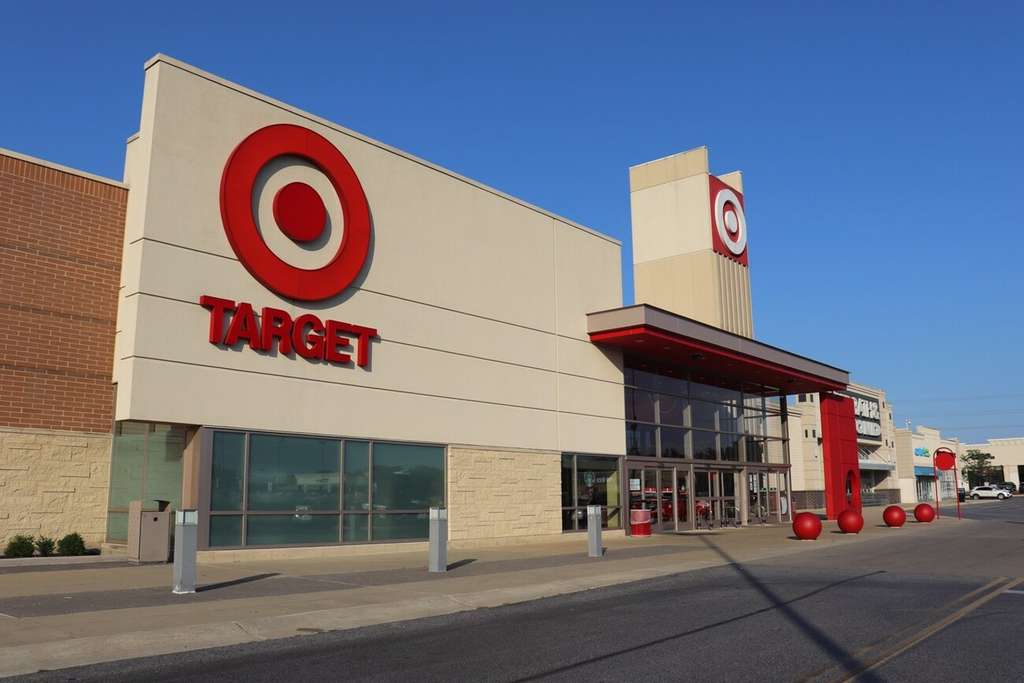
Target has built a strong digital shopping business around its network of physical stores. Customers can order products through Target’s website and app, use same-day services and collect purchases from stores.
Target sells a broad range of products, including clothing, beauty products, electronics, groceries, home goods and household essentials.
The company held approximately 1.6% of U.S. retail ecommerce sales in 2025, according to Statista estimates.
Target’s stores give it an important advantage in ecommerce because they can also function as fulfillment locations. This allows the retailer to combine online ordering with pickup and local delivery rather than relying entirely on large centralized warehouses.
7. Costco
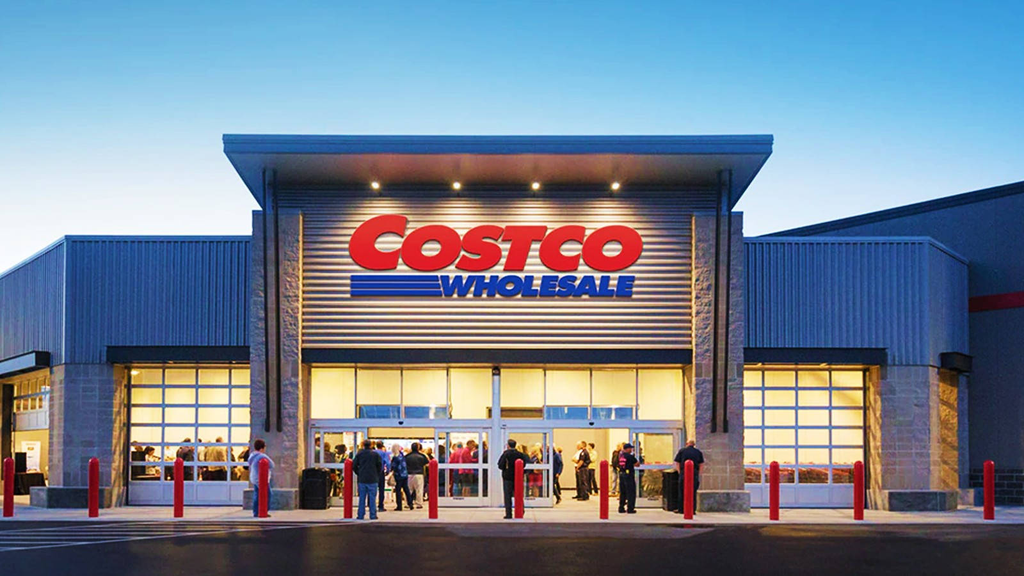
Costco Wholesale has become another important player in American ecommerce. The company is best known for its membership-based warehouse stores, but its website provides customers with access to a large selection of products that can be ordered online.
Costco’s online assortment includes electronics, appliances, furniture, clothing, groceries, jewelry and various household products.
The company’s membership model is an important part of its ecommerce strategy. Customers already have an established relationship with Costco through their memberships, encouraging repeat purchases both online and in stores.
Statista estimated Costco’s U.S. retail ecommerce share at 1.5% in 2025.
Its digital business therefore complements rather than replaces its large physical warehouse network.
8. Best Buy
Best Buy is one of America’s best-known electronics retailers and has developed a substantial ecommerce operation.
Its online store sells laptops, smartphones, televisions, gaming products, appliances, cameras and other consumer electronics. Customers can also combine online shopping with services and support available through Best Buy stores.
Statista estimated Best Buy’s share of U.S. retail ecommerce sales at approximately 1.1% in 2025.
Best Buy’s physical-store network remains an important part of its digital strategy. Customers can research products online and then choose delivery, store pickup or in-person assistance.
This omnichannel approach helps Best Buy compete with Amazon and other online retailers in a category where product comparison and expert assistance can influence purchasing decisions.
9. Chewy

Chewy has established itself as a major ecommerce company by focusing almost entirely on the petcare market.
The company sells pet food, treats, toys, accessories, medications and other products for dogs, cats and other household pets. Its specialized model allows it to focus heavily on recurring purchases, making subscription and automatic-delivery services particularly important.
Chewy generated about $12.6 billion in revenue in 2025, according to figures reported in Fortune’s 2026 U.S. company rankings.
The company demonstrates how specialized ecommerce businesses can compete with general marketplaces by building expertise and customer loyalty within a particular category.
10. Wayfair
Wayfair is a major online retailer specializing in furniture and home products. Unlike Amazon or Walmart, Wayfair’s business is heavily focused on the home category.
Its online marketplace offers furniture, décor, mattresses, lighting, kitchen products, outdoor items and other household goods. Because many of these products are large or difficult to transport, logistics and delivery are especially important to Wayfair’s business model.
Wayfair generated approximately $12.46 billion in revenue in 2025, according to Fortune’s 2026 U.S. company rankings.
The company has built its position by offering a broad selection of home products online and using digital tools to help customers search through large numbers of products.
Top Ecommerce Companies in USA: Key Comparison
The companies on this list use very different approaches to online retail. Amazon operates a massive marketplace, Apple focuses on its own technology products, while Chewy and Wayfair concentrate on specific consumer categories.
| Company | Key Strength Business Model |
| Amazon | Huge selection & fast delivery Marketplace + retail |
| Walmart | Stores + online integration Omnichannel retail |
| Apple | Strong brand & direct sales Direct-to-consumer |
| eBay | Independent sellers & collectibles Marketplace |
The Home Depot Home-improvement specialization Omnichannel retail
| Target | Same-day services & stores | Omnichannel retail | |||
| Costco | Membership model | Membership retail | |||
| Best Buy | Electronics expertise | Omnichannel retail | |||
| Company | Key Strength | Business Model | |||
| Chewy | Pet specialization | Online specialty retail | |||
| Wayfair | Home-furnishing selection | Online specialty retail | |||
U.S. Ecommerce Market and Competition
The U.S. ecommerce market includes both online-first companies and traditional retailers that have expanded aggressively into digital commerce. Amazon and Walmart stand out because of their enormous scale, while companies such as eBay, Chewy and Wayfair have built specialized positions.
Website traffic also highlights the enormous gap between the market leaders and other platforms. Similarweb’s December 2025 data placed Amazon first among U.S. ecommerce websites with more than 6.7 billion monthly visits, followed by eBay with about 1.16 billion and Walmart with roughly 721 million.
The market is also changing rapidly. Newer platforms such as Temu, Shein and TikTok Shop are putting pressure on established retailers. Social commerce, in particular, is becoming an increasingly important part of online shopping as consumers discover products through short-form videos and creators.
Future of Ecommerce in the USA
The U.S. ecommerce industry is expected to remain highly competitive. Large companies are investing in faster delivery, artificial intelligence, personalization, digital payments, marketplace services and omnichannel shopping.
Another important trend is the integration of online and offline retail. Walmart, Target, Home Depot, Costco and Best Buy are using their physical stores as part of their ecommerce infrastructure, while Amazon continues to expand beyond its traditional online marketplace.
Social commerce is also becoming increasingly important. Platforms such as TikTok are turning product discovery, entertainment and purchasing into a single experience. At the same time, specialized companies such as Chewy and Wayfair continue to demonstrate that ecommerce businesses do not necessarily need to sell everything to succeed.
Conclusion
The U.S. ecommerce industry is led by a mixture of technology companies, online marketplaces and traditional retailers. Amazon remains the clear market leader, while Walmart continues to strengthen its position as the largest traditional retail competitor. Companies such as Apple, eBay, The Home Depot, Target, Costco, Best Buy, Chewy and Wayfair have each developed distinctive approaches to online retail.
As shopping habits continue to move between websites, apps and physical stores, these companies will compete not only on price and product selection but also on convenience, delivery speed, customer experience and technology. With new social-commerce and international competitors entering the market, the next phase of U.S. ecommerce is likely to be even more competitive.
Frequently Asked Questions
Which is the largest ecommerce company in the USA?
Amazon is the largest U.S. ecommerce company by retail ecommerce market share. Statista estimated its 2025 share at approximately 40.5%.
Is Walmart bigger than Amazon in ecommerce?
No. Amazon remains significantly larger in U.S. ecommerce, although Walmart is the second-largest major online retailer and has been rapidly expanding its digital business.
Is eBay still a major ecommerce company?
Yes. eBay remains one of the largest ecommerce marketplaces in the U.S. and continues to be particularly important for used products, collectibles, electronics and peer-to-peer commerce.
Which ecommerce company specializes in pet products?
Chewy specializes in online pet products, including food, toys, accessories and other pet-care products.
Which ecommerce company specializes in furniture?
Wayfair is one of the best-known U.S. ecommerce companies focused primarily on furniture and home goods.
What is omnichannel ecommerce?
Omnichannel ecommerce combines online shopping with physical retail services. Customers may discover or purchase a product online and then choose home delivery, store pickup or another physical-store service.
How is social commerce changing ecommerce?
Social commerce combines product discovery and shopping with social-media content. Platforms such as TikTok Shop allow consumers to discover products through creators and videos and purchase them through the same digital ecosystem.
Are traditional retailers still important in ecommerce?
Yes. Companies such as Walmart, Target, Home Depot, Costco and Best Buy have invested heavily in websites, apps, delivery and store pickup, allowing them to compete with online-first marketplaces.
What is the future of ecommerce in the USA?
The industry is expected to focus increasingly on faster fulfillment, personalization, AI-powered shopping experiences, social commerce and the integration of online and physical retail.