The United States has the largest and most competitive stock brokerage industry in the world. Millions of Americans use online brokers every day to buy and sell stocks, ETFs, options, and mutual funds, often without paying any commission at all.
This industry has changed a lot in the last few decades. What used to be an expensive service, available only through phone calls to a broker, is now available on a mobile app in a few seconds. Some brokers focus on long-term investors who want retirement planning and low-cost index funds. Others focus on active traders who want fast execution, advanced charts, and options trading tools.
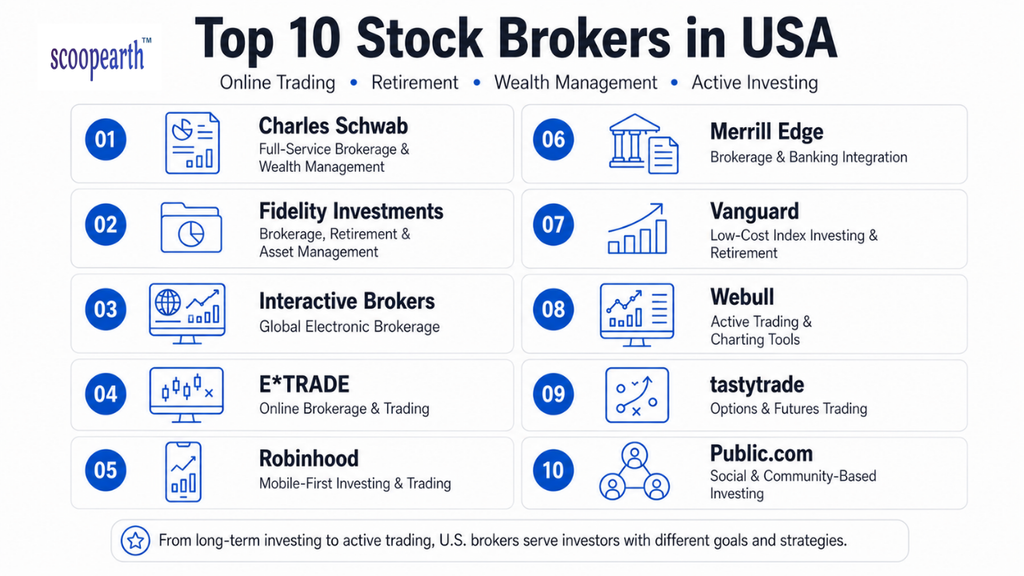
Below is a brief overview of the 10 leading stock brokers in the United States, ranked according to their scale, date of founding, ownership structure, and the range of services they provide.
Quick Comparison
| Rank | Company | Founded | Owner / Founders | Headquarters | Core Focus |
| 1 | Charles Schwab | 1971 | Charles R. Schwab (Founder); Rick Wurster (CEO); publicly listed (NYSE: SCHW) | Westlake, Texas | Full-Service Brokerage & Wealth Management |
| 2 | Fidelity Investments | 1946 | Founded by Edward C. Johnson II; privately held, led by CEO Abigail Johnson | Boston, Massachusetts | Brokerage, Retirement & Asset Management |
| 3 | Interactive Brokers | 1978 | Founded by Thomas Peterffy; publicly listed (Nasdaq: IBKR) | Greenwich, Connecticut | Global Electronic Brokerage |
| 4 | E*TRADE | 1982 | Founded by William A. Porter & Bernard A. Newcomb; part of Morgan Stanley | New York, New York | Online Brokerage & Trading |
| 5 | Robinhood | 2013 | Founded by Vladimir Tenev & Baiju Bhatt; publicly listed (Nasdaq: HOOD) | Menlo Park, California | Mobile-First Commission-Free Trading |
| 6 | Merrill Edge | 1914 (as Merrill Lynch) | Founded by Charles E. Merrill; part of Bank of America | New York, New York | Brokerage & Banking Integration |
| 7 | Vanguard | 1975 | Founded by John C. Bogle; investor-owned, led by CEO Salim Ramji | Malvern, Pennsylvania | Low-Cost Index Investing & Retirement |
| 8 | Webull | 2016 | Founded by Wang Anquan; publicly listed (Nasdaq: BULL) | St. Petersburg, Florida | Active Trading & Charting Tools |
| 9 | tastytrade | 2011 | Founded by Tom Sosnoff; privately held | Chicago, Illinois | Options & Futures Trading |
| 10 | Public.com | 2019 | Founded by Jannick Malling & Leif Abraham; privately held | New York, New York | Social & Community-Based Investing |
Charles Schwab – America’s Largest Publicly Traded Brokerage
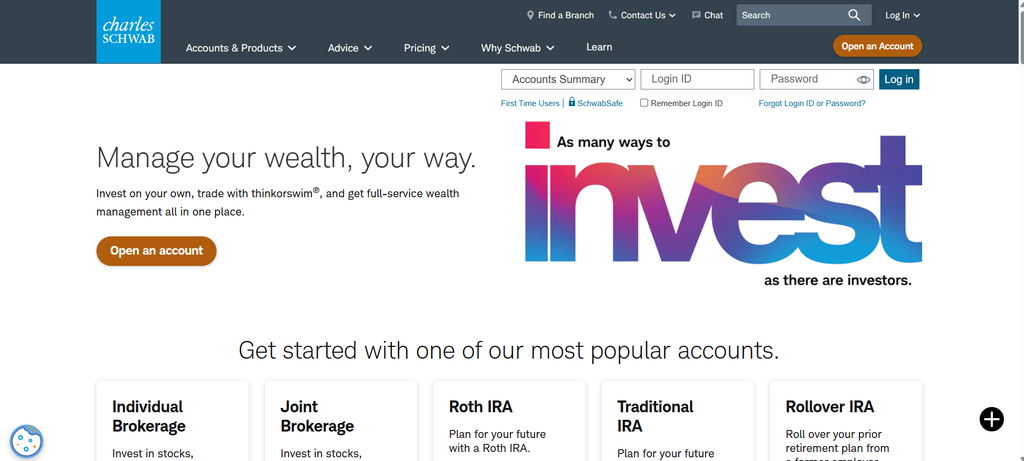
Image Courtesy:Charles Schwab (Official Website)
- Founded: 1971
- Owner: Founded by Charles R. Schwab; publicly listed, led by CEO Rick Wurster
- Headquarters: Westlake, Texas
Charles Schwab started his brokerage company in 1971 with the idea of making the stock market accessible to everyone. Schwab realized that clients who are not accredited and do not have substantial incomes are forced to pay huge fees to traditional Wall Street brokerage houses.
In 1975, Schwab took advantage of the SEC’s decision to deregulate the fixed commission system and created a discount brokerage firm that offered services significantly cheaper than its competitors.
This allowed Schwab to become one of the biggest brokerage companies in America after it acquired TD Ameritrade in 2020, managing hundreds of millions of dollars on behalf of its clients and holding tens of millions of accounts for ordinary Americans.
What Charles Schwab does: Full-service brokerage, banking, and wealth management for retail and institutional clients.
Services: Stock and ETF trading, options trading, mutual funds, retirement accounts, banking services, and the thinkorswim platform for advanced traders.
Fidelity Investments – A Family-Run Financial Giant
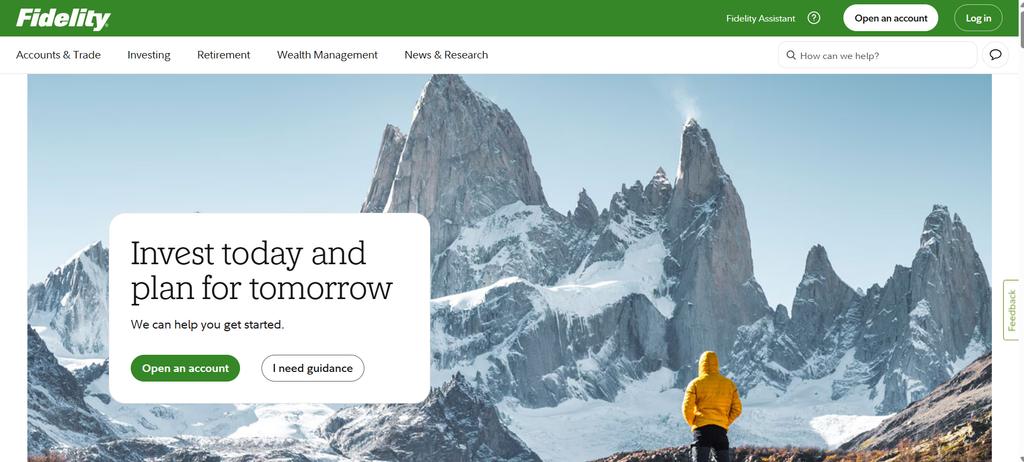
Image Courtesy: Fidelity Investments (Official Website)
- Founded: 1946
- Owner: Founded by Edward C. Johnson II; privately held, led by CEO Abigail Johnson
- Headquarters: Boston, Massachusetts
Fidelity was founded in 1946 and remains one of the few large American financial companies controlled by its founding family. The company is now run by Abigail Johnson, the granddaughter of its founder, who has guided the firm to become one of the world’s largest asset managers.
The company is known for its low-expense-ratio index funds and its role as one of the largest administrators of corporate 401(k) retirement plans in the country.
What Fidelity Investments does: Brokerage services, retirement planning, and asset management for individuals and institutions.
Services: Commission-free stock and ETF trading, mutual funds, 401(k) administration, retirement accounts, and wealth management advice.
Interactive Brokers – A Pioneer of Electronic Trading
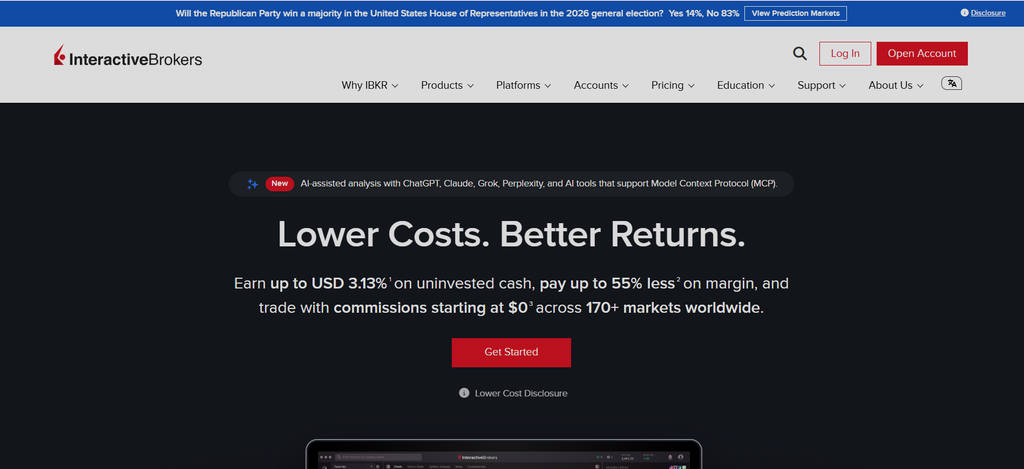
Image Courtesy: Interactive Brokers (Official Website)
- Founded: 1978
- Owner: Founded by Thomas Peterffy; publicly listed, led by CEO Milan Galik
- Headquarters: Greenwich, Connecticut
Interactive Brokers was founded by Thomas Peterffy, an early pioneer of computer-assisted trading, who helped to change the industry from floor-based trading to automated and electronic trading. The company has grown from a small market-making firm to a top-level electronic brokerage firm.
Now, Interactive Brokers provides access to more than 90 markets worldwide and has become a preferred choice for pro traders and international investors due to its low commissions and wide range of products offered.
What Interactive Brokers does: Global electronic brokerage and direct market access for professional and retail investors.
Services: Stock, options, futures, currency, and bond trading, cryptocurrency access, and margin lending across international markets.
E*TRADE – The Broker That Popularized Online Trading
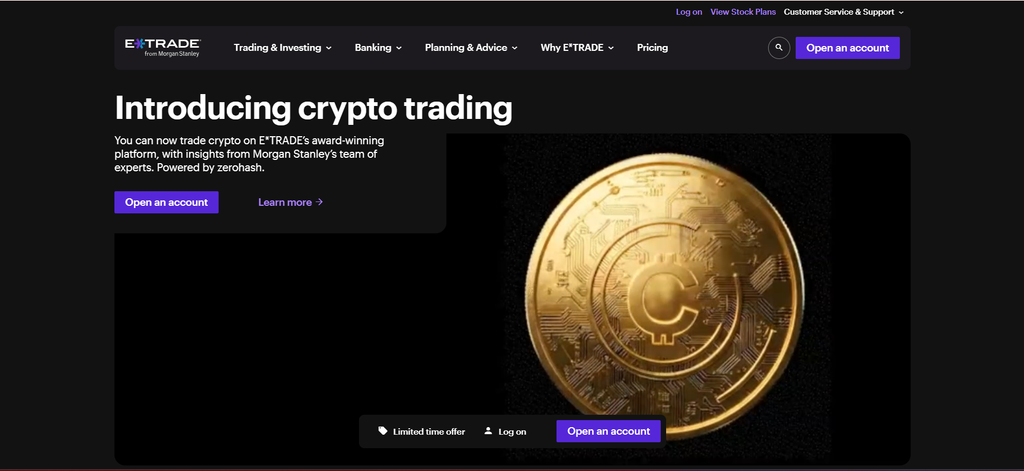
Image Courtesy: E*TRADE(Official Website)
- Founded: 1982
- Owner: Founded by William A. Porter and Bernard A. Newcomb; part of Morgan Stanley
- Headquarters: New York, New York
ETRADE was among the first online trading platforms that allowed common Americans to participate in the stock market. It disrupted the market by enabling individual investors to trade digitally at a time when such transactions required a phone call.
Its innovative technology enabled it to democratize trading, making it accessible to millions of unsophisticated investors. The company was bought by Morgan Stanley in 2020, providing it with much-needed liquidity as it continues to provide its trading platform and services to the public.
What E*TRADE does: Online brokerage and trading services under the Morgan Stanley umbrella.
Services: Commission-free stock and ETF trading, options trading, retirement accounts, and banking products through Morgan Stanley.
Robinhood – The App That Made Investing Simple
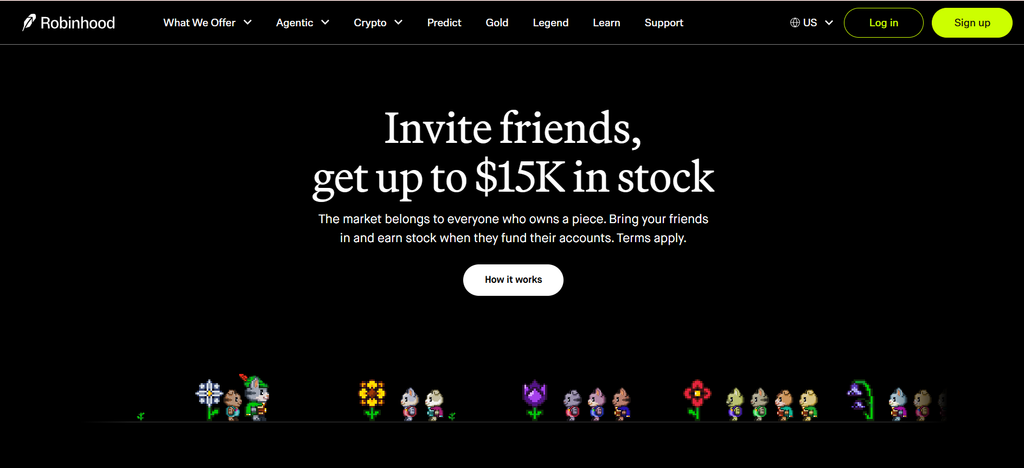
Image Courtesy: Robinhood (Official Website)
- Founded: 2013
- Owner: Founded by Vladimir Tenev and Baiju Bhatt; publicly listed, led by CEO Vladimir Tenev
- Headquarters: Menlo Park, California
Robinhood was founded on the idea that investing is a fair game for everyone regardless of income levels. A user-friendly application drew in thousands of new and young investors who were previously alienated by the complexities of the stock market and by brokers’ high commission fees.
The company is now expanding into crypto, retirement, and cash management accounts, and it is popular for its role in democratizing investing and simplifying the stock market for the majority.
What Robinhood does: Mobile-first, commission-free trading aimed at retail and beginner investors.
Services: Commission-free stock, ETF, options, and cryptocurrency trading, retirement accounts, and cash management tools.
Merrill Edge – Wall Street Legacy Meets Modern Banking
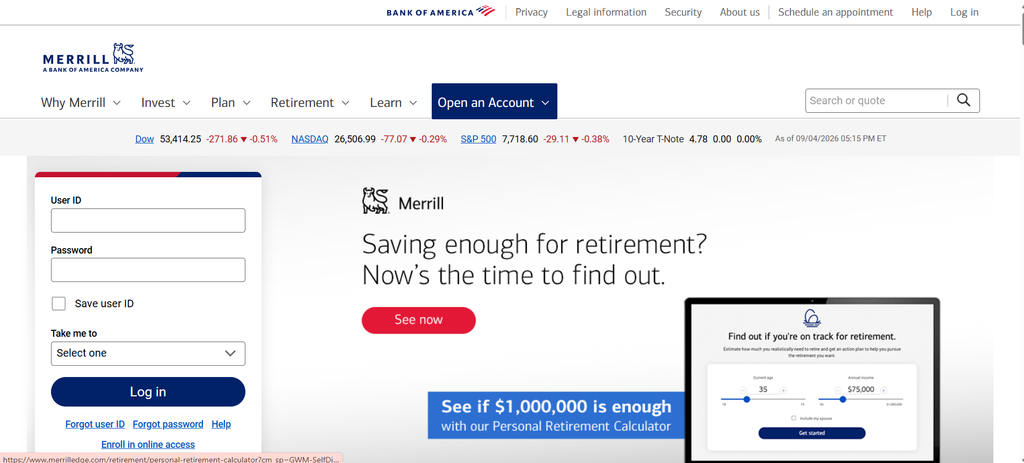
Image Courtesy: Merrill Edge(Official Website)
- Founded: 1914 (as Merrill Lynch)
- Owner: Founded by Charles E. Merrill; part of Bank of America
- Headquarters: New York, New York
Merrill Edge carries forward the legacy of Merrill Lynch, one of the most recognized names in Wall Street history, founded on the belief that everyday investors deserved the same opportunities as the wealthy. After the 2008 financial crisis, Merrill Lynch’s wealth business was folded into Bank of America.
Merrill Edge now operates as Bank of America’s online investing arm, giving customers a way to manage banking and investing together within one account ecosystem.
What Merrill Edge does: Online brokerage and guided investing integrated with Bank of America banking.
Services: Commission-free stock and ETF trading, guided investment portfolios, retirement accounts, and integration with Bank of America checking and savings accounts.
Vanguard – The Home of Low-Cost Index Investing
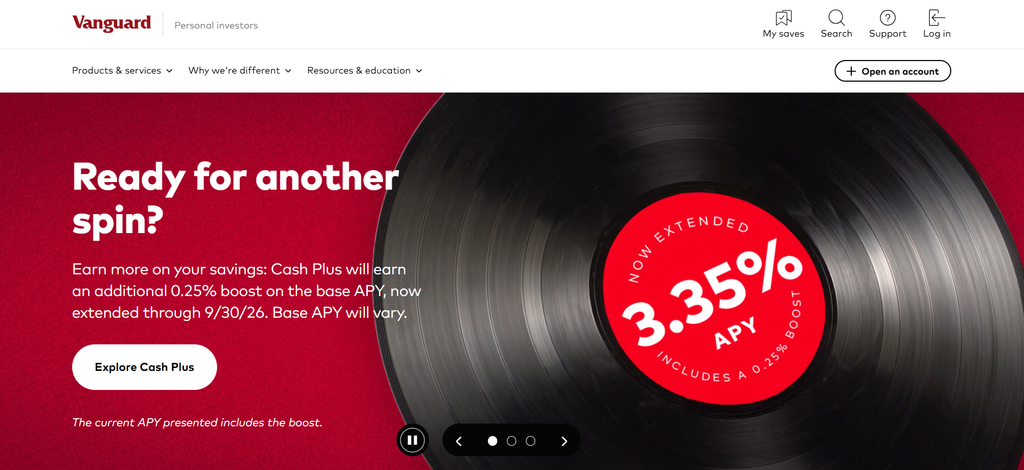
Image Courtesy: Vanguard (Official Website)
- Founded: 1975
- Owner: Founded by John C. Bogle; investor-owned, led by CEO Salim Ramji
- Headquarters: Malvern, Pennsylvania
Vanguard was founded by John C. Bogle, who invented the first index mutual fund and revolutionized the industry by championing low-cost investing and redefining the thinking about expenses. The company has a unique ownership structure that places the firm’s funds in the ownership of its investors, making Vanguard one of the companies with the lowest expense ratios.
Salim Ramji, who joined as CEO in 2024, has continued this low-cost focus while expanding Vanguard’s technology and product offerings, including access to newer asset classes.
What Vanguard does: Low-cost investing and retirement planning built around long-term, buy-and-hold strategies.
Services: Stock and ETF trading, mutual funds, retirement accounts, and financial advice for long-term investors.
Webull – A Fast-Growing Platform for Active Traders
Image Courtesy: Webull (Official Website)
- Founded: 2016
- Owner: Founded by Wang Anquan; publicly listed, led by CEO Anthony Denier
- Headquarters: St. Petersburg, Florida
Webull entered the market with a focus on active traders who wanted advanced charting and technical analysis tools without paying for them separately. Its data-rich interface quickly attracted a younger generation of traders looking for more depth than typical beginner apps.
The company went public on the Nasdaq in 2025 and has since expanded its headquarters and workforce in Florida while continuing to add new products such as AI-powered stock research tools.
What Webull does: Commission-free trading built around advanced charts and technical analysis.
Services: Stock, ETF, options, and cryptocurrency trading, extended-hours trading, and paper trading for practice.
tastytrade – Built by Options Traders, for Options Traders
Image Courtesy: tastytrade (Official Website)
- Founded: 2011
- Owner: Founded by Tom Sosnoff; privately held
- Headquarters: Chicago, Illinois
tastytrade was founded by Tom Sosnoff, who also helped create the trading platform thinkorswim before it was sold to TD Ameritrade. He built tastytrade specifically for options and futures traders who wanted lower costs and practical, no-nonsense market education.
The platform is best known for capping fees on multi-leg options trades, a structure that appeals strongly to frequent options traders rather than casual, long-term investors.
What tastytrade does: Specialized brokerage focused on options and futures trading.
Services: Options and futures trading with capped multi-leg fees, daily market commentary, and trader education content.
Public.com – A Newer Broker Built Around Community
Image Courtesy: Public.com (Official Website)
- Founded: 2019
- Owner: Founded by Jannick Malling and Leif Abraham; privately held
- Headquarters: New York, New York
Public was founded with the idea that investing could be more transparent and social, rather than something people figure out alone. The founders built a platform where users could see what others are investing in and follow shared market discussions.
The company has since added fractional shares, bonds, and options trading, positioning itself as an approachable option for newer investors who want both tools and community insight.
What Public.com does: Commission-free investing combined with a social, community-driven experience.
Services: Commission-free stock and ETF trading, fractional shares, bonds, options trading, and a social investing feed.
Frequently Asked Questions (FAQs)
Which is the largest stock broker in the USA?
Charles Schwab is currently the largest publicly traded brokerage firm in the country, especially after its 2020 merger with TD Ameritrade.
Which brokers on this list are privately held versus publicly traded?
Fidelity, tastytrade, and Public.com are privately held, while Charles Schwab, Interactive Brokers, Robinhood, and Webull are publicly traded on US stock exchanges.
Which broker is best known for long-term, low-cost investing?
Vanguard is best known for long-term, low-cost investing because of its investor-owned structure and its very low expense ratios on funds.
Which broker is best for professional and international traders?
Interactive Brokers is widely used by professional and international traders because of its access to more than 90 global markets and competitive pricing.
Do all stock brokers in the USA charge zero commission on trades?
Most major brokers now offer zero-commission trading on stocks and ETFs, though fees may still apply on options contracts and certain other products.
Which broker is best for options and futures trading?
tastytrade is well known among options and futures traders because of its capped fees on multi-leg trades and practical trader education.
Are these stock brokers regulated in the USA?
Yes, all major US stock brokers are regulated by the SEC and FINRA, and client accounts are protected by SIPC insurance up to certain limits.
Which brokers are owned by a bank or larger financial group?
Merrill Edge is owned by Bank of America, and E*TRADE operates under Morgan Stanley, giving both platforms access to larger banking networks.
Which broker is considered the most beginner-friendly?
Robinhood and Public.com are considered beginner-friendly because of their simple mobile apps and easy account setup process.
Why has the US stock brokerage industry grown so competitive in recent years?
Growth has been driven by the shift to zero-commission trading, rising smartphone-based investing, and brokers competing heavily on tools, research, and customer experience rather than fees alone.
Conclusion
The US stock brokerage industry is as varied as the American investing public itself. It ranges from long-established names like Charles Schwab, Fidelity, and Merrill Edge, which built their reputation on decades of trust and financial expertise, to newer, more focused platforms like Robinhood, Webull, and Public.com, which have made investing simple through mobile-first design.
The industry manages trillions of dollars for retail and institutional investors, and competition among these ten brokers continues to push down costs and improve tools for everyday Americans. As such, the brokers discussed here will remain central to how people in the United States save, invest, and plan for their financial future in the years ahead.