You know that feeling when you read a label and realize you have no idea what half the words mean? Honey aisles do that to people. Raw organic honey, pasteurized honey, raw mountain honey, it all looks the same in a jar. But it’s not.
Most people just grab whatever’s on the shelf and assume honey is honey. Then they taste it and wonder why the one their grandmother used to buy tasted completely different. Turns out, there’s a massive gap between what’s sitting on supermarket shelves and what actually comes straight from the hive.
What Makes Raw Honey Different
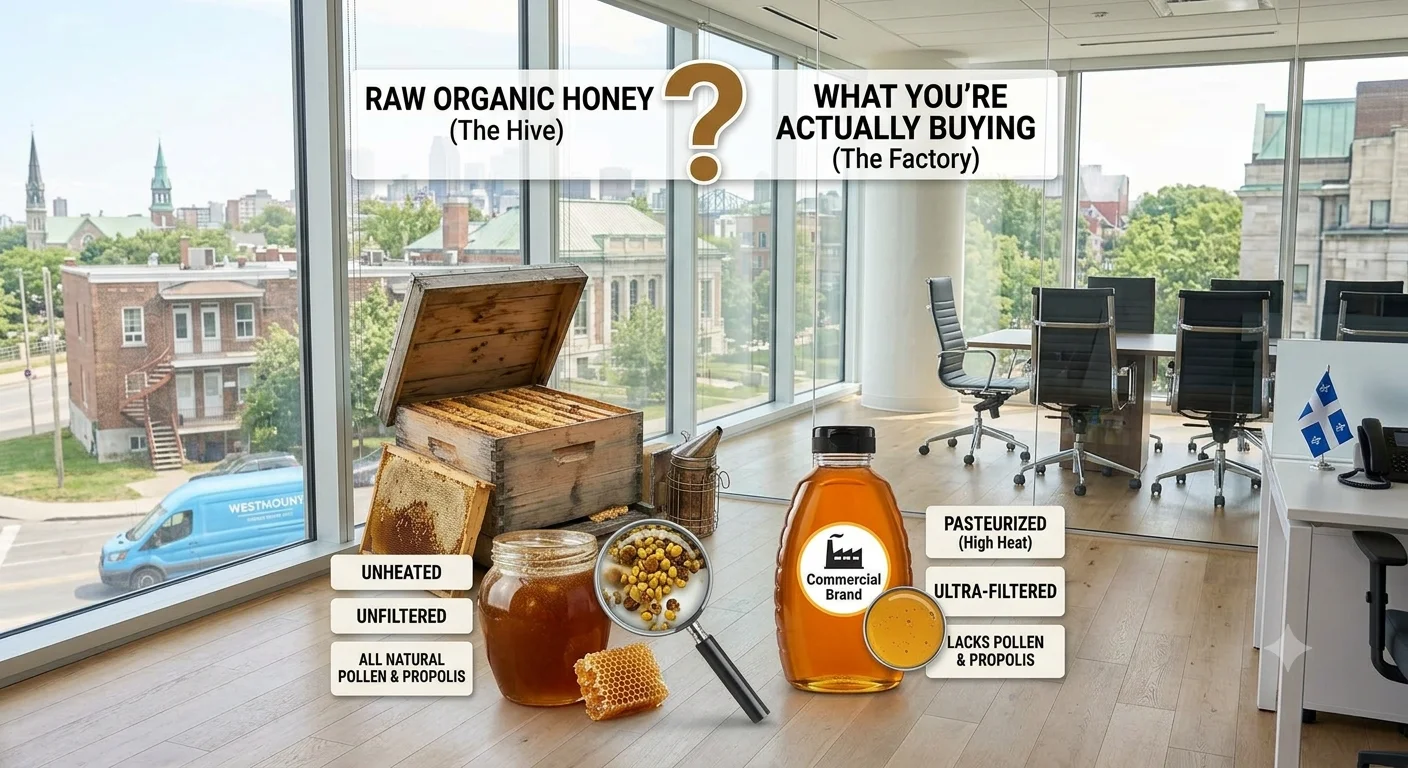
Raw honey never gets heated. That’s the core difference. When honey sits in processing facilities and gets heated to high temperatures, something gets lost. The natural enzymes, the pollen, the nutrients that make honey worth eating in the first place, they all break down.
When you buy raw honey, you are getting something that still has all of that intact. It still has the live enzymes that your body actually recognizes. It still has the pollen that beekeepers didn’t filter out. You can taste the difference immediately. It’s thicker, grainier sometimes, and the flavor is actually complex instead of just being sweet.
Mountain Honey Has Its Own Story
Raw mountain honey comes from bees that work in high-altitude regions. These bees are feeding on different flowers than bees in regular areas. Wildflowers that grow at elevation, rare plants, and vegetation that doesn’t exist in lowland areas. That changes everything about the honey they produce.
Mountain regions mean cleaner air, less industrial pollution, and fewer pesticides. The bees are doing their work in places where the environment is actually pristine. That translates directly into what ends up in the jar. You can taste richness in mountain honey that you don’t get anywhere else.
Organic Part Actually Matters
Organic certification isn’t just a buzzword. It means the beekeepers are not treating their hives with synthetic chemicals. The bees aren’t foraging in areas sprayed with pesticides. The entire operation follows standards that most people don’t even think about until they start reading labels.
When you pick up an organic jar, you know someone checked the sources. You know the flowers the bees visited weren’t doused in chemicals. It’s one less thing to worry about, which sounds simple until you realize how many things people usually have to worry about with food.
Why Your Honey Probably Isn’t Raw
Most commercial honey goes through processing specifically designed to make it look perfect. It gets heated to prevent crystallization. It gets filtered to remove pollen and particles. It gets blended with honey from multiple sources so every jar tastes identical.
This solves problems for big companies: shelf stability, consistent appearance, longer storage. But it destroys the actual benefit of eating honey in the first place. You are left with something that’s technically honey but has lost most of what made it valuable.
Some producers even mix in corn syrup or other sweeteners and still call it honey. It’s why checking the label actually matters. If the label doesn’t say raw, it’s been processed. If it doesn’t say organic, you don’t know what went into growing those flowers.
How to Actually Tell the Difference
Real raw honey often crystallizes. That grainy texture that looks weird in a jar? That’s actually a sign it’s real. Processed honey stays smooth and liquid because the processing removes the particles that trigger crystallization.
Taste it. Raw honey has complexity. You might taste floral notes, or earthiness, or something that reminds you of wildflowers. Store-bought processed honey just tastes sweet and flat.
Check the label. It should say raw. It should say organic if that’s what you are after. If it says honey product or honey blend, keep walking.
Finding Good Honey Isn’t Complicated
Local beekeepers often have the best stuff. They are not trying to sell to massive retailers. They are selling to people who actually care about quality. Farmers markets usually have stands where someone can explain exactly where the honey came from and what flowers the bees were working.
When you find good raw honey, even the price makes sense. You are not paying for pretty packaging or corporate marketing. You are paying for something that took real work to produce.
Bottom Line
Raw organic honey and raw mountain honey aren’t luxury items. They are the actual product. Everything else sitting on supermarket shelves is a processed version that lost most of its value somewhere along the supply chain.
Your body can recognize real honey. Your taste buds can tell the difference. Once you’ve had the real thing, it’s hard to go back to the processed version. It tastes like actual food instead of just sweet liquid in a jar.