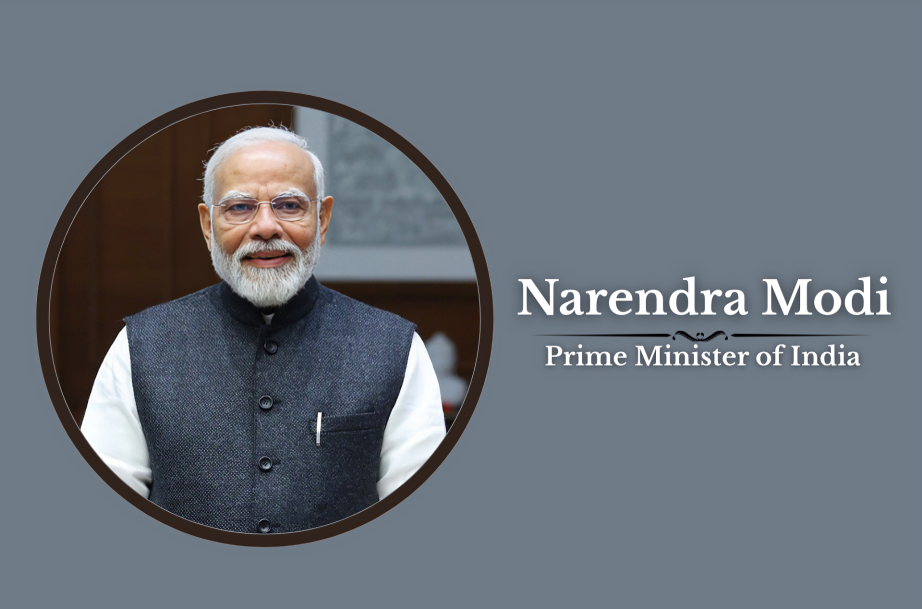
At Yashobhoomi, the India International Convention and Expo Centre in New Delhi, Prime Minister Narendra Modi will inaugurate the fourth SEMICON India on September 2, 2025. This flagship event, which goes on until September 4, is a crucial part of India’s efforts to become a world semiconductor powerhouse. SEMICON India 2025 is proud to welcome 33 countries, 350 exhibitors, more than 50 visionary speakers, and over 50 of the world’s CXOs to South Asia’s largest event that presents technova, advancements in semiconductor and electronic technologies.
India’s semiconductor journey
India has been on an active semiconductor path owing to the Semicon India Programme pushed by the government to create a self-sustainable and strong semiconductor ecosystem. Ten strategic projects have so far been approved, including high-volume fabrications (Fabs), 3D heterogeneous packaging, compound semiconductor, including Silicon Carbide (SiC), and outsourced semiconductor assembly and test (OSATs). All of these projects are not only infrastructural milestones but also a goal for India to get access to significant parts of the global semiconductor value chain.
The government commitment is not restricted to manufacturing. Under the Design Linked Incentive (DLI) scheme, 23 start-ups have been supported to develop chips to be used in CCTV systems, navigation devices, motor controllers, communication modules, and microprocessor units, among others. More than 280 academic institutions and 72 startups have been able to access the latest design tools, as well, which is fostering the next generation of chip designers and innovators.
The combination of fabrication, design, packaging, and testing represents a more holistic approach that India can create a vertically integrated semiconducting ecosystem. It is consistent with the macro policy of making India self-reliant, Atmanirbhar Bharat, where technological independence is regarded as an anchor of economic and strategic self-sustainability.
Alignment between policy and execution
The semiconductor policy of India stands apart due to policy implementation synchronisation. ISM is the ministry of Electronics and Information Technology (MeitY), which is the nodal agency for the Semicon India Programme. ISM assesses the proposals, organises technology alliances, liaises with the central and state governments, and administers fiscal awarding. Its main aim is to make India a credible international destination for semiconductor and electronics manufacturing.
Emergence as a semiconductor hub and global convergence
The timing is essential in SEMICON India 2025. India has the potential to become a hub of manufacturing semiconductors, which could prove to be an attractive alternative to countries as global supply chains realign and countries make a bigger effort in being less dependent on any single source of suppliers. The extent of demographic benefit, engineering capability, policy availability and the rising market need provides a promising environment for the growth of semiconductors in the country.
The location and democratic style of governance also make India very attractive to global investors due to their desire to achieve stability as well as scaling up. By having gained SEMICON India 2025, this country does not simply demonstrate what it is capable of but also indicates its willingness to become the leader in the next breakthrough within technology.
EMICON India 2025 is not a national-level event but a global convergence. The existence of global leading firms like Applied Materials, ASML, IBM, Infineon, KLA, Lam Research, MERCK, Micron, PSMC, Rapidus, Sandisk, Siemens, SK Hynix, TATA Electronics, and Tokyo Electron reinforces the global nature of Indian interests in the semiconductor industry. These companies can introduce to India the experience of chip development, manufacturing, material science and supply chain management that is singular in importance.
Conclusion
SEMICON India 2025 is not an ordinary industry exhibition; it is a statement of ambitions. India has risen in electrifying support of global governance in the semiconductor sector with a comprehensive vision, and in this turmoil, the convergence of policies, industry, academia and international cooperation at this event is a turning point. A long race remains with consistency in investment, ecologies, and talent development; that said, the ecosystem is established.