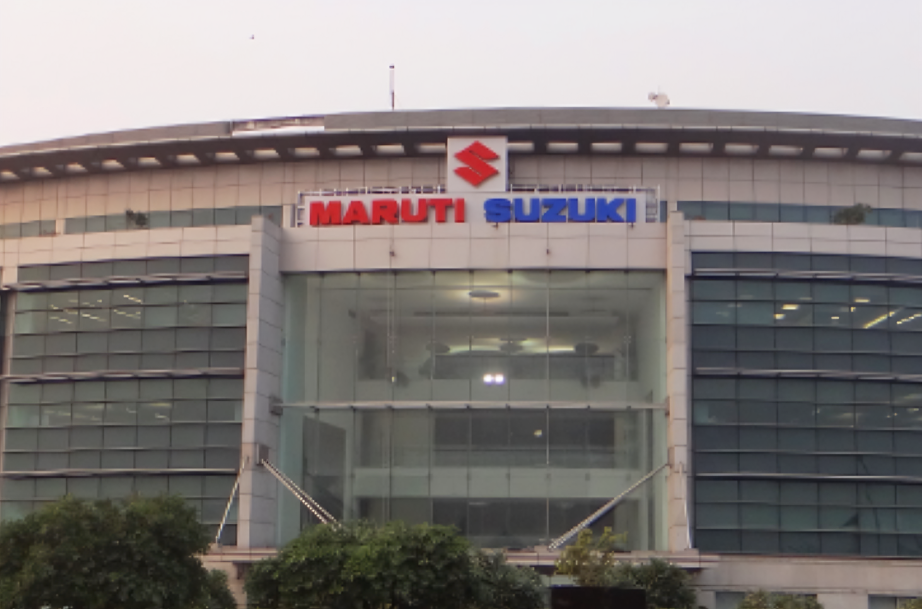
Maruti Suzuki India declared its statement of profit and loss for the first quarter of financial year 2026-27, which recorded a record for sales but has shown poor performance on the bottom line. India’s largest passenger car maker declared a standalone net profit of ₹3,352.10 crore, depicting a decrease of 10.8% YoY for such segment profits in the first quarter of the ongoing financial year.
Profit margin after tax fell 6.6% sequentially from the previous quarter. Profit before tax showed a 11.5% YoY decline and a 10.2% sequential decline to ₹4,341.30 crore in the current quarter.
Operational efficiency and cost pressure analysis
Net sales increased by 36% in the first quarter of the ongoing fiscal year 2023, reaching ₹49,959.10 crore for the automaker. There was a slight decline of 0.2% quarter-on-quarter in net sales. This disconnect between robust revenue growth and narrowly margined profit warns of the higher margin pressures the automaker has faced during the 3-month operating period.
The operating EBITDA dropped by 6.7% from last year’s figure and saw a significant quarterly drop of 30.0% to reach ₹4,311.10 crore. The operating EBITDA margin saw a substantial decline and fell to 8.6% in Q1 FY27 compared to 12.6% in Q1 FY26. The operating EBIT also decreased by 17.4% year-on-year and 42.6% quarterly to ₹2,531.10 crore.
Cost of raw materials became the foremost cause of margin erosion by analyzing the company’s cost structure. The increase in the quarter has been driven by a rise in material costs to 80.5% from 74.5% in the same quarter last year, reported in net sales.
The rise was 600 basis points relative to net sales and was driven by unfavorable commodity price trends in a region already strained by conflict in West Asia. Management reported that material costs increased from the early part of the quarter but accelerated in the latter section, where geopolitical conflict broke out in West Asia, causing a negative effect on net earnings despite strong volume results.
The company has also recorded operational efficiencies that accounted for some relief on the input cost front. Employee cost as a percentage of net sales fell to 4.9% from 5.6% recorded a year ago. Other expenses declined to 11.0% of net sales from 12.7% in Q1 FY26. Maruti Suzuki India said positive operating leverage arising due to an increase in production volumes and sustained cost-cutting efforts cushioned the impact of a sharp rise in commodity prices and bad foreign exchange rate movements.
Stock performance and expansion initiatives
In spite of the pressure on financial margins, Maruti Suzuki India posted a robust commercial performance in domestic and export markets, setting a fresh record in terms of sales during the quarter. Total deliveries of vehicles reached 682,724 units, increasing 29.3% year-over-year in the quarter ending 30 June 2026. Segmental growth was spread across product lines.
Domestic small car sales rose by 34.1% year-on-year, and sports utility vehicle sales enjoyed robust growth of 44.6% year-on-year. The overseas shipment performance was also strong, with export volume rising by 28.6% in Q1 FY27. Maruti Suzuki India’s market share stood at 41.2%, up 2.3 percentage points from the previous year, as a result of these sales.
The company said the volume success was due to the enhancement of production capacity after its 2nd manufacturing plant was commissioned at Kharkhoda. This extra plant capacity contributed to the increased manufacturing output, allowing the company to meet the higher demand in the market for its various product offerings.
Retail demand overwhelmed supply speedily following the high levels of vehicle dispatches from manufacturing facilities, resulting in dealer network inventory levels of around 13 days at the end of the quarter. In addition to car production, the Maruti Suzuki India board approved strategic investments focused on clean energy projects.
The board approved the investment of ₹561 crore to implement 4 compressed biogas projects in the 1st phase. Based on the experience and operation of the first 4 projects, Management stated that there will be consideration for further expansion of compressed biogas manufacturing infrastructure.
On the capital markets side, Maruti Suzuki India’s share prices saw sideways movement ahead of the official earnings release. This share gained 0.37% and closed at ₹14,240 on 31 July 2026, Friday. Maruti Suzuki India is the largest automobile manufacturer in India and produces a comprehensive range of hatchbacks, sedans, utility vehicles, and sports utility vehicles not only for Indian customers but also for export markets abroad.
Conclusion
Maruti Suzuki India’s Q1 FY27 sales data showed a clear contrast between record growth in volume and earnings concerns. Net sales grew 36.4% to ₹49,959.10 crore and total vehicle sales jumped to a record high of 682,724, but standalone PAT slipped 10.8% to ₹3,352.10 crore due to an increase in material costs caused by the West Asia conflict.
The automaker is continuing to focus on operational efficiencies and scale to beat external commodity cost headwinds, with new manufacturing capacity at Kharkhoda, market share gains, low dealer inventories, and new investments in compressed biogas.