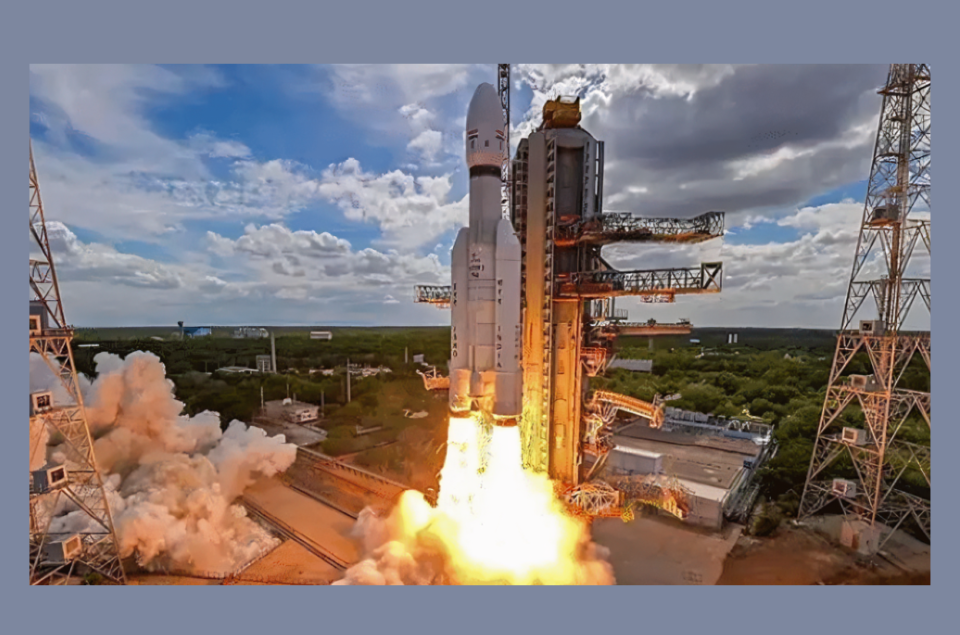
In a major milestone for the expanding space industry in India, the industry has achieved a significant financial milestone in the current financial year by generating over $150 million in funding. Pawan Goenka, the Chairman of the Indian National Space Promotion and Authorisation Centre (IN-SPACe), made this announcement at the India Economic Forum. Goenka said that the industry had hit an all-time high of the $150 million mark only two days earlier. This surge of investment underlines the rapidly growing investors’ interest and the beginning of the new age of the participation of individuals in the area that used to be the preserve of government agencies.
Vision and prediction of the financial year
The existing trend indicates that the economic performance of the space industry has just started. Pawan Goenka was optimistic that the amount of money invested in this financial year will only keep on increasing, and this will exceed the mark of $200 million before the financial year ends.
If the target is achieved, it would constitute an impressive growth trend, almost twice the amount of capital raised by the industry in the last financial year. This trend is an indication of the effective effect of the strategic move undertaken by the government to allow the entry of the space segment to private participants, because it was introduced with a profound reform of the area in 2020.
The space sector vision is not limited to government contracts. Goenka encouraged the larger commercial industry to appreciate the future of space start-ups. He recommended that business ventures consider such specialised start-ups to get a solution to the problem of space technology that could improve the business operations of such ventures.
The private sector can promote innovation and create a self-perpetuating market of space services by applying space-derived information or technology to the conventional industries. This partnership between the long-established industries and the emerging space technologies companies is regarded as an essential element in the long-term economic development.
Ambitious roadmap and role of IN-SPACe
IN-SPACe, as the promoter and the regulator of the space sector, is critical in ensuring this growth. Pawan Goenka noted that the organisation is on the move to inform potential investors of the huge opportunities that the space segment holds.
IN-SPACe is filling in the information gap and contributing to creating a sound ecosystem in which capital can be more easily invested in innovative space ventures. The dual mandate of the organisation is what guarantees that although the sector is controlled in terms of safety and security, it is also marketed as a viable and profitable source of investment, both locally and internationally.
The changing nature of demand in the Indian space economy is one of the most remarkable changes to be described by the IN-SPACe chairman. In the past, other government departments almost completely depended on the Indian Space Research Organisation (ISRO) to provide space-based solutions. But this landscape is changing.
The space startups are finding an increasing demand for their services by government departments. This transition is essential to the sustainability of the privatised sector, since it offers a continuous flow of projects and revenue. Goenka observed that to gain further market share, the private companies urgently require the development of advanced space technology that specifically meets the needs of the government.
The economic statistics and changes in demand are components of a greater, grander roadmap of the space economy in India. The space economy in India is estimated to range between $8 billion.
The industry is expected to reach a valuation of $44 billion by 2033 with the current growth rate and the inflow of private capital. A continuous emphasis on innovation, enabling regulatory frameworks, and engagement of the overall population and the business sector is going to be needed to achieve this almost six-fold increase.
Conclusion
The space industry in India has already generated $150 million in the current fiscal year can be taken as a strong indicator of the effectiveness of the 2020 reforms. The sector is shifting to a prosperous commercial sector under the leadership of IN-SPACe and the vision of Pawan Goenka, who describes it as an activity that is not government-led but is a thriving commercial activity.
The doubling of funds with reference to the last year, the growing confidence of investors, and the diversification of the demand of both government departments and private startups all indicate a bright future. The current fiscal year is a transitional period into a new stage of financial achievements and unprecedented success in the sector, as it aims to become a $44 billion economy in 2033.