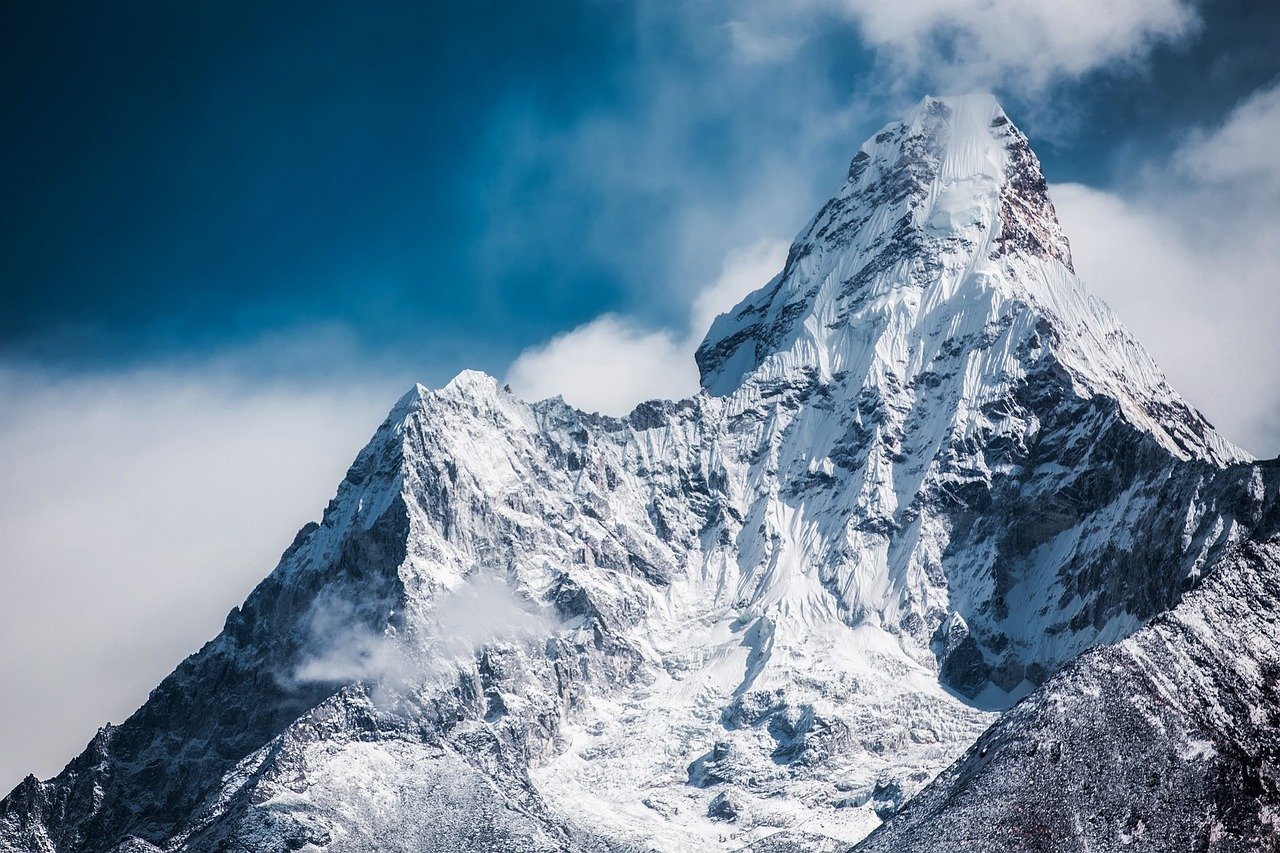
A new synthesis report published by the International Centre of Integrated Mountain Development (ICIMOD) has highlighted the astonishing financial needs to put the Himalayan region into a protective position against the increasing effects of climate change. As per the findings, India would need approximately $102 billion in a single year in order to close the existing disparities in climate adaptation and mitigation in its territories in the Himalayas. This figure is a subset of a larger-scale evaluation of the Hindu Kush Himalaya (HKH) area, which has been experiencing a growing perilous climate that impacts the local ecosystem as well as the huge numbers of individuals living downstream. The urgency of the report is that climate finance should be scaled massively to guarantee the stability of one of the most ecologically sensitive regions in the world.
Strategic importance and financial report
The ICIMOD synthesis, launched as a continuation of the First Determination Report reported to the United Nations Framework Convention on Climate Change (UNFCCC) in 2020, points out that the destruction of this area has far-reaching effects. Since the HKH serves as a main source of the major river systems, its health is directly associated with the food and water security of billions of citizens in Asia.
The budgetary values presented in the report are huge, indicating the colossal size of the task. The total estimated climate-related funding required in the Hindu Kush Himalaya region on an annual basis is about $768.7 billion, in the case of the whole region. Out of this total, India and China are identified as the major contributors of funding requirements, as they contribute over 92% of the total requirement.
A yearly requirement of the Indian country is at $102 billion as compared to a much more demanding China at an estimated $605 billion annually. These numbers are the expenses related to adaptation, i.e., to the existing and upcoming impact of climate change, and mitigation, i.e., to emission cutbacks that result from global warming.
Environmental vulnerability and regional disparity
The reason behind such high amounts of funding is the acceleration of the threats posed by climate change in the mountains at an extremely high rate. The report highlights some of the major trends that are presently destabilizing the region, the first being the heightened melting of glaciers and the rising number of extreme weather events. These physical transformations cause enormous loss of biodiversity and an increase in water insecurity and subsequently endanger the livelihoods of the mountain-dwelling communities and those of the downstream regions. The Himalayan geomorphology is highly vulnerable to such changes, and so it becomes intermittently vulnerable, a cycle of vulnerability that has to be broken by investing in it immediately and over a long period.
The report outlines priority areas that prevail in terms of funding the needed resilience and low-carbon transitions to successfully use the demanded funds amount of $100 billion. The shift to low-carbon energy sources and creating urban infrastructure that is more resistant to climate conditions is considered to be the required measures that would make sure that the region would be able to pursue its developmental objectives without adding to environmental degradation.
One of the major issues raised by the report is that the vulnerability of the climate and the financing disparities across the HKH countries are uneven. The smaller economies, such as Nepal, Bhutan, Bangladesh, Pakistan, Afghanistan, and Myanmar, have far worse financing disparity assessed against their Gross Domestic Product (GDP).
This difference increases their vulnerability to climate and necessitates international collaboration. Since the effects of the Himalayan degradation are cross-border, which influences the river flow, disaster risks, and national stability across the boundaries, the report underlines the fact that the climate action in the Himalayas cannot be addressed within the framework of individual nations.
Conclusion
The ICIMOD report results are a stark eye-opener on the financial scale of the climate crisis in the Himalayas. Since India requires $102 billion annually to cover adaptation and mitigation, the disparity between its present and the real needs is still a significant obstacle. The Himalaya environmental health is thus a common concern with international ramifications, as the eight HKH countries are interdependent. This bridging of the $100 billion gap will not only be necessary to conserve the Himalayan ecosystem but also to ensure long-term food, water, and economic survival of the billions of people who depend on the Water Tower of Asia.