India has also detailed a highly ambitious and broad roadmap to speed up its capabilities in domestic Artificial Intelligence (AI) much faster, with the plans being directly communicated to the Silicon Valley community this week. The core of this announcement, made by Abhishek Singh, the Director General of the National Informatics Centre and Additional Secretary in the Ministry of Electronics and IT, is that the government has plans to launch a new voice-enabled Large Language Model (LLM) before the global AI Impact Summit 2026, which is set to be hosted in New Delhi. Singh pointed out that the fast ascending economic position of the country, which is the largest and fastest-growing major economy in the world and is currently expanding by an 8.2% rate, is directly connected to the power of the existing digital architecture.
Efficiency and the India AI mission
The government executive pronounced that this digital community infrastructure forms the core foundation of the realisation of India’s massive AI aspirations, which forms the centre of the goal of transforming the economy of its current magnitude of approximately $4 trillion into a colossal $30 trillion by the year 2047. The key central enabler of this huge economic growth, he argued, was AI.
The core of the India AI initiative is that it is built on the already established, population-scale digital public infrastructure, which Singh called mind-boggling in its magnitude. This ecosystem is referred to as the India Stack and includes systems like Aadhaar, the Unified Payments Interface (UPI), and DigiLocker. The effectiveness and functionality of these systems are globally established, and Singh reports that approximately 27 countries are developing Aadhar-based solutions, and countries, such as the United Kingdom are also researching their implementation of DigiLocker-like digital systems.
The next generation of AI, especially the next voice-based LLM, will aim to assist in turbocharging this digital public infrastructure. The main objective is to use AI to make key services available in all Indian languages, thus enabling hundreds of millions of citizens, or to be more precise, the remaining 500 million people in this country, to use natural speech to access government schemes, critical healthcare data, and agricultural assistance, significantly increasing access and inclusion throughout the whole country.
Singh has identified several important blank spaces that required the initiation of the India AI Mission, which was launched last year. The entire AI ecosystem in India was highly limited by hardware, with the entire network having only approximately 600 odd GPUs, and even less research and development (R&D) spending relative to the global giants such as the United States and China. The government has intervened directly to correct the hardware shortage and, in conjunction with industry partners, made a significant rollout of 40,000 Graphics Processing Units (GPUs) accessible at significantly subsidised prices.
The second critical gap was the lack of indigenous AI models, where India lacked an LLM of its own. In reaction, the government is currently actively pursuing funding for nearly 12 such projects to create Indian LLMs and smaller specialised models (SLMs). These projects involve the design of domain-specific models of sophisticated areas like medical care and materials science.
Two of these landmark development projects, one led by the Indian Institute of Technology (IIT) Madras and another by IIT Bombay, are said to be almost complete. One of these homegrown solutions is the voice-based LLM, which can be expected to be announced before the summit.
In parallel with these models is the national datasets platform, AI Coach, which has been developed to help with training and innovation, hosting 3,500 data sets brought together through the public and private sectors. It plans to expand further into 30 scalable AI applications, such as an AI assistant to farmers and more sophisticated diagnostic solutions to more common healthcare issues, such as tuberculosis, cataract, and diabetic retinopathy, directly addressing the number of personnel-squeezed rural care, where machines have been brought to the village, but experts remain absent.
Upcoming AI Impact Summit 2026
The next global event to the AI Impact summit 2026, is regarded as a landmark event. It will be the first global AI event in the developing world in history, as India aims to undertake its promise of democratising access to AI and allow nations not in the West to become just AI users. The event will attract over 100 countries, 15 heads of government, and 50 CEOs of leading world technology companies. There are seven working groups of international working groups which are currently negotiating on significant deliverables based on core themes such as inclusion, safety, economic growth, sustainability and science, both co-led by India.
The summit is expected to lead to the creation of a charter to democratize AI resources, an AI commons repository, principles of workplace transition, an AI-for-science network, and an AI safety commons. India also plans to demand that frontier model developers firm undertakings as part of this global leadership initiative to transfer important “usage data… to sovereign governments. The global nature of the mission was reflected in the global innovation challenges, where it received more than 15,000 entries across 136 countries. All the summit, according to Singh, is based on the major tenets of people, planet and progress, with Ideas being the most welcome.
Conclusion
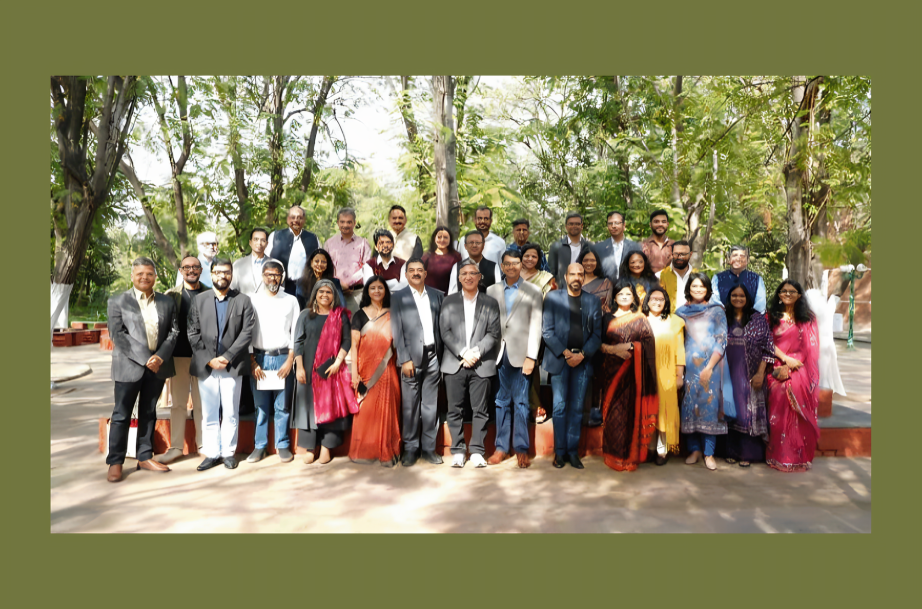
The Silicon Valley pitch, including executives of such companies as Anthropic, Zoom, Microsoft, Salesforce, OpenAI, Equinix and NVIDIA, led to a meeting that reinforced the idea of rising centrality of India in the global technology sector. The executives expressed deep confidence in the prospect that India offers; when asked about the rationale of opening an office in Bangalore, Anthropic’s Michael Sellitto spoke of the enormous potential India offers, and Zoom’s Velchamy Sankaralingam confirmed that the firm’s engineering and operations presence in India would continue to expand. Investors shared these views.