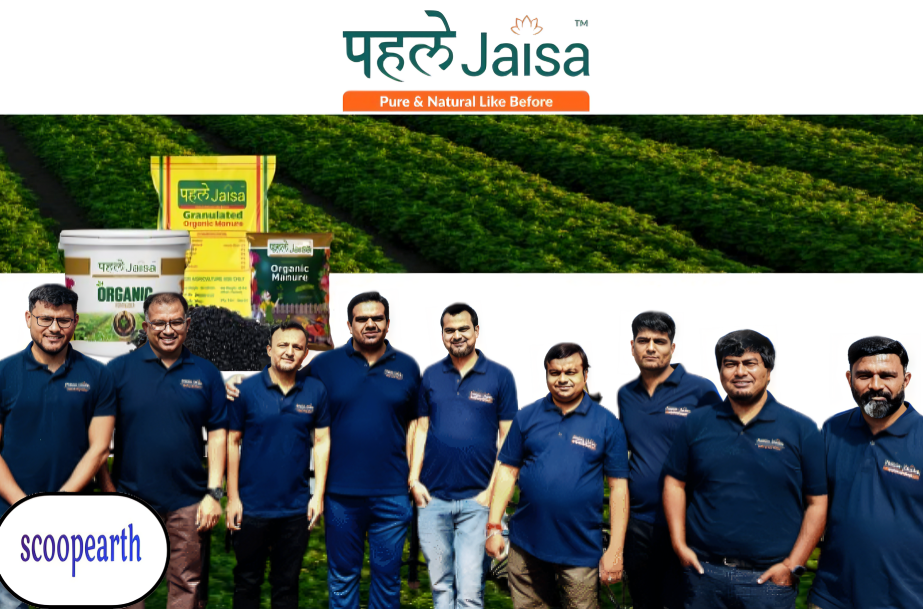
Cropcoin (Pehle Jaisa) has raised ₹12 crore in a pre-Series A round led by Unicorn India Ventures. Climate Angels is an existing company investor. Climate Angels was also involved in this major capital injection. This most recent round is a significant milestone for Cropcoin, the Gurugram-based startup.
It reflects its efforts to expand its operations and influence in the Indian agricultural market. Having a map of their coming months and having a track record of revenue growth, Cropcoin appears to be in the right position to implement its expansion strategy in Bihar, Jharkhand, and other states.
Strategic expansion and the aim of Cropcoin
The recent financing is the next after the company reached a financial milestone in June of last year, when it raised $300,000 in a round led by Pantnagar Capital and Climate Angels. The company had previously raised $169,000 through a seed round. These consecutive investments emphasize the increasing trust of investors in the business model of Cropcoin and their particular attention to the more sustainable solutions to the agricultural issues.
Cropcoin will use the new capital to aggressively increase its operational presence. Its startup is present in 10 districts, although the new funding will help launch services in all 66 districts in the states of Bihar and Jharkhand. The expansion is the focus of the mission of the company to deliver its specialized services to a far larger group of farmers and agricultural producers in the region.
Pankaj Pandey and Ehtesham Farooqui founded the company in 2022 with a central theme of waste management of agricultural waste and improving the health of the soil. By focusing on these essential points, Cropcoin will develop a more sustainable and profitable ecosystem that will benefit rural populations. The founders have placed the company in a position to address two issues: environmental degradation and an increase in the cost of inputs to contemporary farmers.
Financial performance and sustainable farming practices
The core of the operations of Cropcoin is to convert animal waste into organic fertilizers and bio-stimulants at the source. This process enables farm poultry and dairy plants to convert what was once seen as waste into a useful commodity. This will not only enhance the overall hygiene of the farm but also directly lead to the profitability of such operations in farming by generating a new source of income or lowering disposal expenses.
Cropcoin is an active proponent of sustainable agriculture that is not based on extensive use of chemical fertilizers. The startup contributes to the revival of soil health and local biodiversity by encouraging the use of organic alternatives. Such initiatives have also been associated with larger environmental objectives, like the reduction of greenhouse gas levels, which are usually exaggerated by conventional waste management and chemical agriculture techniques.
The startup has shown strong growth in the last year and registered three times the growth in revenue. This financial development can be traced in the fast expansion of its farmer base that has grown to 20,000 to 70,000 farmers spread to Bihar, Jharkhand and Manipur. Due to this momentum, the company is now on its way towards an Annual Recurring Revenue(ARR) of ₹10 crore with a blended philosophy of minimum capital burn.
In the next 12-18 months, Cropcoin will achieve high results in the next stage of its development. Besides having finished its 66-district rollout in Bihar and Jharkhand, the company intends to pursue an increase in its farmer base to more than 1.5 lakh people. The startup is planning to enhance its presence in the Northeast of India and even more firmly establish itself as one of the major actors in the Indian agritech environment.
Conclusion
The ₹12 crore investment led by Unicorn India Ventures is a turning point for Cropcoin as it shifts its image to a wider scope of influence in the agritech industry. The startup is targeting root problems in the agricultural supply chain by concentrating on the intersection of waste management, soil health, and farmer profitability.
As the company develops its operations and grows its list of farmers, its focus on chemical-free food production and reduction of carbon footprint is consistent with the global trends of sustainable agriculture.