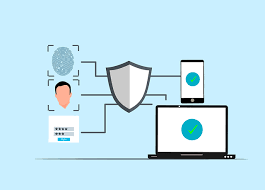
The speed of workload movement is very rapid in the cloud-native world that companies have entered today. Cloud Security Posture Management (CSPM) is a preemptive method that automatically identifies, analyzes and remediates inappropriate settings within numerous cloud environments. In contrast to tools that respond to an attack, CSPM operate in advance to add risk data to DevOps pipelines to maintain standards like NIST 800-53 and SOC 2. CSPM can detect the existence of a weakness by automatically performing posture checks.
CSPM relies on agentless scans and APIs to learn the entire cloud installation. In case you have a large AWS, Azure, and Google Cloud environment, CSPM tools collect control-plane data and compare thousands of settings against benchmarks like the CIS Foundations. Best practices start here – continuously find changes to understand what issues you have, and indicate any problematic cases, such as open S3 buckets or unencrypted EBS volumes.
Create a Priority Inventory of Risk
The initial important step is the development of a living inventory of the assets. Graph models can be used to map the dependence between resources – the tool reads through IAM policy, network ACLs and VPC flows and identifies hidden or unauthorised resources that scans miss.
Assess security risk by ranking them according to the extent of their harm and ease of access. Weak points that may disrupt vital business activities should be considered a priority. Then figure out the resources to translate technical gaps into realistic attack scenarios. Periodically review and reconcile the issues with references to such benchmarks as the NIST Cybersecurity Framework to be sure that nothing is ignored. The use of any confidential cloud services or permissions should be automatically deleted to prevent access by unauthorised persons.
Automate Proactive Controls
Replace manual checks with policy-as-code. Declarative languages such as Open Policy Agent (OPA), Rego or Sentinel are used to put security rules into pipeline-based infrastructure-as-code (IaC) with declarative languages. Predefined policies must be taken up on root accounts. In the process of continuous integration/continuous delivery (CI/CD), CSPM prevents pull requests that violate policy.
Add drift monitoring – CSPM continues to make comparisons between the live environment and a golden baseline and automatically fixes it with serverless functions. As an example, it is possible to use a scripting language like AWS Lambda or Azure Functions to close excessively permissive security groups. This is in line with zero-trust concepts that suppose anything is subject to compromise and verifying it several times.
Combine Behavioural Analytics and Threat Intelligence
New threats cannot be provided by the mere presence of static rules. Add real-time threat feeds of such sources as AlienVault OTX or MISP. Compare posture data with indicators of compromise (IoCs) with weird API calls that resemble the Solar Winds attacks. Machine-learning models get trained on normal behaviour and raise the red flag when it changes abruptly. More so, sophisticated systems employ unsupervised control-plane anomaly detection on control-plane logs.
Cross-Team Governance and Testing
The most suitable way of using cloud security controls is when accountability remains in-house. Security visibility, reporting, and posture tracking can be centralised by having a dedicated Cloud Centre of Excellence (CCoE). This team group must have live dashboards that indicate exposure trends and concentration of risks. To justify preparedness, a team is recommended to carry out periodical adversary exercises, such as those involving the deliberate mishandling of sensitive credentials, and how fast detection and response systems are activated.
Integrate feedback into SecDevOps. Give the developers brief, actionable fixes, such as snippets of Terraform, so that they have to do less copying and pasting. Record material numbers – the number of policy violations, the extent of compliance coverage and risk score.
Arrange Multi-Cloud and Hybrid Posture
Standardise controls in a multi-cloud environment by the use of shared layers. CSPM can bridge all APIs of providers and map rules to do cross-checking. Hybrid solutions scan agents on-prem VMware or bare metal and seal the divides.
Last but not least, seek Continuous Threat Exposure Management (CTEM). Rank exposures by the probability of their exploitation. This approach is more than risk reduction. It transforms compliance into a box, into a strategic weapon, and removes future risks to the clouds.
Conclusion
CSPM requires constant discovery, automation of policies as code, threat intelligence and shared governance. Ranking CVSS-based risks and implementing zero-trust help businesses to reduce misconfiguration issues. Such a proactive position maintains the organisation in sync with NIST and SOC2 as well as enhancing the multi-cloud sustainability. Use CSPM as a major strength – convert best practices into robust, versatile defences with experts like Qualysec Technologies in order to safely innovate.