Blinq Mobility is becoming a notable Indian startup tackling major issues in the electric vehicle (EV) sector, such as long charging times, operational downtime, and high ownership costs. Established in 2024 by IIT Delhi graduates, the company is developing a modular electric vehicle platform designed for quick battery swapping and heavy daily use. Blinq’s goal is to make EV adoption practical and affordable for fleet operators, ride-hailing services, and city drivers who need their vehicles to be on the road as much as possible.
Blinq Mobility has a clear vision: to eliminate delays caused by charging and lower initial costs, allowing EVs to easily replace traditional vehicles in busy urban areas.
From Idea to Scalable EV Solution
Blinq Mobility started with a simple question: why should electric cars take hours to charge when batteries can be swapped in minutes?
Nikesh, the Founder and CEO, was inspired by his extensive experience with electric vehicle systems. While studying at IIT Delhi, he worked on electric race cars, gaining valuable knowledge about powertrains, batteries, and vehicle integration. After graduating, he founded a company focused on EV components and witnessed the challenges fleet operators faced.
Two main issues were evident: long charging times and high initial costs. For fleets that operate 16–20 hours a day, these were significant barriers. This understanding led to Blinq’s solution—robotic battery swapping paired with a subscription-based ownership model.
Blinq in Action: No Downtime Mobility
Founded in June 2024 and officially registered in October, Blinq Mobility exemplifies the speed and efficiency it aims to deliver. A drained battery can be swapped for a fully charged one in just a few minutes, allowing vehicles to get back on the road almost immediately.
Blinq’s systems are designed as a cohesive platform, integrating vehicles, batteries, swapping infrastructure, and software from the start. This unified approach ensures reliability, scalability, and effectiveness for high-use urban scenarios.
A Strong Team with Deep Commitment
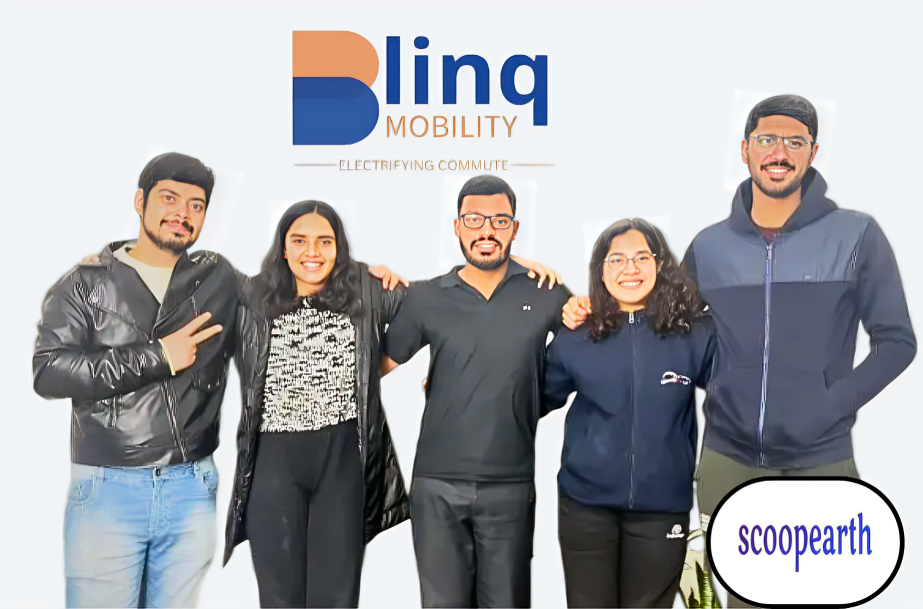
Blinq Mobility is led by a team of five IIT Delhi alumni who combine strong engineering skills with business knowledge. The leadership includes CTO Ankit, who has worked on advanced projects at Tesla like the Cybertruck and Robotaxi, and co-founder Abhilasha, who focuses on alternative battery technologies and EV electronics.
The company fosters a culture of curiosity, practical problem-solving, and strong ownership. Team members are encouraged to think like founders, promoting accountability and quick learning throughout the organisation.
Support from Institutions and Regulatory Bodies
Blinq is supported by the Automotive Research Association of India (ARAI), which is the main body for vehicle certification in India. This partnership has been crucial for product validation, testing, and meeting regulatory requirements.
Additionally, the startup has received grants and support from organisations like AIC Banasthali, FIIRE Goa, and the Deshpande Foundation. These institutions have provided mentorship, access to infrastructure, and early-stage support, helping Blinq tackle the challenges of building hardware in India.
Addressing India’s Urban EV Needs
By separating the battery from the vehicle, Blinq directly tackles the issue of vehicle uptime. Battery swapping cuts downtime to just minutes, while a subscription model for batteries significantly reduces the initial costs of vehicles.
Unlike modified EV solutions, Blinq’s vehicles are designed as a complete system, leading to better integration, lower maintenance, and an improved user experience—key factors for urban fleet operations.
Market Potential and Long-Term Goals
Blinq Mobility focuses on high-usage fleets, ride-hailing services, and commercial urban drivers, which together represent a billion-dollar opportunity in India. Its revenue model includes vehicle sales or leasing, battery subscriptions, swapping services, and fleet management software.
Beyond its business goals, Blinq aims to have a positive impact by lowering urban emissions, enhancing fleet economics, and increasing driver earnings. With a commitment to execution rather than hype, the company is positioning itself to play a significant role in India’s shift towards clean mobility.