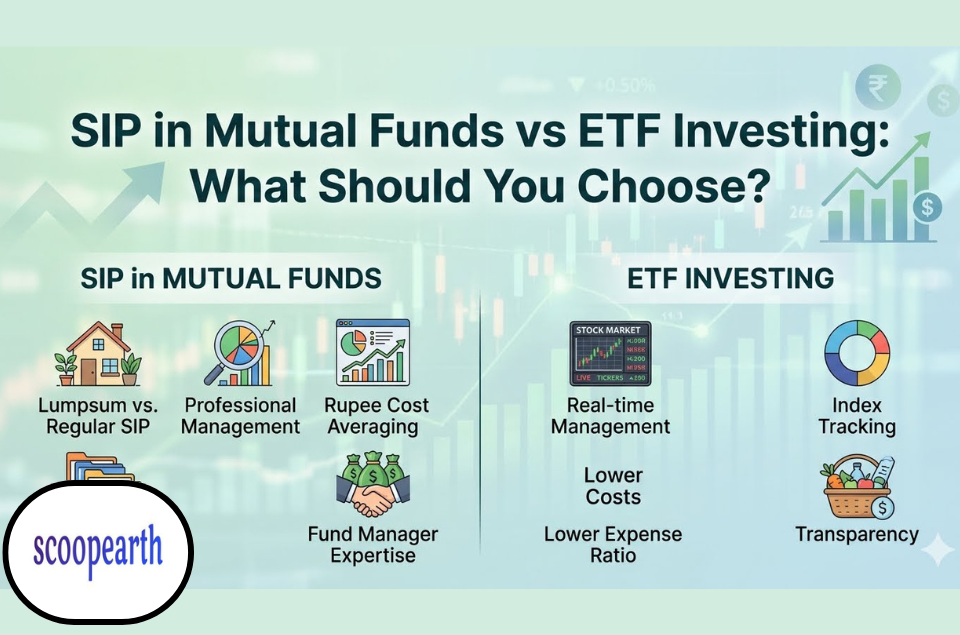
Investors can use different methods to gain market-linked exposure, and SIPs and ETFs are two commonly considered approaches. Although both can be used to invest in financial markets, they differ in structure, investment process, pricing, costs, and the level of involvement required from the investor.
Understanding these differences can help beginners assess which approach fits their financial objectives and investment preferences. In this article, the key features, costs, risks, and practical considerations of SIPs and ETFs are compared.
How SIPs and ETFs Work
The first step is to understand how each investment method operates. Although both can provide exposure to a group of securities, the way investors contribute funds and purchase units differs.
A SIP involves investing a selected amount in a mutual fund at regular intervals. Investors can choose the SIP amount and frequency based on the options available for the selected scheme. The investment is processed at the applicable NAV for the relevant transaction date.
ETF investing involves buying and selling ETF units through a stock exchange during market hours. Investors place orders through an eligible trading facility, and the units are generally held in a Demat account after settlement.
Investors using an intraday trading app may also have access to ETF-related trading facilities, depending on the platform. However, ETF investing and intraday trading are different activities. ETF investing involves purchasing units of an exchange-traded fund, while intraday trading generally involves opening and closing eligible positions within the same trading session.
The two approaches differ across several areas, including how investments are made, how prices are determined, and how investors manage their contributions.
Factor
SIP in Mutual Funds
ETF Investing
Structure
Regular investment method in a mutual fund
Exchange-traded investment product
Investment frequency
Usually regular and predetermined
Investor decides when to buy or sell
Trading
Generally processed through the mutual fund route
Traded on a stock exchange
Demat account
Requirement depends on the investment route
Generally used to hold ETF units
Pricing
Based on applicable NAV
Market price during trading hours
Costs
Fund-related costs and applicable charges
Expense ratio, brokerage and other applicable costs
Flexibility
Designed for regular contributions
Can be bought or sold during market hours
Investment Approach and Convenience
One of the main differences is the way investors participate in each option.
A SIP is designed around regular investing. Once the SIP instructions are established, investments can take place automatically according to the selected schedule, subject to the applicable process. This approach can reduce the need to place an individual investment order for every instalment.
ETF investing gives investors more control over the timing of purchases and sales. Investors need to place orders themselves and consider the prevailing market price and liquidity.
The level of involvement can therefore differ between the two approaches. Investors can consider whether they prefer a predefined investment schedule or greater control over individual purchase and sale decisions.
What Are the Costs?
Costs can differ between mutual funds and ETFs.
SIP Costs
Mutual funds have an expense ratio that represents the expenses charged by the scheme. Other applicable costs may depend on the fund, investment route, and transaction.
Investors can review the scheme’s expense ratio and other applicable charges before investing.
ETF Costs
ETFs also have an expense ratio. Since ETFs are traded on stock exchanges, investors may also incur brokerage and other transaction-related charges, depending on the intermediary and transaction.
The difference between the buying and selling price can also affect the effective transaction cost.
The level of risk depends on the specific ETF and the assets it tracks.
What Should Beginners Consider?
Beginners can consider their investment objective, preferred investment frequency, risk tolerance, investment horizon, and level of involvement.
A SIP may suit investors who prefer making regular contributions according to a predefined schedule. ETFs may appeal to investors who prefer exchange-traded products and want to decide when to buy or sell units.
Investors may also encounter other market products while exploring digital investment platforms. For example, an FNO trading app provides access to eligible Futures and Options contracts, which have different structures, margin requirements, expiry dates, and risk characteristics. F&O therefore needs to be assessed separately from ETF investing.
The choice between a SIP and an ETF depends on the individual’s financial circumstances and the characteristics of the selected product.
Conclusion
SIP investing and ETF investing offer different ways to gain market-linked exposure. A SIP focuses on regular contributions to a mutual fund, while ETF investing involves buying and selling exchange-traded units through the market.
Established platforms such as 5paisa are among the digital options available to investors exploring different market and investment facilities. Before choosing either approach, investors can review the product structure, costs, account requirements, risks, and level of involvement involved in managing the investment.