
Introduction
The United Kingdom has one of the strongest and most developed education technology markets in Europe. UK EdTech companies are changing how students learn, how teachers prepare lessons, how schools manage education, and how employees develop new skills.
The sector covers a wide range of services. These include online learning platforms, digital textbooks, assessment tools, tutoring, classroom software, teacher resources, apprenticeships, professional training, and artificial intelligence-powered learning.
The UK is also home to some of the world’s best-known education companies. Pearson has a global presence in learning, assessment, qualifications, and digital education. Companies such as RM, Twinkl, Tes, Atom Learning, and Seneca Learning are strongly connected with schools, teachers, parents, and students. At the same time, companies such as Multiverse and Learning Technologies Group focus more on workplace learning, apprenticeships, and professional skills.
The UK EdTech market has also changed quickly because of artificial intelligence. AI is now being used for personalised learning, automated assessment, lesson planning, content creation, tutoring, and workplace skills development.
This article highlights the Top 10 EdTech Companies in the UK, based on a combination of revenue, number of users, market reach, educational impact, technology, product range, and importance to the UK education sector. Since many leading EdTech companies are privately owned, their financial information is not always directly comparable.
Pearson
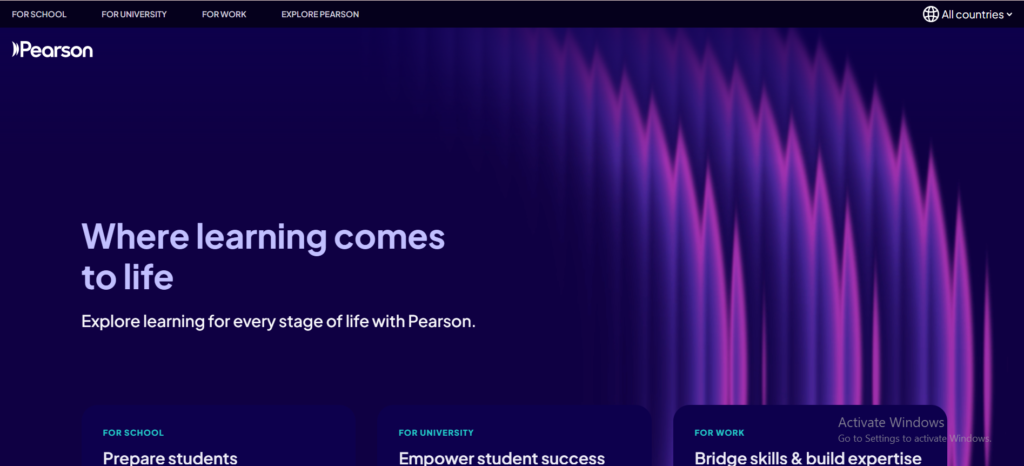
Image Courtesy: Pearson / Official Website
| Founded | 1844 |
| Headquarters | London, England |
| 2025 Underlying Sales | Approximately £3.5 billion |
| 2025 Adjusted Operating Profit | Approximately £600 million |
| CEO | Omar Abbosh |
Pearson is the largest and most internationally recognised education company on this list. Although the company operates globally, the UK remains an important part of its history, operations, qualifications business, and education ecosystem.
Pearson provides educational content, digital learning platforms, assessments, qualifications, English-language learning, and professional education. Its brands include Pearson Edexcel, which is widely used for school qualifications in the UK and internationally.
In 2025, Pearson reported approximately £3.5 billion in underlying sales, while adjusted operating profit reached around £600 million. The company also reported 4% underlying sales growth for 2025.
Pearson is increasingly investing in artificial intelligence and digital learning. The company has been using AI to improve learning products, assessments, and personalised education. CEO Omar Abbosh, who joined Pearson in 2024, has placed technology and AI at the centre of the company’s strategy.
Because of its size, global reach, qualifications business, and digital transformation, Pearson is arguably the most important UK education technology company.
RM plc
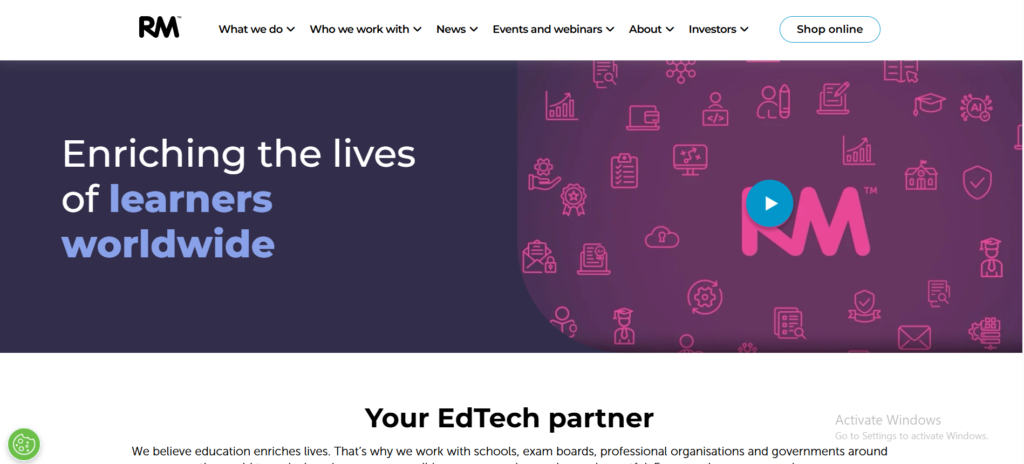
Image Courtesy: RM plc / Official Website
| Founded | 1973 |
| Headquarters | Abingdon, England |
| 2025 Revenue | £162.1 million |
| 2025 Adjusted EBITDA | £16.5 million |
| CEO | Mark Cook |
RM plc is one of the UK’s long-established education technology companies. It provides technology, assessment, digital learning, and education services to schools and other education organisations.
The company works across several areas of education, including assessment, digital platforms, school technology, and teaching resources.
For the year ended November 2025, RM reported £162.1 million in revenue from continuing operations, compared with £166.1 million in 2024. More importantly, the company returned to statutory profit after tax of £2.2 million, while adjusted EBITDA increased by almost 20% to £16.5 million.
RM’s Assessment division performed particularly well, with recurring assessment revenue increasing strongly. The company also launched RM Ava, a cloud-based adaptive accreditation platform.
RM remains important because it combines education content with technology, assessment, and digital infrastructure.
Twinkl
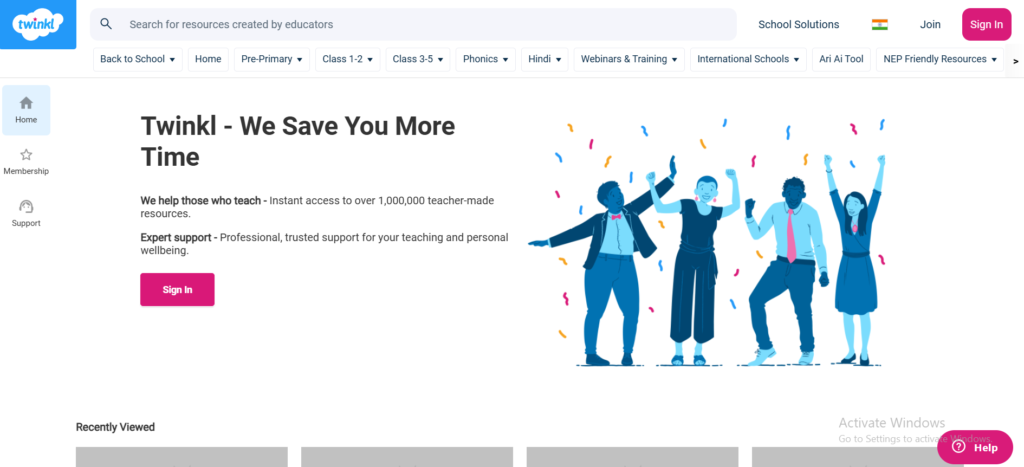
Image Courtesy: Twinkl / Official Website
| Founded | 2010 |
| Headquarters | Sheffield, England |
| FY2025 Turnover | Approximately £97.6 million |
| FY2025 Employees | Approximately 1,230 |
| Main Focus | Digital teaching resources |
Twinkl has become one of the UK’s best-known digital education companies, particularly among teachers and schools.
The company provides worksheets, lesson plans, activities, presentations, games, assessments, classroom materials, and other digital resources. Its platform covers subjects from early years and primary education to secondary education.
Twinkl’s latest filed accounts for the year ended April 2025 show turnover of approximately £97.6 million, up around 24% from the previous year. The company had more than 1,200 employees according to company-data records based on its latest accounts. Companies House confirms that Twinkl filed full accounts for the year ended 30 April 2025.
One reason for Twinkl’s success is its practical approach. Instead of focusing only on online courses, it gives teachers ready-to-use resources that can be used directly in classrooms.
Twinkl has also expanded internationally, making it one of the UK’s most successful education-content businesses.
Tes
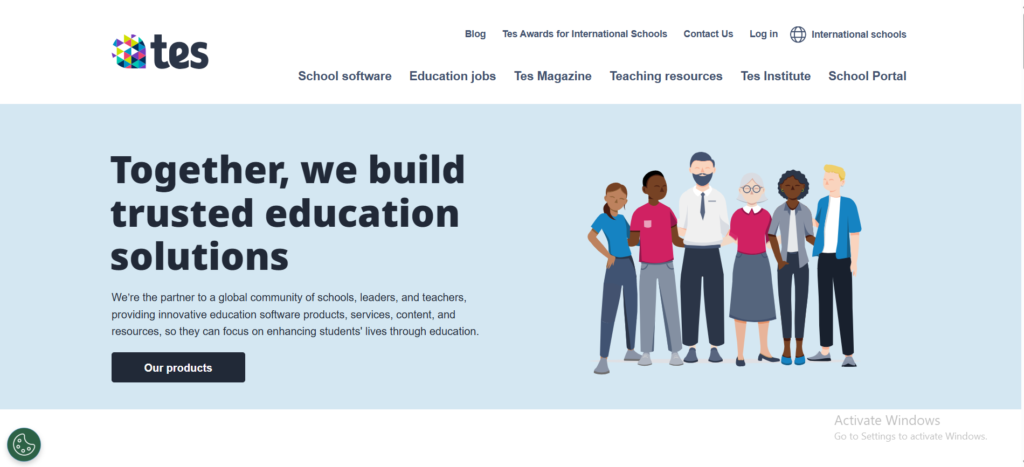
Image Courtesy: Tes / Official Website
| Founded | 1910 |
| Headquarters | Sheffield, England |
| FY2025 Turnover | Approximately £118.9 million |
| FY2025 Employees | 354 |
| Main Focus | Teacher resources, recruitment and education services |
Tes, formerly known as Times Educational Supplement, has a long history in UK education.
Today, Tes is much more than an education newspaper. It operates a large digital platform for teachers and schools, offering teaching resources, recruitment services, professional development, school management tools, and education information.
Tes Global Limited reported approximately £118.9 million in turnover for the year ended August 2025, an increase of around 11% from the previous year. Its reported employee count was 354.
The company has a particularly strong relationship with teachers. Its digital resources and recruitment services give it a large presence in the education market.
Tes is important to the UK EdTech industry because it connects technology with one of the most important parts of education: teachers themselves.
Learning Technologies Group
Image Courtesy: Learning Technologies Group / Official Website
| Founded | 2013 |
| Headquarters | London, England |
| 2024 Revenue | Approximately £485 million |
| 2024 Adjusted EBIT | At least £86 million |
| Ownership | General Atlantic |
Learning Technologies Group, commonly known as LTG, focuses mainly on digital learning and workplace training rather than traditional school education.
The company provides learning management systems, employee training, talent management software, digital content, and professional development solutions.
For 2024, LTG expected continuing-operations revenue of at least £485 million, with adjusted EBIT of at least £86 million.
A major development came in March 2025, when LTG became a private company following its acquisition by General Atlantic. The transaction valued the business at approximately £802.4 million.
LTG is particularly important because the definition of EdTech is expanding beyond schools. Companies increasingly need technology to train employees, manage skills, and prepare workers for AI-driven changes.
Multiverse
Image Courtesy: Multiverse / Official Website
| Founded | 2016 |
| Headquarters | London, England |
| FY2025 Revenue | Approximately £79.6 million |
| Employees | Around 800 |
| Main Focus | Apprenticeships and workplace skills |
Multiverse is one of the UK’s best-known EdTech companies in the workplace learning market.
Founded by Euan Blair, Multiverse provides apprenticeships and professional training designed to help companies develop digital, technology, data, and AI skills.
For the financial year ending March 2025, Multiverse reported approximately £79.6 million in revenue. The company had trained around 30,000 apprentices and employed roughly 800 people. It has worked with large organisations including Microsoft and M&S.
Multiverse has also become one of the UK’s most valuable EdTech startups. In 2026, the company raised another $70 million, taking its reported valuation to approximately $2.1 billion.
The company’s focus on AI and workforce development is especially relevant because businesses are facing a growing need to retrain employees as technology changes jobs and skills.
Atom Learning
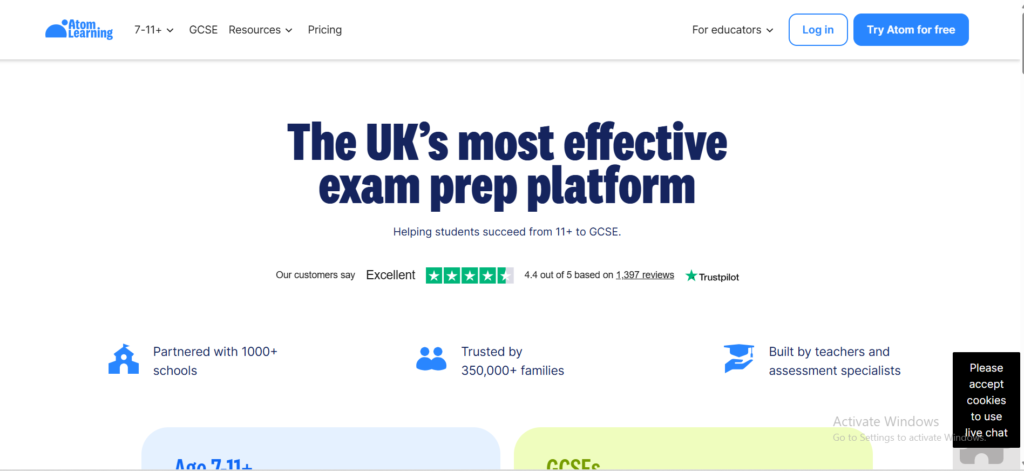
Image Courtesy: Atom Learning / Official Website
| Founded | 2017 |
| Headquarters | London, England |
| 2024 Revenue | Approximately £13.2 million |
| Main Focus | Online learning and school entrance exams |
| Founders | Alex Hatvany and Jake O’Keeffe |
Atom Learning provides online learning and personalised education for children, particularly students preparing for school entrance examinations.
Its platform combines digital content, assessment, adaptive learning, and tutoring. It is particularly popular with families preparing children for selective independent schools.
The company’s latest publicly available full financial data for 2024 shows turnover of approximately £13.15 million, up around 19% from 2023. The business had around 90 employees at the end of 2024.
Companies House confirms that Atom Learning filed full accounts for the year ended December 2025 in May 2026, although detailed figures are not always presented in easily comparable public summaries.
Atom’s strength comes from combining technology with personalised academic support rather than offering only standard online courses.
Seneca Learning
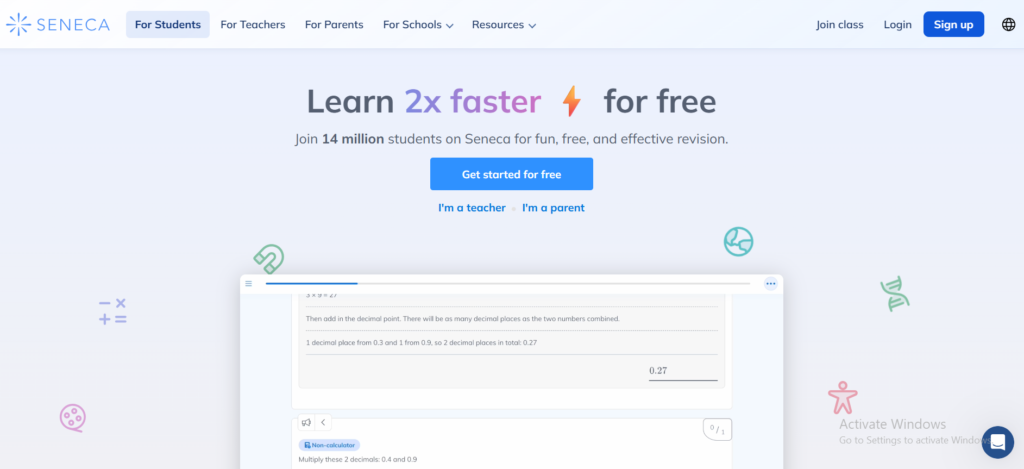
Image Courtesy: Seneca Learning / Official Website
| Founded | 2017 |
| Headquarters | London, England |
| Users | 14+ million worldwide |
| Main Focus | Revision and personalised learning |
| Business Model | Free and premium |
Seneca Learning is one of the UK’s most widely used digital revision platforms.
The company provides courses and revision materials for subjects including GCSE, A-level, and other school qualifications. Its platform uses techniques from cognitive science and personalised learning to help students revise more effectively.
Seneca currently reports more than 14 million users worldwide, over 300,000 teachers, and more than 8 billion questions answered on its platform.
Unlike many EdTech companies, Seneca keeps a large part of its service free. It also offers premium subscriptions for students, parents, and schools.
The company has become particularly popular because its platform is simple, interactive, and designed around the UK curriculum and exam boards.
Century Tech
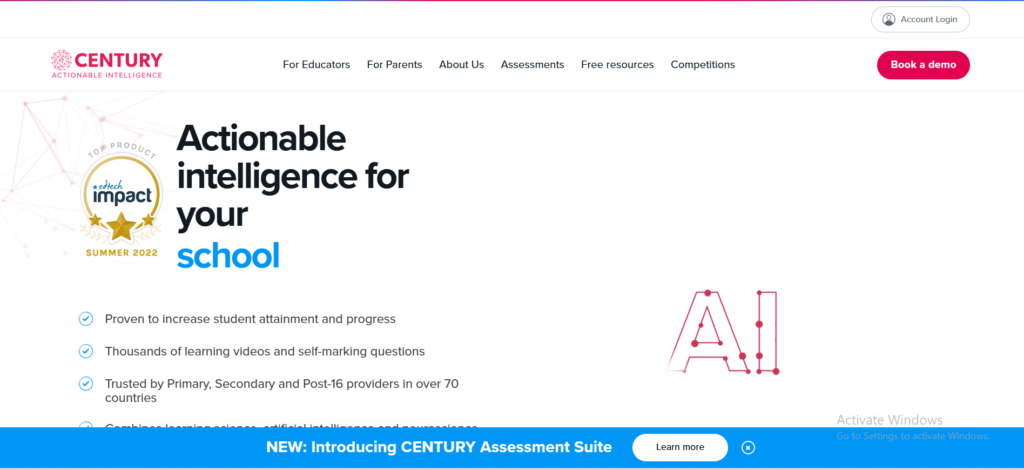
Image Courtesy: Century Tech / Official Website
| Founded | 2013 |
| Headquarters | London, England |
| Employees | Around 90 |
| Main Focus | AI-powered personalised learning |
| Founder & CEO | Priya Lakhani |
CENTURY Tech is one of the UK’s notable companies using artificial intelligence directly in education.
The platform uses AI to understand student performance and recommend learning activities based on individual needs. It is designed to help students learn at their own pace while also giving teachers information about student progress.
CENTURY has focused on schools and education systems in the UK and international markets.
Its 2025 company information shows around 89 employees, although turnover was not publicly reported in the available summary of its latest accounts.
The company is important because personalised learning is becoming one of the major applications of AI in education. Instead of giving every student exactly the same learning path, AI can identify areas where individual students need more support.
Sparx Learning
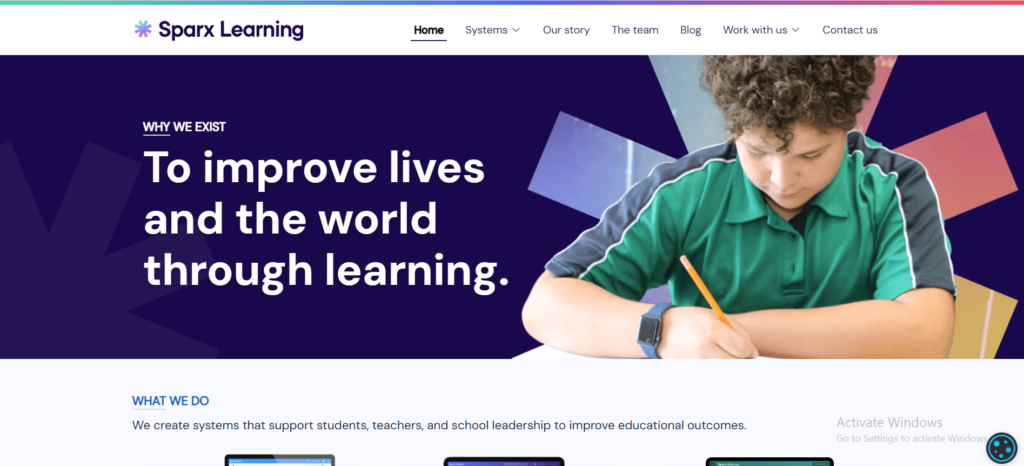
Image Courtesy: Sparx Learning / Official Website
| Founded | 2010 |
| Headquarters | Exeter, England |
| Main Products | Sparx Maths, Sparx Reader and Sparx Science |
| Main Focus | School learning and homework |
Sparx Learning is another major UK EdTech company focused on school education.
Its best-known product, Sparx Maths, provides personalised maths homework and practice. The platform uses student performance data to adjust questions and provide targeted learning.
The company has expanded beyond maths with products such as Sparx Reader and Sparx Science.
Sparx is particularly relevant because its model is built around regular classroom use rather than occasional online learning. Teachers can assign work, track progress, and identify areas where students need additional support.
The company does not publish the same level of financial information as listed companies such as Pearson or RM, so a reliable current revenue figure should not be estimated without a clear public filing. Its importance is better measured through school adoption, product reach, and its position in the UK school EdTech market.
Financial and Operational Comparison of the Top EdTech Companies in the UK
| Company | Latest Available Financial / Scale Figure | Main Focus |
| Pearson | ~£3.5B 2025 underlying sales | Learning, assessment & qualifications |
| RM plc | £162.1M FY2025 revenue | Education technology & assessment |
| Tes | £118.9M FY2025 turnover | Teacher resources & recruitment |
| Twinkl | ~£97.6M FY2025 turnover | Digital teaching resources |
| Learning Technologies Group | ~£485M 2024 revenue | Workplace learning |
| Multiverse | £79.6M FY2025 revenue | Apprenticeships & workforce training |
| Atom Learning | £13.2M 2024 turnover | Personalised school learning |
| Seneca Learning | $7.5 million approx.. | Revision & personalised learning |
| CENTURY Tech | $16 million approx. | AI-powered learning |
| Sparx Learning | $19.8 approx. | Maths, reading & science |
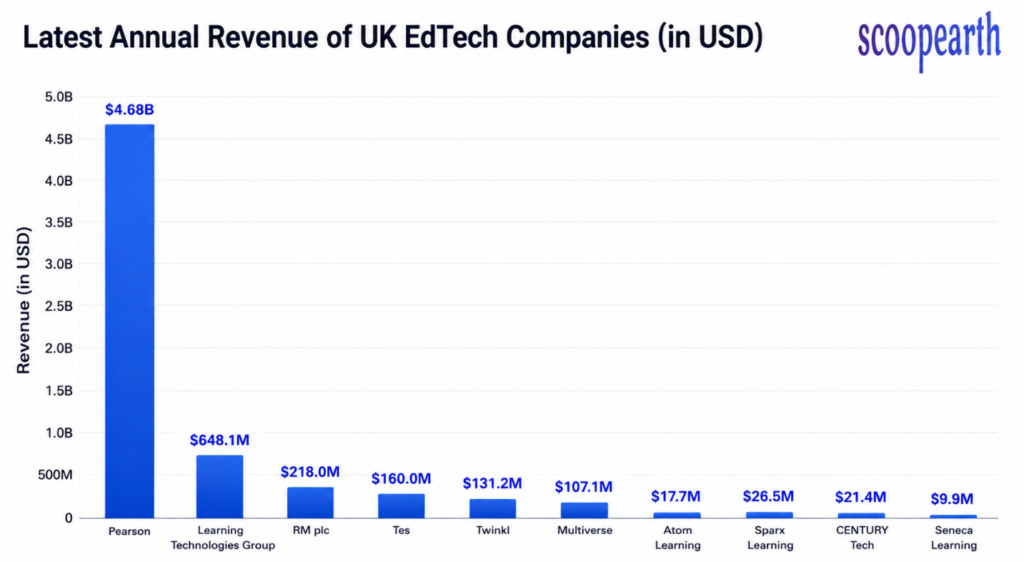
Figures refer to different reporting periods and business structures. Pearson and LTG figures are group-level figures, while some private companies report only UK company turnover. Therefore, the figures should not be treated as a strict revenue ranking.
Why These Companies Lead the UK EdTech Industry
Strong Digital Adoption
UK schools, universities, teachers, and businesses increasingly use digital platforms for teaching, assessment, training, and communication. This has created opportunities for companies offering simple and useful technology.
Personalised Learning
Personalisation is becoming a major trend. Platforms such as Atom Learning, Seneca, Sparx, and CENTURY use student performance data to recommend suitable content and activities.
Growth of Artificial Intelligence
AI is changing the EdTech industry. Companies are using AI for personalised learning, automated assessment, content creation, tutoring, and teacher support.
Pearson has also made AI a major part of its strategy, while companies such as CENTURY are built around AI-driven personalised learning.
Demand for Workforce Skills
EdTech is no longer limited to children and schools. Companies need employees to learn new technology and AI skills.
This is creating opportunities for companies such as Multiverse and Learning Technologies Group, which focus heavily on workplace training and professional development.
Large International Opportunity
Many UK EdTech companies have customers outside the UK. Twinkl, Pearson, RM, Seneca, and Multiverse have all developed international businesses.
The UK’s strong education system, English-language advantage, technology sector, and access to international markets provide a strong base for EdTech companies.
Conclusion
The UK has developed a diverse EdTech industry that covers almost every stage of learning.
Pearson remains the largest and most established education company, combining learning content, assessments, qualifications, and technology. RM plc has a strong position in education technology and assessment, while Twinkl and Tes have built large platforms for teachers and schools.
Learning Technologies Group and Multiverse show how EdTech is expanding into workplace learning and professional skills. Atom Learning, Seneca Learning, CENTURY Tech, and Sparx Learning are using technology and personalisation to change how students study and practise.
The next phase of UK EdTech is likely to be shaped by artificial intelligence, personalised learning, digital assessment, teacher productivity, skills training, and lifelong learning.
AI will not simply replace traditional education. Instead, the strongest EdTech companies are likely to use AI to support teachers, understand student needs, automate repetitive tasks, and make learning more personalised.
The UK therefore remains an important global EdTech hub. Companies that can combine good educational content with reliable technology, measurable learning outcomes, and strong relationships with schools, students, teachers, and employers are likely to remain at the centre of the industry.
FAQs:
What is EdTech?
EdTech means using technology to improve teaching, learning, training, and education.
Which is the largest EdTech company in the UK?
Pearson is one of the UK’s largest and most established education technology companies.
What does Pearson do?
Pearson provides digital learning, educational content, assessments, and qualifications.
Which UK EdTech company is popular with teachers?
Twinkl is widely used by teachers for digital teaching resources and classroom materials.
What does RM plc provide?
RM provides education technology, assessment solutions, and digital services for schools and education organisations.
What is Tes known for?
Tes is known for teacher resources, education recruitment, professional development, and digital services.
What does Multiverse offer?
Multiverse provides apprenticeships and training focused on digital, technology, data, and AI skills.
What is Seneca Learning?
Seneca Learning is an online revision platform that helps students prepare for school examinations.
How does CENTURY Tech use AI?
CENTURY Tech uses AI to provide personalised learning and identify areas where students need more support.
What does Atom Learning provide?
Atom Learning offers personalised online learning and preparation for school entrance examinations.
What is Sparx Learning known for?
Sparx Learning is best known for its personalised maths learning and homework platform.
Is UK EdTech used outside the UK?
Yes, many UK EdTech companies serve students, teachers, schools, and businesses internationally.
How is AI changing EdTech in the UK?
AI is helping personalise learning, support teachers, automate assessments, and improve educational content.
Does EdTech only focus on schools?
No, EdTech also supports universities, professional training, apprenticeships, and workplace learning.
What is the future of UK EdTech?
AI, personalised learning, digital assessment, skills training, and lifelong learning are expected to drive future growth.