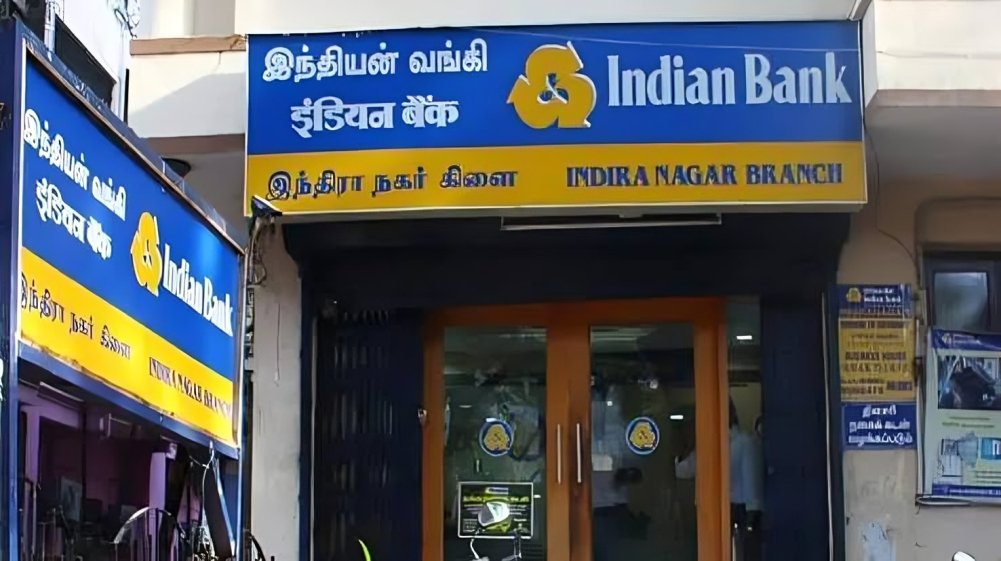
Indian Bank posted impressive credit growth in the first quarter of FY27 of 15.2%, hitting the upper bound of its conservative growth forecast. The credit expansion for the quarter was impressive and exceeded the earlier forecast of growth of between 11% and 13% set by the public sector lender. The retail segment, along with the Micro, Small and Medium Enterprises (MSME) segment, continued to report solid demand across lending products. The speed of loan dispersion also underscores the public sector bank’s ability to accelerate its total loan book efficiently in the quarter compared with some of its industry peers.
Credit growth performance and operating profit
In Q1 FY27, the bank’s loan book grew by 15.2% YoY, with a significant increase in the retail and MSME segments. The strong performance across these segments reflects the strength of Indian Bank’s growth plans and highlights the enduring robustness of both consumer lending and small business financing.
Indian Bank’s performance on credit growth has improved over the projections, which puts it ahead of many other peers in the banking sector. The profitability ratios of Indian Bank have improved significantly in the reported quarter. The efficiency of capital utilization was indicated by the Return on Assets at 1.3% and Return on Equity at 16.3%.
The asset quality trended positive as well, with gross slippages of 79 basis points and 22 basis points of net slippages. The figures reflect effective control over non-performing assets despite the rapid credit expansion, reflecting the bank’s disciplined approach to risk management.
The bank’s overall profitability gains from the increase in its Net Interest Margins (NIM), which has improved by 6 basis points in the current quarter. A core operating profit excluding treasury income rose 22.6% year-on-year.
The improvement of the current portfolio under Indian Bank shows its dominance of the core business activities and its potential for ongoing positive earnings from operating activities. The operating-profit growth has materialized through robust credit growth and cost management.
CASA growth and ECL transition
Indian Bank has taken a proactive approach towards preparation for the transition to the Expected Credit Loss (ECL) framework. In Q1 FY27, the bank has provisioned for ₹10 billion, and the aggregate impact of the transition is estimated to be approximately ₹30 billion.
Such provisions offer a means of improving the bank’s capital structure and protecting against future credit losses, even though they have a negative effect on profitability in the short run. This proactive stance demonstrates the bank’s careful financial management and understanding of regulatory shifts.
Deposits increased 13.5% Y-o-Y; Current Account Savings Account (CASA) deposits led the advance at 15.1%. The robust CASA expansion is especially important because low-cost deposits allow the bank to keep funding costs down and margins competitive.
Maintaining this deposit momentum will be important for supporting credit expansion in the future while limiting interest expenses. Indian Bank’s retail and MSME lending growth without diluting asset quality is a key area of watch.
Short-term profitability will also be closely watched for the remaining ECL transition, as it could impact that area. Deposit growth prospects and credit cost control will continue to play a key role in the bank’s long-term financial strength. The low base effect of the strong Q1 performance would support planned growth for FY27.
Conclusion
Indian Bank’s Q1 FY27 earnings reported a balanced and resilient performance. The bank’s 15.2% credit expansion, combined with asset quality improvement and higher profitability indicators, reflects its capability to generate sustainable performance. Its strong deposit growth and proactive provisioning for the transition to the ECL add to its firepower. The bank’s expansion into retail, MSMEs, and other areas will depend on its disciplined risk management and financial planning processes to ensure long-term success. The performance validates Indian Bank’s status as a robust public sector bank, poised to thrive in the dynamic financial environment of FY27 and beyond.