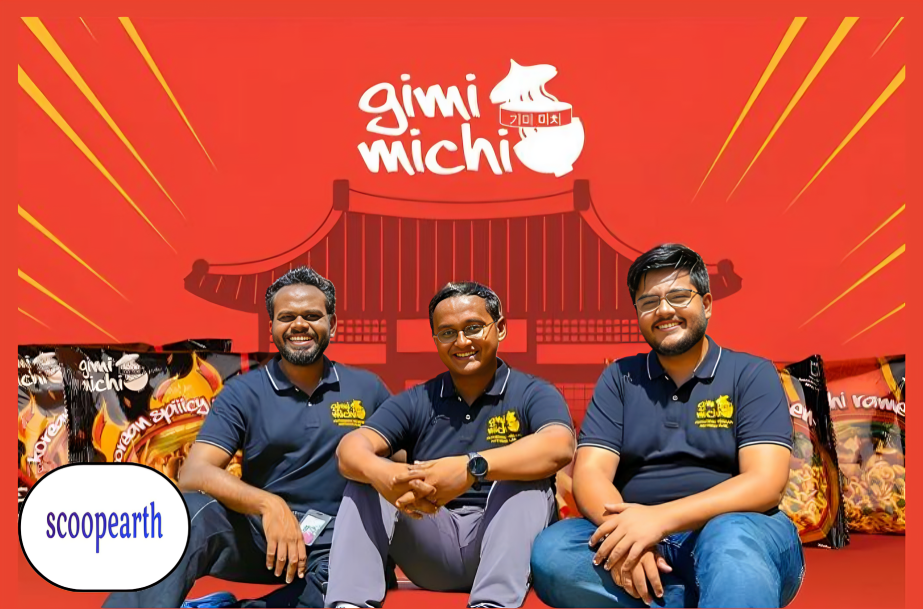
Gimi Michi is an emerging Korean food-focused fast-moving consumer goods startup. Gimi Michi has raised $1 million in its seed round. This investment was led by IndiaQuotient. It reflects robust investor appetite for culturally relevant consumer brands in India. The funding round also saw active engagement from a strategic wider circle of co-investors, with DeVC, Titan Capital and IIMA Ventures actively participating in the process. The funding is a significant milestone for the young company. It serves as a solid base to deliver true and authentic Korean dishes to the evolving Indian youth and consumers.
Capital deployment and financial performance
The company intends to use the newly acquired $1 million in additional funds to accelerate its overall operational and market growth initiatives. The capital will be judiciously deployed on strategic team growth, intensive product development and targeted brand-building efforts, says the press release.
The company will also prioritize building robust supply chains and distribution channels, expanding its reach to more popular quick-commerce platforms, in particular, and making its products easily available to urban respondents who look for immediate delivery options. Founded by executives with an entrepreneurial background, Mishri Kumar, Akhil Kumar and Bodhi Rathor, Gimi Michi is headquartered in Gurugram.
The founders have a broad and relevant set of credentials, having served at some of the most prestigious management consulting firms and large consumer goods companies, including BCG, Mondelez and AB InBev. With its solid corporate foundation, the founding team emerges with an edge in dealing with product procurement and brand management issues, planning large-scale distribution, and scaling up its operations quickly in the fiercely competitive food & beverages market in India.
The team behind the business started their venture with reckless certainty that Korean food would be accepted by the masses in India, to the extent that Korean entertainment has been accepted in this country in recent years. The founders were quick to point out that the explosive growth of K-dramas, K-pop music and viral social media trends has already fostered strong cultural resonance among Indian audiences.
The key to success is to create a bridge, which has given young customers an open and eagerness to experience the true Korean cuisine, meaning that it is the brand’s responsibility to fill the gap between supply and demand by offering high-quality, authentic cuisine within an easily accessible range of prices. Gimi Michi has been around for just about six months, and it shows impressive commercial traction with an efficient operating strategy.
The company currently operates in the lucrative Korean region of the otherwise competitive ramen market. This is the first stage of the series, and the company has already sold a considerable number of products on the main e-commerce marketplace, Flipkart, and has become the leading brand for noodles on that platform.
The performance strength here suggests a high level of product-market fit and corroborates the company’s emphasis on developing premium noodle formulations that resonate with regional palates. The startup’s financial figures also demonstrate its unique growth process.
Gimi Michi also announced that it already sells something close to ₹1 crore per month with an impressive month-on-month growth of around 60%. The company also claimed that about half of its sales were coming from consumers in Tier II and Tier III cities, suggesting that interest in Korean food is not only located in metros. It is expected to deliver repeat purchase rates well above the typical for the category, in both general e-commerce and quick e-commerce channels.
Ability and growth roadmap
Gimi Michi’s strategy is set for a successful expansion, positioning itself to become a significant and profitable component in the growing food category. The company is betting on the significant changes within the eating habits sector, and internal leadership noted that Korean cuisine has the unique potential to emerge as a generational food trend of Gen Alpha consumers, as it did with Chinese and Italian cuisines in earlier decades.
This trend is backed by the industry’s overall estimate that the Indian ramen market could reach a value of more than $1 billion in the coming decade. Larger FMCG companies are starting to give the noodle space major attention as Korean noodles take up a larger share of the whole noodle sales volume in online channels.
Being a fast-moving, digital-first brand allows Gimi Michi to outpace these corporate giants and keep them constantly agile to sustain their product pipeline and real-time distribution management. The company’s capacity to achieve high repeat purchase rates signifies that the startup has established a reliable consumer base that sees the brand as a trusted source for genuine flavors.
Conclusion
With the successful completion of a $1 million Seed funding round, Gimi Michi has firmly positioned itself to become a leader in the now-growing authentic Korean FMCG market in India. The investment, backed by institutional investors such as IndiaQuotient and with a highly capable founding team, has established that a one-off product with a well-executed strategy can deliver explosive monthly revenues across multiple geographies. The company’s new business is ideally positioned to redefine the Chinese instant noodle market and create a profitable and profit-heavy mass-market food category out of a viral culture phenomenon.