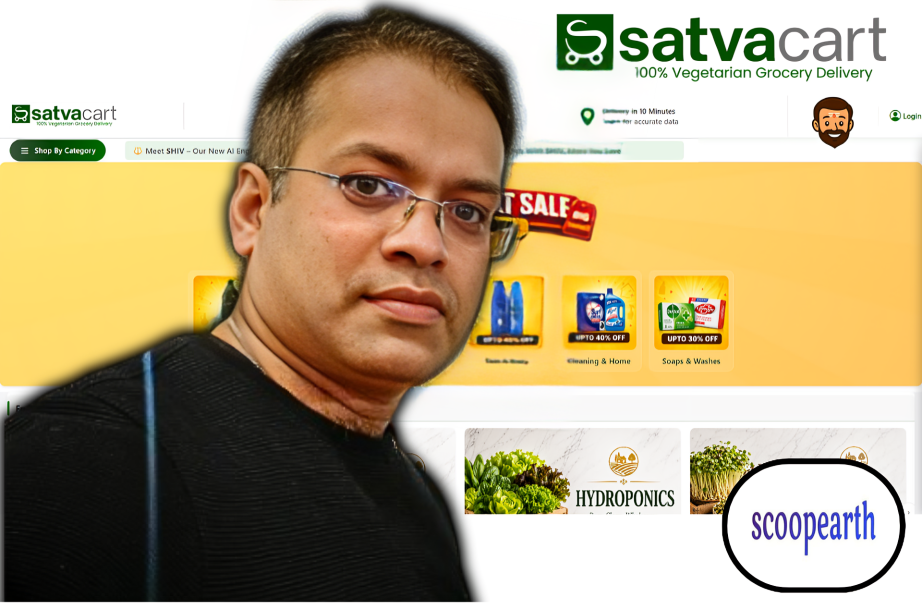
Satvacart is an e-grocery startup based in Gurugram. After 12 years of service, Satvacart is officially closed. On the 28th of August, the company declared its last day of operation, and the overall staff was dissolved. Founder Rahul H. Saxena shared the news on LinkedIn, marking the end of one of India’s early pioneering efforts in online grocery delivery.
End of operations and primary factor
The decision to close down operations comes after a series of difficult years in which Satvacart went all out to find new ways to keep the business alive. The company considered various funding, strategic investment, and acquisition plans to sustain the business.
The company’s operations had advanced to a point at which they had been, to a certain degree, the direct burden of the same people who had been by their side, and its termination was an inevitable consequence.
One of the main reasons for their closure was the type of capital brought into the company during their period of operations. However, Saxena says Satvacart raised funds mostly through smaller tranches. The small incremental capital inflows weren’t enough to rebuild and grow the business.
Even with the lack of finances, the leadership team kept the pressure on until the end and pledged to look at every avenue they could in the market. Satvacart had engaged in two major talks with more powerful investors for substantial infused capital, but failed to clinch a deal.
The startup engaged in talks with several industry players to acquire. Not a single one of these talks ever got past the stage of negotiation, in part because Satvacart’s profit-making operation failed to produce the kinds of numbers that institutional and strategic acquirers were actively seeking.
Market dynamics and company evolution
Satvacart is an online grocery marketplace. The company initially started its operations in Gurugram with a milk subscription service before expanding its stock-based grocery delivery business.
In this model, the startup provided services to customers through micro-clusters and independent warehouses. During 2015, the startup secured seed capital investment from Palaash Ventures and various angel investors in order to expand its operational base, acquire the customer base, and solidify its core technology team.
While some of its venture-backed rivals opted for a more aggressive growth track of customer acquisition and fast expansion, Satvacart kept its expansion strategy grounded with a steady, bottom-line approach. This is a strategy helped this organization become one of the earliest profitable players in the e-grocery industry.
However, the dynamics of the market changed drastically as the focus shifted towards quick commerce organizations, which included Blinkit, Zepto, and Swiggy Instamart.
Ecommerce giants like Amazon and Flipkart stepped into the quick delivery arena with Amazon Now and Flipkart Minutes, respectively. Traditional institutional investors were drawn to dominant scale-driven models and were less willing to jump into Satvacarts’ scenes, which were becoming more difficult to achieve in a smaller industry.
Conclusion
Satvacart’s collapse after 12 years marks the serious structural problems faced by early-stage players of e-grocery services who lack institutional investments and large funding. The startup was profitable in a careful, inventory-driven way early on in 2019, but its funding model in small tranches restricted their ability to rebuild and compete with hyper-funded quick commerce giants.
The lack of massive scale in strategic investments and acquisitions saw the company being forced to shut down operations and disperse its team, taking with it a major page from India’s fledgling e-grocery history.