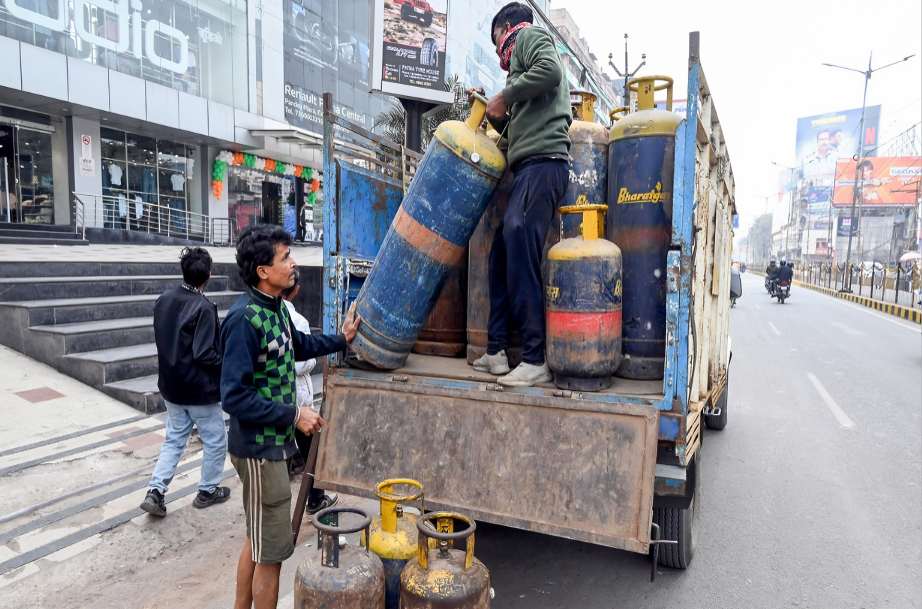
Ministry of Petroleum and Natural Gas (MoPNG) officially announced that the distribution of non-domestic liquefied petroleum gas (LPG) to states and Union Territories has been increased significantly. This action is aimed at relieving the strain on commercial outlets that have been struggling with fuel crises.
The recent directive has increased the allocation by another 20%, resulting in a cumulative supply of 70% of the pre-crisis level. This ruling is a long-overdue saviour of many commercial sectors that comprise the heart of the food and service industry.
Primary beneficiaries and revised allocation
The central government had already limited allocations because the supply chain was being disrupted, as well as geopolitical tensions affecting the availability of fuels around the globe. Having realized the critical necessity to maintain the economic activity and social welfare services, the ministry has resolved to introduce higher quotas gradually.
The new distribution of 70% of the pre-crisis need is aimed at filling the gap between the demand and supply as the government exercises constant watch on the changing energy situation.
The higher amount of LPG is not to be handed out carelessly under the new rules issued by the Petroleum Ministry. The government has enforced a prioritization system that is very strict in order to ensure that the fuel is provided to key services and areas that have a high impact on the populace.
Restaurants, dhabas, hotels and industrial canteens are the major beneficiaries of this 70% quota. The supply squeeze has hit these establishments especially hard, and they have experienced difficulties in their operations and higher costs to consumers.
The ministry has instructed that food processing plants, dairies and subsidized canteens or outlets operated by state governments and local organizations be assigned priority. The high-priority list also includes community kitchens and providing migrant laborers with 5 kg free trade LPG (FTL) cylinders. Through these aspects, the government is trying to stabilize the food supply chains and ensure that the welfare programs and the affordable food available to the working population will be operational during the transition period.
Critical component and mandatory registrations
The Ministry of Petroleum and Natural Gas has instituted strict measures to ensure compliance so that commercial cylinders are not diverted. Every commercial and industrial consumer of LPG will now be obligated to subscribe with the Oil Marketing Companies (OMCs) to become eligible for the new allocation of 50% to 70%.
To ensure effective monitoring of every consumer, OMCs have been charged with keeping close documentation of every consumer in the sector they are operating, the exact use of the gas, and their annual weight demand. Such databases will assist the government in monitoring the usage patterns and ensuring that the subsidized or allocated fuel is utilized accordingly.
One of the most important elements of the new mandate is the drive towards Piped Natural Gas (PNG). The ministry has enforced the requirement of a commercial and industrial user to request a PNG connection to their City Gas Distribution (CGD) entities.
The consumers are required to show a state of readiness to receive piped gas before they can receive all the benefits of the revised LPG quota. It is one of several strategic changes that have been implemented to minimize the overdependence of India on imported LPG cylinders and transition to a more stable and efficient pipeline-based infrastructure.
Conclusion
The Petroleum Ministry’s decision to increase the non-domestic LPG quota to 70% of the pre-crisis level is a strategic intervention that is aimed at assisting the commercial sector at a time when there is uncertainty in the energy supply.
The government is striking a balance between the urgent need for fuel and the obligation of switching to the more sustainable sources of energy by connecting the augmented quantity of supply to registration and strict oversight of PNG by OMCs. This is a moderated measure that will help to ensure the energy future of the nation and protect the interests of both the business and the citizen.