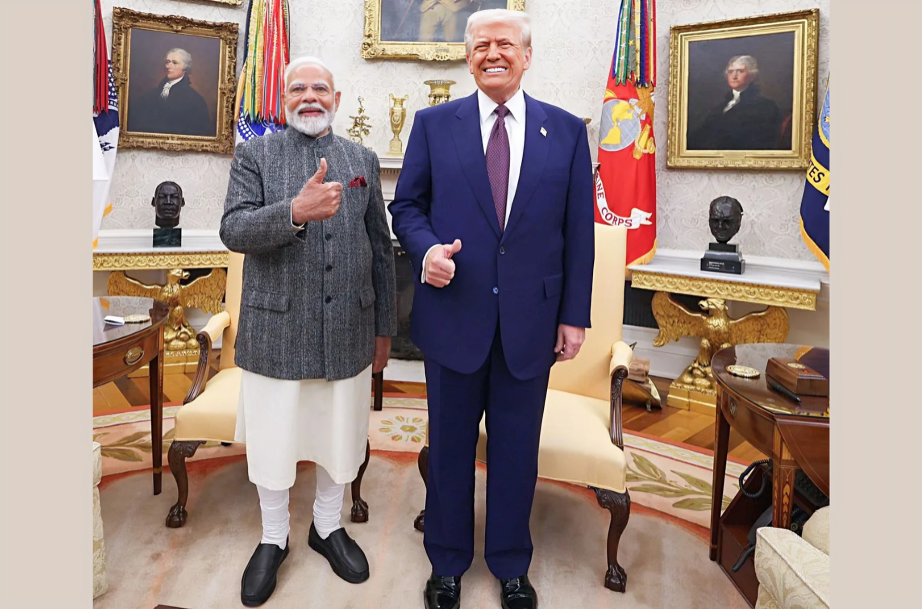
India will be subjected to a reduced tariff rate of 10% on its exports into the United States of America in a major change in the US trade policy. This shift is an immediate effect of the decision of US President Donald Trump to impose a new global tax on the products imported into America.
This ruling is after a significant legal defeat by the administration, where a federal court, the US Supreme Court, ruled against the President on his former broad tariffs. This new 10% rate is, in effect, a replacement of the 18% tariff that was previously imposed on Indian goods under the interim trade agreement framework.
Catalyst and the new proclamation
This change was catalyzed by a 6-3 decision of the US Supreme Court, in which Chief Justice John Roberts decided in the majority opinion. The court decided that the wide tariffs imposed by President Trump on other countries before were illegal, claiming that the President was overstepping his executive powers.
Trump reacted to this judicial defeat by issuing a new proclamation called Imposing a Temporary Import Surcharge to Address Fundamental International Payments Problems. This order refers to the authority of the President under Section 122 of the Trade Act of 1974 to act to deal with international payment imbalances in the form of surcharges.
According to the new proclamation, there will be a temporary import surcharge of 10% ad valorem on imported articles to the United States. This step will last 150 days, starting 12:01 am Eastern Standard Time on February 24.
Since this 10% rate is being implemented internationally, it overrides the 18% rate that was negotiated earlier this month when the announcement of the India-US interim trade agreement was made. Initially, Washington had intended to cut the reciprocal tariff on New Delhi from 25% to 18%, but the new universal order of the day has unwillingly decreased it.
Impact and economic strategy
Although the levy on the 10% is comprehensive, a fact sheet issued by the White House made it clear that some products will not be subject to this tax. These exemptions are meant to safeguard the US economy’s needs and to make the surcharge target the payment issues without a detriment to domestic production.
The list of excluded items includes critical minerals, metals that are used in money, energy products, and natural resources that cannot be produced in adequate amounts in the United States. The temporary duty will not cover certain agricultural goods such as beef, tomatoes, and oranges, pharmaceuticals, special electronics, aerospace products, and different categories of vehicles and parts.
President Trump justified the action as a balancing mechanism to restructure trade relations and to be advantageous to American workers, farmers, and manufacturers. Nevertheless, the administration continues to argue that such interim measures fall under the legal regime of the Trade Act of 1974 despite the decision of the Supreme Court, which Trump severely criticized, terming the justices as fools and lapdogs.
When it comes to the particular relationship with India, President Trump underlined that the framework of the interim trade agreement is not going to change. According to him, nothing changes as far as the momentum of the deal is concerned, but the mechanism of the tariffs has changed.
According to the President, the deal would result in a give-and-take situation that would see India paying tariffs to the US, a state of affairs he said is reversing the past years. He stated that although he believes Prime Minister Narendra Modi to be a great gentleman, he believed that the past trade relations were not fair to the United States, which resulted in the present fair play.
Another aspect emphasized by the administration was the geopolitical situation of this trade relationship. The President observed that at his request, India has greatly decreased its energy importation from Russia and turned to American energy products. This change was a major element of a previous Executive Order that abolished 25% punitive tariffs on India. Trump attributed these trade moves to other foreign policy ambitions, such as the urge to resolve international disputes.
Conclusion
The lowering of the tariff to 10%is a complicated twist in the Indian-US economic relationship that was caused by internal American legal hurdles. Although the Supreme Court invalidated the first tariff system by the administration, the reference to the Trade Act of 1974 has established a new but interim international criterion.
In the case of India, this is more favourable than the negotiated rate of 18% in the past, although the US administration is still in its aggressive America First trade policy. With the February 24 implementation date at hand, the key issue on the bilateral trade pact is how such temporary surcharges will influence the signing and operationalization of bilateral trade pacts in the long term.