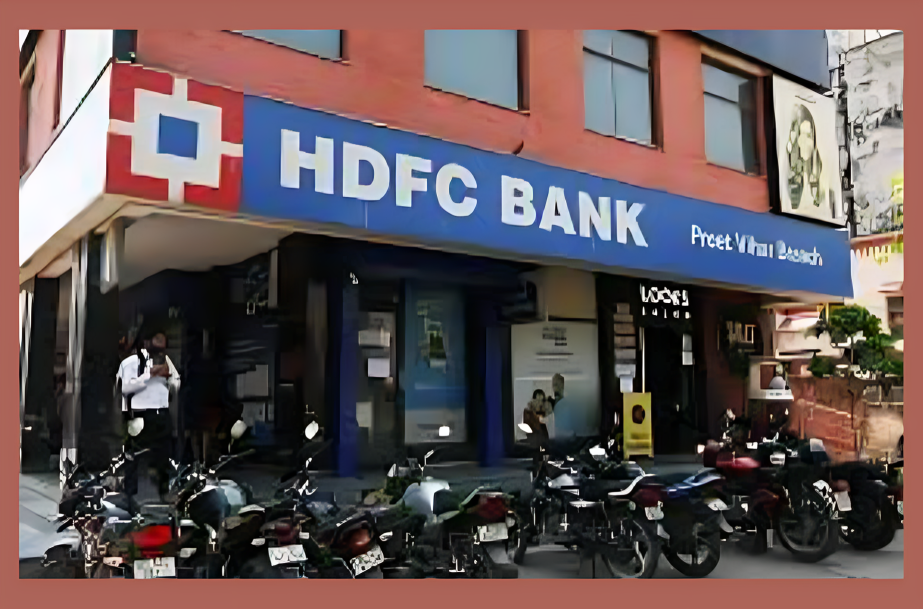
One of the major financial institutions of the Indian private sector, HDFC Bank, has just declared a strategic corporate measure that entails allotment of a high number of equity shares. The recent regulatory changes show that the bank has managed to distribute 13,60,302 equity shares to the employees. This is the continuation of the bank’s reward for its employees as a part of its employee benefit plans, and this is the Employees Stock Options Scheme (ESOS).
Share allotment details
The allotment was accomplished after the exercise of stock options and Restricted Stock Units (RSUs) by qualified employees. These schemes are commonplace in large-scale corporate organizations, and they are aimed at getting the employees to have their interests aligned with the long-term growth and performance of the organization. The bank encourages a culture of ownership and high performance by offering employees an opportunity to own an equity stake at different levels of operation of the bank.
The particularities of this business move indicate a narrow-range growth in the overall amount of bank equity. The 13.60 lakh shares (specifically 13,60,302 shares) were issued to the employees who decided to convert their vested options and RSUs into real equity. This is to enable the employees to have the direct benefits of the market value of the bank as a major element of their total remuneration and incentive package.
The stock issued has a face value of Re 1 per share. This allowance is not an ordinary administrative exercise, but reflects the implementation of contractual obligations of the bank as part of its employee incentive programs. By ensuring that such options are exercised and shares are allotted, the bank retains its image as an employer that rewards and motivates its human capital in a real and tangible way through concrete financial compensation based on the success of the bank and the shareholder.
Marginal expansion and market context
The first effect of this allotment is an equivalent addition to the total paid-up share capital of HDFC Bank. Before this issue, the bank had a paid-up share capital of 15,38,80,85,056 equity shares. The face value of each of these shares is Re 1. This has increased the share capital base to 15,38,94,45,358 equity shares, following the allotment of the additional 13,60,302 equity shares.
Such a marginal increase in the share capital indicates the incessant process of employee stock vesting and exercise that typifies large, listed corporations. Although the issue of 13.60 lakh shares is insignificant in comparison to the huge number of shares in the bank, it is still a formal change in the capital structure of the company that needs to be reported to the regulators and other market participants. The growth indicates the conversion of employee-owned options into liquid shares at a steady pace, thus expanding the shareholder base in the bank to a slight extent.
Being a publicly-traded organization, HDFC Bank conforms to the rigorous standards of transparency and disclosure. The data on the issue of share distribution within the ESOS framework is publicly available, and it keeps the investors and other stakeholders updated about the alteration of the capital structure of the bank. This disclosure is critical in terms of the integrity of markets and to the extent that any corporate activity, however minute in terms of the total market capitalization, is captured and handed over to the exchanges.
The decision to allocate the shares within the ESOS and RSU schemes is not a new occurrence within the Indian banking industry, especially among the large-sized institutions that have used stock-based compensation as a strategy to retain and attract the best talent. In the case of HDFC Bank, the move highlights how its human resource policies are uniform and consistent, and how it has been able to manage its equity base and compensate those who help it achieve operational excellence.
Conclusion
The issue of 13.60 lakh equity shares by HDFC Bank is a testimony to the well-organized nature of the bank’s approach to employee engagement and capital management. The exercise of Options and RSUs has not only allowed the bank to reward its loyal staff but also enabled the bank to transform its paid-up share capital to 15,38,94,45,358 shares.
This would provide the bank with the assurance that it is upholding its obligations under its ESOS and still has the required regulatory standards that a large financial institution is supposed to have. Such allotments will continue to form part of its strategy as the bank moves ahead to ensure that it aligns employee objectives and shareholder interests.