India and Argentina have agreed to step up joint efforts to significantly improve market access for Indian pharmaceutical and agricultural products. The bilateral initiative involved technical discussions on easing farm exports and structural pledges to improve India’s official status under Argentina’s national pharmaceutical regulatory system.
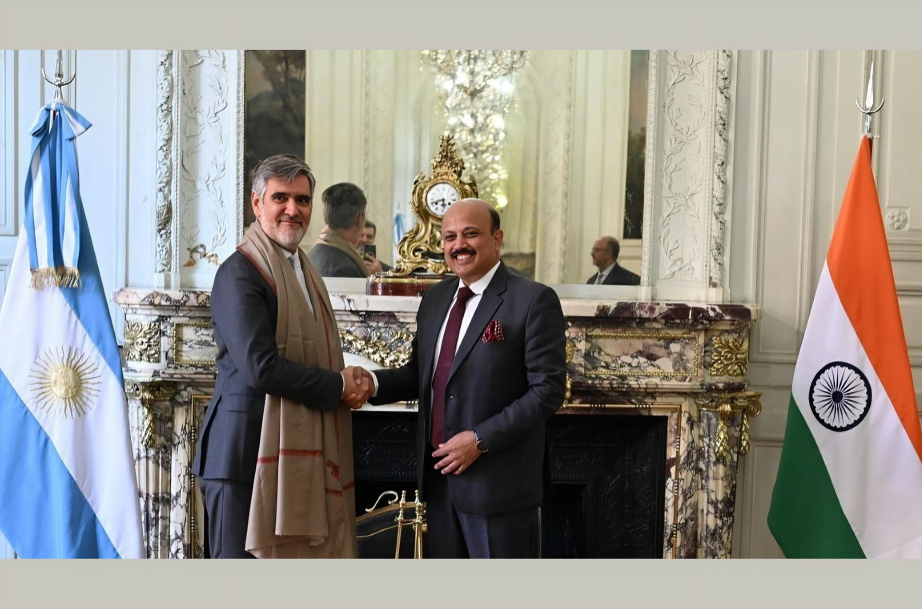
The fourth meeting of the India-Argentina Joint Trade Committee (JTC) was held at Buenos Aires on August 24, where the official developments were discussed in detail. Indian side was represented by the Commerce Secretary Rajesh Agrawal, while the Ambassador of Argentina, Secretary for International Economic Relations Fernando Brun, represented the Argentine side at the bilateral meeting.
Strategic regulatory shift and agricultural market integration
One of the major issues discussed during the fourth JTC meeting was to remove the regulatory and entry barriers for essential commodities from India into South America. Argentina has made a formal commitment to pursue India’s upgrade from Annex II to an Annex I status in its pharmaceutical regulatory framework.
This move signifies a comprehensive reform of the regulatory landscape in India, offering a more progressive path to the business growth of the country’s pharmaceutical companies and increased access to robust and cost-effective healthcare services for the country’s citizens. In addition to medical progress, both countries reported significant progress on sanitary and phytosanitary (SPS) controls for various agricultural products.
Both governments are in the process of technical-level talks to facilitate market access for Indian products such as onions, milk and milk products, grapes, potatoes, bananas and pulses. The efforts in regulatory alignment are emblematic of a shared goal of expanding the scope of trade baskets and improving agricultural trade clearance procedures for producers.
Bilateral trade and high-level commercial forums
The trade negotiations come at an unprecedented time when economic collaboration between the two countries is ripe. India established an annual bilateral trade exceeding $6.5 billion with Argentina in 2025 without any previous record of a negative growth period. With such growth figures, India has become the fifth most significant trading partner of Argentina, demonstrating ample scope for further integration of both economies through traditional and non-traditional means.
At the meeting, the Joint Trade Committee examined investment areas in strategic sectors like physical infrastructure, energy and mining. A focus was on the direct presence of India’s Khanij Bidesh India Limited (KABIL) in Argentina’s critical lithium sector.
KABIL has finished phase II drilling at its lithium project in Catamarca and is exploring investment possibilities in Salta and Jujuy. India and Mercosur considered their collaboration on aviation business, space technologies, telecommunication services, and digital service infrastructure, including 5G services and artificial intelligence, to be important for the future.
India and Mercosur considered further development of the preferential trade agreement between India and Mercosur to be very important for their business relationship. Milestones envisioned for analysis include finalization of the Terms of Reference and adoption of digital certificates of origin to reduce cases of cross-border friction and operational costs for businesses involved in inter-border operations.
Commerce Secretary Agrawal had targeted talks with Argentine political leadership on the issue of non-tariff barriers, pharmaceutical regulatory recognition, agriculture and high-tech cooperation among others, including a possible collaboration between the Indian Space Research Organisation (ISRO) and Argentina’s National Space Activities Commission (CONAE).
The government-level JTC meeting was followed by the India-Argentina Business Forum on 25 August. Comprising over 25 top-level corporate executives, including UPL chief Rajesh Agrawal, Kirloskar Group chief and Aditya Birla Group’s topgun, India’s first and largest-ever commercial delegation was led by Agrawal to Argentina.
The delegation actively explored the opportunities for trade and investment in areas of pharmaceuticals and health, agriculture, minerals, energy, banking, tourism, and telecommunications. The primary purpose of this groundbreaking business event was to turn high-level policy commitments into real-world private-sector partnerships, as noted by the Ministry of Commerce and Industry.
Conclusion
Buenos Aires is witnessing an elevation of economic ties between India and Argentina in the form of milestone bilateral talks. Both countries are actively working to remove non-tariff trade limitations, reduce regulatory complexity, and extend market access for goods and services in the pharmaceutical and agricultural industries, with bilateral trade reaching over $6.5 billion in 2025 as a result of robust yearly expansion.
The bilateral ties are gaining a stronger emphasis on industry cooperation and sustainable integration, based on strategic investments in energy, lithium mining, space technology and digital infrastructure alongside strong participation from high-profile business leaders.